‘Everybody Should Be a Feminist Filmmaker’
The unassuming story of three working-class Indian women has captured the world’s attention. Here’s why.

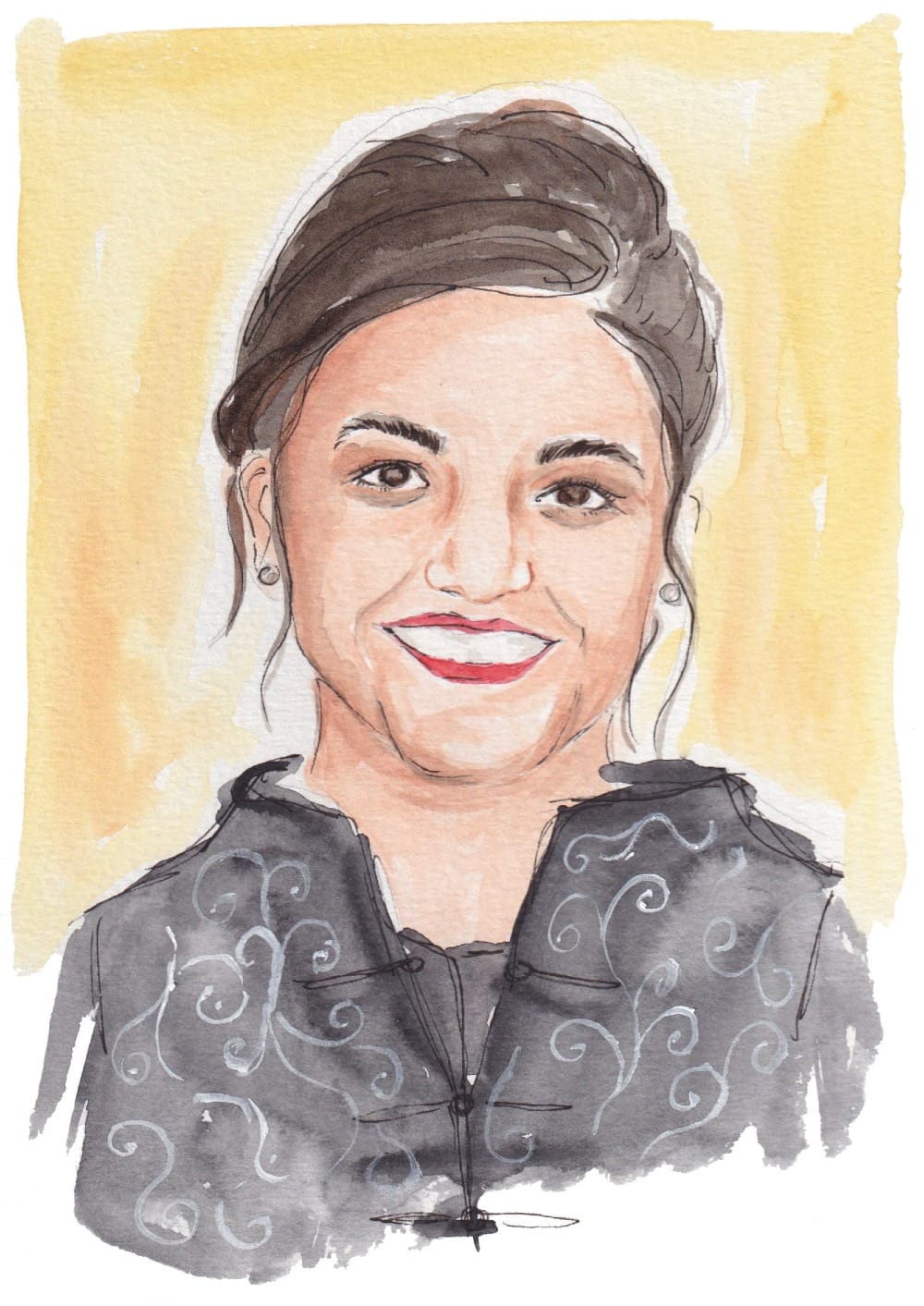
“All We Imagine as Light” is a movie about love and longing, identity and patriarchy, and the power of female friendship. Last year, it became the first Indian film to win the Grand Prix at the Cannes Film Festival, and it was nominated for multiple awards including the Golden Globes and a British Academy Film Award. It also showed up on Barack Obama’s favorite movies of 2024 list.
The film follows the story of Prabha and Anu, nurses (and roommates) from the southern state of Kerala, as they navigate life in Mumbai. From the outset, the director, Payal Kapadia sought to explore the friction that could emerge between two women with very different worldviews living in close quarters—and how that “causes them to change the way they look at themselves and each other.”
The contrast is drawn early. We learn that Prabha’s husband left for Germany shortly after their arranged marriage, while Anu is secretly dating a Muslim man named Shiaz even as her Hindu parents bombard her with photos of potential suitors. The third protagonist is Parvaty, a cook at the hospital where the nurses work, who Prabha tries to help in a fight against eviction.
Mumbai is a central character too, with a tracking shot and voiceovers from real-life migrant workers taking viewers into the heart of Dadar, an area once home to cotton mills that have since been replaced with luxury shopping malls and trendy cafes.
The result is an intimate portrait of three working-class women that is both a joyful celebration of sisterhood and a searing story of dissent. Kapadia skillfully raises questions about gender, class, caste, religion, and migration in contemporary India—and how they are connected—without once telling the viewer what to think.
She shared thoughts with The Persistent on feminist filmmaking, avoiding tropes, and building empathy. The conversation has been edited for length and clarity.
Why did you put women, particularly working-class women, at the center of your film?
It was very instinctive. The nursing profession was something I wanted to look into because in India it’s one where a woman can leave their home state and go to another state to work, and the parents are happy because it's seen as a very respectable job. I was also spending time in hospitals and noticed that it was the nurses that pretty much ran the place.
I could then talk about other women's issues, like contraception, which gave me a lot to explore.
How important was Mumbai as the backdrop for their stories?
Mumbai, like any big city, is one of many contradictions. It allows for a lot of economic possibilities, especially for women. However it can also be a very brutal city, which has complete disregard for its people.
You’ve described in earlier interviews the “lingering men” in the film—the ones, like Prabha’s husband, who are referred to but we never see. Tell me about that decision.
The men who are affecting the women’s lives in a negative way are all offscreen. Prabha’s husband, who left for Germany, and Parvaty’s husband, who didn’t safeguard her future [by securing documentation for their home]: I never wanted to show these men, yet I did want to show that the consequences of their actions are hurtful to these women.
The men on screen are very kind.
A standout scene has Prabha and Parvaty hurling stones at a billboard advertising a high-end apartment complex, which reads: “Class is a privilege. Reserved for the privileged.” How important was it for you to reflect on growing income inequality in India?
Especially in Mumbai, the gentrification is evident. There's a physical sort of inequality in its architectural setup; in the areas where we’ve shot the movie. Many people lost their housing [because of gentrification]. So this is what we focused on.
Tell me about the challenges of depicting a relationship between a Hindu woman and a Muslim man—which you did beautifully by the way—in the current context of Hindu nationalist India and the persecution those in interfaith relationships can face?
What we wanted to do was to not fall into the kind of rhetoric which reduces Anu and Shiaz to their immediate religious identities. We wanted to make the audience root for them like any couple at the start of a romance. But every Indian will feel the slight fear of what could happen to them. Unfortunately that's how it is. For young couples who are in both inter-religious and inter-caste relationships that fear is a real one.
Do you see yourself as a feminist filmmaker?
I think at this time, everybody should be a feminist filmmaker. And feminism must include questions of other discrimination—class, caste, access to resources. Because you can't talk about feminism without all these intersections.
One of the propositions in the film was a kind of utopia, to say that there could be this relationship between these three women that could go beyond familial relationships. [Familial relationships] can be very supportive, no doubt, but they can also let us down. So if there was another kind of family, which went beyond one's immediate identity and age, what could that possibly look like?
How have people responded to the film in India?
A lot of young people went to the cinema to watch it. College students, young girls, and also older women who’ve moved to another city to work. I think that everybody knows an Anu and everybody knows a Prabha. I think women get it. A lot of men are just confused.
The film’s themes shine through—identity, who we can love, migration. Are there particular messages you are trying to convey?
I feel that the movie I've made is about questioning a lot of things that I am confused about. And I am putting forward those questions as a proposition, perhaps. So let's say the proposition, then, is to see how one can be more understanding and accepting and empathetic towards those whose ideas we may not at first completely agree with, and maybe find some way to listen to and understand where the other person is coming from.
Many articles have been written about you being “snubbed” in favor of “Laapataa Ladies” (which also has a woman director) as India’s official Oscars entry. But you’ve pushed back against a narrative pitting women against one another…
It’s too hard to make films and there are too few women doing it. We have to celebrate that more and more women are making films.