Whitney White: 'These women were risking it all. They weren’t just liking things on Instagram.'
Whitney White, the director of the Broadway play 'Liberation,' says modern life has made feminism more "cowardly."

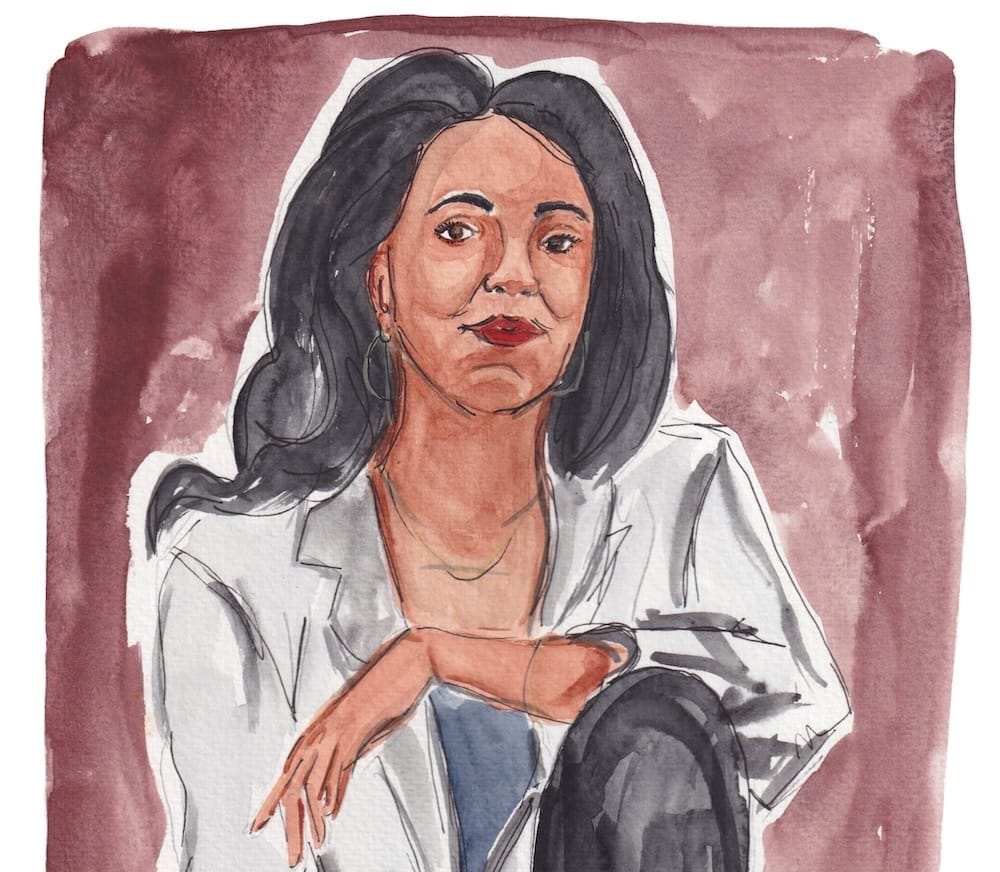
I had no idea what to expect when I settled into my seat at Broadway’s James Earl Jones Theatre to see the critically-acclaimed play Liberation.
Countless books, plays, and films have grappled with second-wave feminism—the political and cultural movement that reshaped women’s lives in the 1960s and ’70s and that is sometimes mockingly referred to as women’s lib. It’s a period that’s been examined, debated, and mythologized from almost every angle. How would Liberation, which follows six women in a “consciousness raising” group from 1970 until today, be able to distinguish itself? What could possibly still be unsaid?
As someone who considers herself to be a fairly stoic person, one thing I didn’t expect was to spend the next two hours howling with laughter, cringing with secondhand humiliation and, ultimately, being moved to tears.
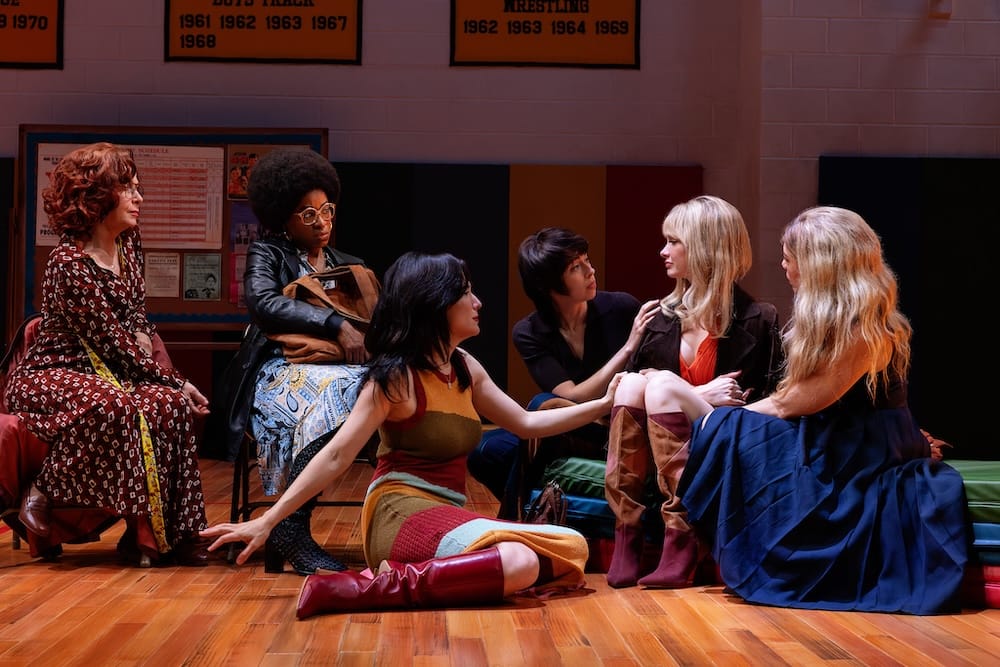
Set simultaneously in the past and the present, with characters breaking the fourth wall to talk directly to audience members, Liberation—written by Bess Wohl and directed by Whitney White—takes place in a school rec room in Ohio, where an adult daughter in the 2020s is uncovering her mother’s buried past.
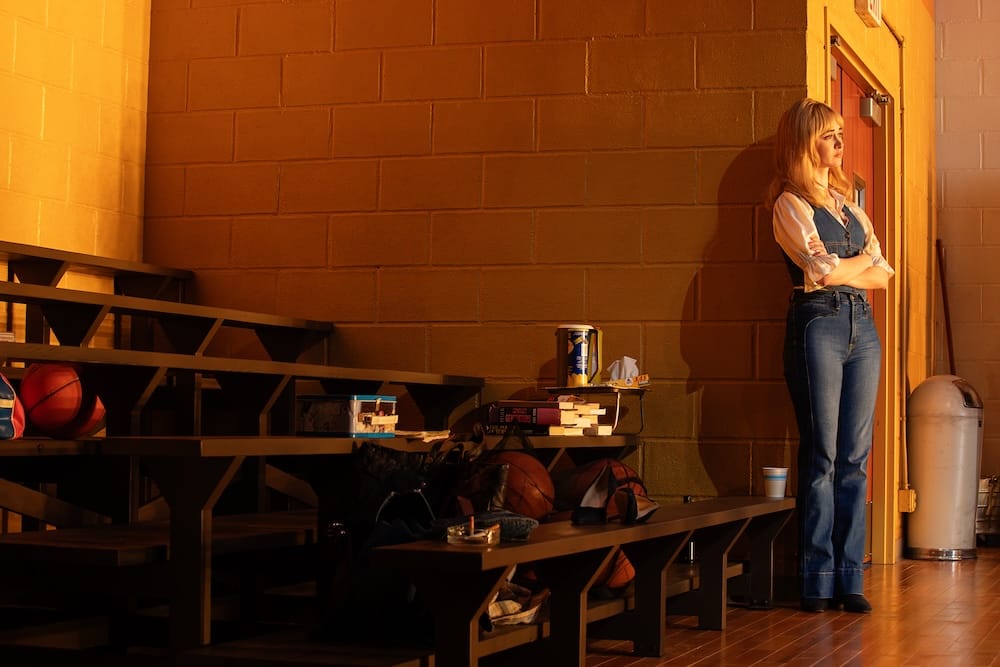
The play oscillates between Lizzie (Susannah Flood)—who plays both the daughter in the present and her mother in the past—and the other group members, all of whom come together to talk about the strictures on their lives as women in the ’70s, many of which remain today. Present day Lizzie is determined to dig into her mother’s buried past, trying to discover whether her mother was happy in the traditional life she led. As the story unfolds, it reveals how ideals, compromises, and unanswered questions have echoed forward in time, shaping not only these characters’ personal lives, but the country’s collective political realities.
At its core, Liberation asks what progress actually looks like, what remains unresolved beneath the language of empowerment, and what we today can learn from those who came before us. White, Wohl, and the stellar ensemble cast deliver a show rooted in empathy and emotional clarity, and they do it with humor, pathos, and a surprising dose of nakedness (in the literal sense).
White spoke to The Persistent about her approach to directing Liberation, her collaboration with Wohl, and the challenges of staging a story that bridges generations, ideologies, and, sometimes, uncomfortable realities.
The conversation has been lightly edited for clarity.
What motivated you to direct Liberation?
When I read the script, what immediately struck me was how distinctly the playwright drew the characters. They felt real–they weren’t clownish or exaggerated. Most importantly, the playwright was taking the issues seriously.
I’m allergic to any portraiture of women that doesn’t genuinely take our lives seriously. Abortion, for example, has to be dealt with in a particular way. A closeted relationship has to be handled with care. A woman realizing that she’s aging and that it’s too late to change her life—that deserves respect. What I loved is that the play manages to treat those things with seriousness and still allow room for comedy. The characters were clear, but there was also room for me to really build the world and generate a vision for the play.
Tell me about coming to this work as a woman of color.
I’m a Black woman from Chicago but I didn’t approach this thinking I was uniquely positioned to direct it. There’s something each character does that I understand or have experienced in my own life. It wasn’t a stretch for me. A large part of Act II focuses on two Black women, and there’s a moment where a Black actress plays a white character. If you truly believe that solidarity is real, then we’re all women. But I do think my background made me unapologetic.
The Civil Rights movement and the ongoing struggle for human rights for Black women are things I’m loud and proud about. Being entrenched in that history and that fight made me very clear about what I saw in the piece and what I thought it could do. I didn’t feel the need to soften anything.
Liberation is structured as a memory play, moving between past and present. What challenges did that present in staging?
The first step was looking back with respect. We have so many media representations of the seventies that flatten it into stereotypes. If you start from the assumption that people then weren’t so different from us—just living with different tools and limitations—you treat the past differently.
I did a lot of documentary-style research and I realized there was a real gap in my own education. I was a political science major, and much of my study stopped around 1968 or ’69. So I had to sit with that missing time and really learn. My guiding principle became simple: Don’t make fun of these people.
The time jumps were tricky. One wrong lighting choice can completely break the illusion. There was a lot of trial and error to make sure the transitions felt fluid and emotionally truthful.
Did directing Liberation change how you think about feminism?
It did. The play surfaces conversations we still haven’t resolved. There’s a real tension between different kinds of feminists. Some [people feel that] liberal feminists believe they’re smarter than everyone else, or that some of their [causes] aren’t accessible to all women.
I was raised by a single mother who worked incredibly hard. When a character says, “You made a women’s group women can’t come to” [because it meets at 6 pm] that line hits hard. A lot of times intellectual movements are not realistic about real people's needs. Sometimes the political discourse leaves people out. But we need as many people as we can get.
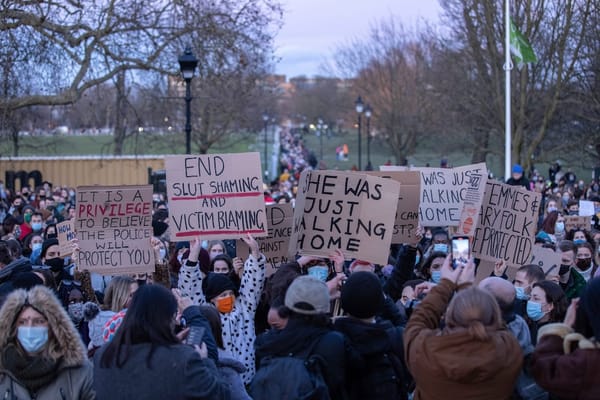
The play also made me think that, in many ways, we’re cowardly today. These women were risking it all. They weren’t just “liking” things on Instagram. I think we’re generally practicing a much more sanitized version of feminism today. What are we really risking to get what we need and believe in? I hope that by the end of this run, I’m a little braver myself.
How did your upbringing shape your connection to the play?
I grew up surrounded by a community of women—my mother, her sisters, my cousins, my grandparents. My grandparents’ house was the center of our family. I grew up in the church, watched my mother work tirelessly to keep me in good schools, and learned early that education could open doors.
We lived in a one-room apartment for a time, and I remember women sitting together talking. That’s where I learned that conversation is political. When women share their fears, their challenges, their stories, they instill strength and change in one another. I’ve seen those conversations uplift families.
What conversations do you hope audiences are having when they leave the theater?
I hope they’re asking themselves what we’ve gained and what we’ve lost. And what people fought hard for that shouldn’t have been lost. Roe v. Wade, for example. The right to keep having these conversations at all.
We’re living in serious times, and some people don’t want to talk about that anymore. But we have to keep finding ways to do it. I want audiences to think about where we’ve been, where we are now, where we want to go in the next ten years, and whose stories we need to draw strength from to get there.
What do you hope younger generations take away from the play?
We need to talk to older generations. We need to understand how it was that they were so brave. My mother was incredibly brave, and the things she endured to give me the life I have matter. I love seeing young women sitting next to people my mother’s age [in the audience]. Every year I get older, I think of questions I wish I’d asked my grandmother. Instead of Googling everything, ask someone who lived it. Ask them what they learned.
That’s the dialogue I’m interested in having.
Liberation runs through February 1 at the James Earl Jones Theatre in New York City.