In Afghanistan, Abusing Animals Now Carries a Stronger Penalty Than Abusing Women
The Taliban’s criminal code, introduced at the start of this year, marks a new low for women.

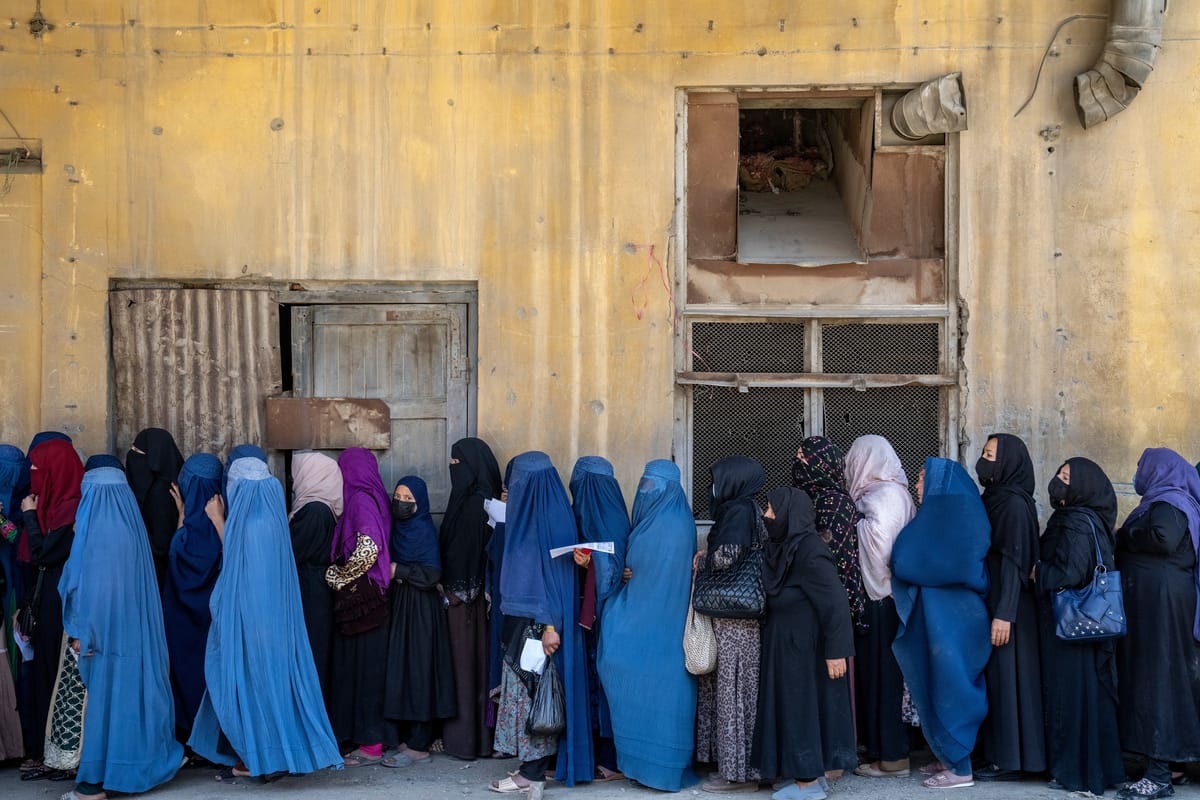
At the end of 2025, it was hard to see how life could get any worse for women in Afghanistan. They were already barred from secondary schools, universities and almost all forms of paid work. They could barely leave the home and had to cover themselves from head to foot, with only their eyes visible.
Yet the Taliban’s new criminal code, introduced at the start of this year, marks a new low.
Under its terms, a married woman can be thrown in jail for visiting her parents’ home if she stays away for too long (no mention is made of how long her husband can spend away from the marital home). If she is beaten by her husband, she will have to go to court to prove that she sustained either broken bones or visible bruises before he is punished. Even if she manages that, he’ll serve a maximum of 15 days before being released. Under the code, men who abuse animals by organizing fights—an Afghan tradition, whereby people bet on the winner—face a longer jail sentence than those who abuse women.
“The new penal code is alarming not only because it restricts women’s fundamental rights but also because it institutionalizes oppression against them,” Fereshta Abbasi, an Afghanistan researcher for Human Rights Watch, told The Persistent. “In Afghanistan, laws no longer protect women; instead, they threaten their safety, autonomy, and dignity."
In some cases, punishments for women are harsher than those for men even for the same thing. A woman accused of leaving the Muslim faith can be imprisoned indefinitely and whipped every day until she changes her mind. Men face no such sanction.
In addition to punishing women, the new code also punishes same-sex relations, and openly discriminates against anyone who does not adhere to the same narrow view of Islam as the Taliban.
The code was not made public, even in Afghanistan, and there’s been no public consultation on it. A copy signed by the Taliban leader, Hibatullah Akhundzada, and circulated to the courts across Afghanistan was obtained and published last month by the human rights group Rawadari. The group is led by Shaharzad Akbar, who chaired Afghanistan’s Independent Human Rights Commission until the Taliban returned to power in 2021—and disbanded it.
Akbar, who now lives in exile in Britain, told The Persistent the new criminal code “legalizes existing discriminatory practices against women” while also “criminalizing women who leave their marital home without their husbands’ permission.”