'When Wars Happen, Human Rights Are the First Casualties': Will the War Undo Years of Progress by Iranian Women?
What does the bombing of Iran mean for Iranian women? The British-Iranian peace advocate Sanam Naraghi Anderlini asks if it could destroy years of work to improve their lives.

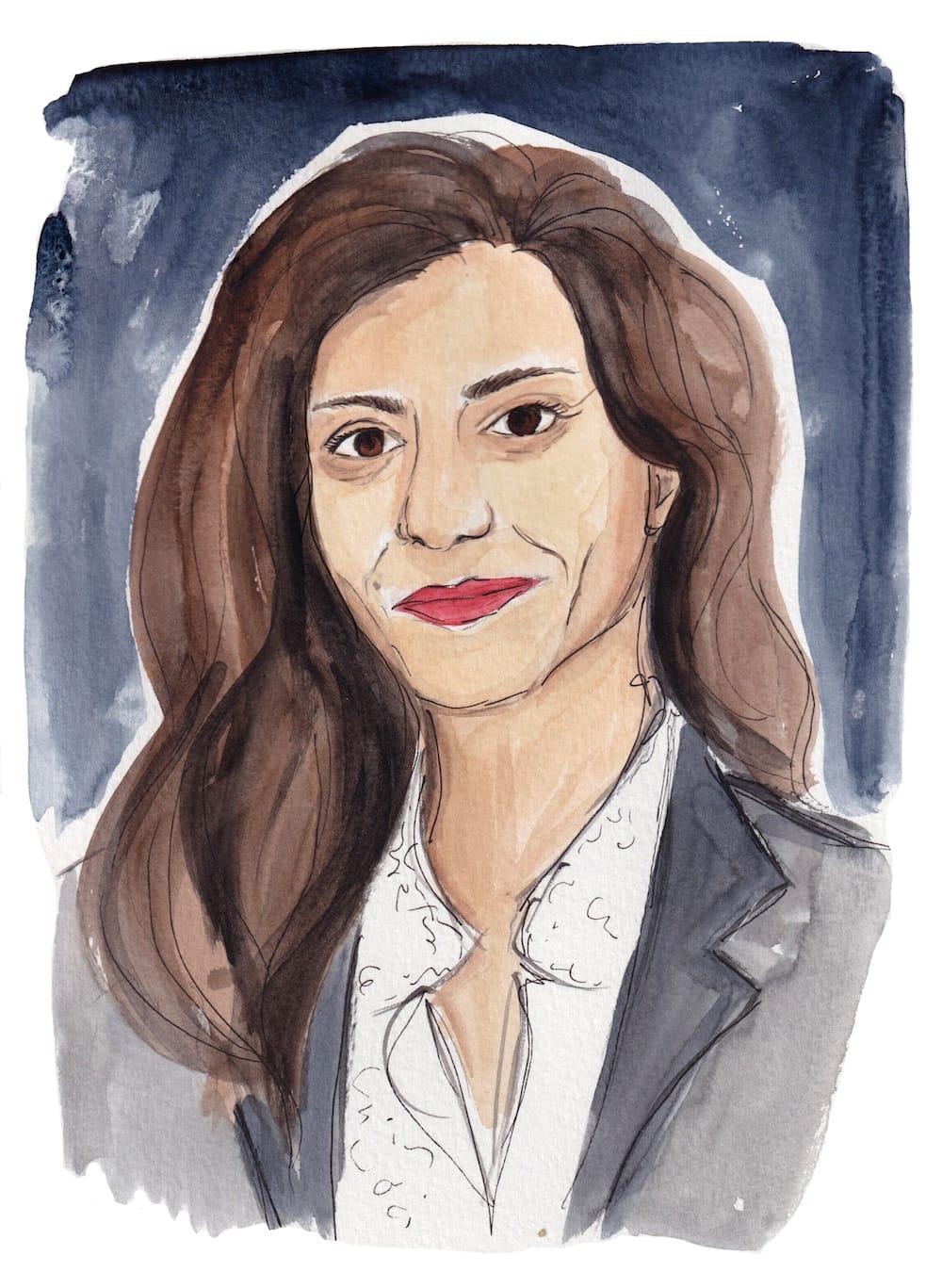
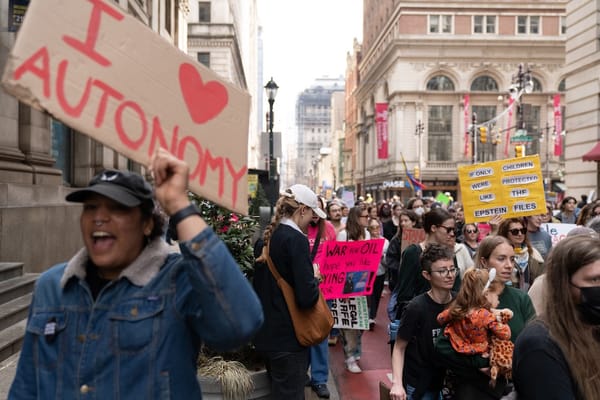
In 2022, when Iran’s women poured onto the streets in cities across Iran to protest the forced wearing of the hijab, they were met with extraordinary violence. Hundreds were killed when Iranian authorities opened fire on the protesters, some of them teenage girls. Those who were detained were subjected to violent abuse including rape, UN investigators found.
The monthslong protests were sparked by the death in custody of Mahsa Amini, a young Kurdish woman detained by Iran’s so-called “morality police” for violating the dress code. The code was imposed on all women by the Islamist regime that took power after the shah was deposed in 1979, and Iranian women have pushed back against it for decades. With extraordinary courage, after Amini’s death women took to the streets in their thousands, setting their headscarves on fire and calling for the overthrow of the Islamic Republic under the slogan Women, Life, Freedom. By the end, at least 500 were dead.
At first glance, it appeared the Women Life Freedom movement had been comprehensively crushed. But in the months and years that followed, a remarkable thing happened: Women across Iran simply stopped covering their heads, with few repercussions. It was an act of quiet rebellion and an important victory against a regime that had sought to silence and repress women for decades.
Since January, that delicate progress has been shattered. The situation in the Middle East now is both terrifying and confusing. What started with Donald Trump pledging U.S. help to those who had come out onto the streets in a fresh wave of anti-government protests that was also violently crushed has escalated into a conflict that has engulfed the broader region. Since the strikes on February 28, America and Israel have pounded Iran with bombs daily, taking out the supreme leader, Ali Khamenei, and many of his top officials. Iran has retaliated strongly, bombing Israel and a host of countries seen as allies of the U.S.
Hundreds of innocent civilians have been killed, most of them Iranian. A girls' school was hit with the reported loss of more than 150 lives. Another bomb hit a gym, reportedly killing 20 women volleyball players. The situation is evolving rapidly: late on Sunday 8 March, Iran said Ali’s son, Mojtaba Khamenei would succeed his father as supreme leader, the choice of a hardline cleric a clear signal that the regime intends to continue its autocratic, illiberal rule. That night, videos of women shouting “death to Mojtaba” from the windows of high-rises in Iran appeared on social media. Two days later, five members of Iran’s women’s football team were given asylum in Australia after declining to sing their national anthem ahead of an Asian Cup match last week, echoing a similar protest by the men’s team in 2022 in solidarity with the Women, Life, Freedom movement.
But with communications cut off inside Iran and media access limited, it’s hard to know just how bad things are, or what’s going through the minds of Iranians.
To try to make sense of what’s happening, we turned to Sanam Naraghi Anderlini, a British-Iranian writer and peace advocate who specializes in women-led peace movements. She’s the founder and chief executive of the International Civil Society Action Network, a non-profit organization that supports female peace activists around the world, and author of the book “Women Building Peace: What They Do, Why It Matters.”
Broadly speaking, Anderlini argues against any efforts to impose regime change on Iran militarily, saying it goes against the spirit of the Women, Life, Freedom movement that emerged in 2022. She spoke with The Persistent about the U.S. and Israeli bombing campaign, the recent anti-government protests, and the effectiveness of the Iranian people’s resistance.
Our conversation has been condensed and lightly edited.
 Xanthe Scharff
Let’s start with some background: Tell us about the significance of the Women, Life, Freedom protests, and how that spirit fed into the recent January protests.
Women, Life, Freedom was an extraordinary moment in Iranian history, but also global history, because it was a women-led mass protest movement that was for democracy and for freedom. It wasn't women protesting just for women's rights. Men stood shoulder to shoulder with them, and it was deeply, intrinsically feminist in the sense that it was nonviolent and inclusive of everybody – across the country, different age groups, rich and poor. The slogans were “Women, Life, Freedom” and “Men, Nation, Development.” The non-violence aspect of it was really important, because you're dealing with a state that has used the tools of violence and oppression for 47 years and three generations of women have borne the brunt of that.
When the Islamists came into power in 1979, they imposed the mandatory hijab on women and in the first decade this meant long black coats, headscarves with no hair showing. Completely covered. The hijab was one of the key pillars of the identity of this regime as an Islamist state. So the question of how people pushed back against the hijab always became a question of challenging the state.
The question of how people pushed back against the hijab always became a question of challenging the state
And so what did Iranian women do? For three generations, literally inch by inch, the hijab would go from above your eyebrows to the middle of your forehead to the back of your head to, you know, showing your hair. It was little by little. Women were challenging the state, and many were paying the price - they were arrested, they were beaten, they were fined. There would be lashes with whips. But the progress was consistent.
The symbol of the hijab became the key challenge, and when protests broke out in 2022 the regime cracked down. Over 500 people were killed, girls were sexually assaulted and raped in prisons; there was really horrific violence. Within weeks of the protests stopping, people were walking down the streets in Iran without the hijab. We see the regime actually backing down. And four years on, more and more, wearing the hijab is a question of choice.
Growing up in Iran in the 1970s, we had a poem in our schoolbooks about a little spring trickling down a mountain. It hits a big rock, and it says to the rock, “can you move aside?” And the rock says, “no.” So the spring says “OK,” and it just keeps trickling, and it erodes the rock and becomes a river.
It’s like you have two languages and the state’s language of violence was countered by the movement. Women, Life, Freedom was a language of non-violence, a language of positive hope, a language of inclusivity against a language of violence. And the state ultimately didn't know what to do with it.
What happened to spark the latest protests in January?
Since 2017 there has been a policy of maximum pressure imposed by the U.S. that has squeezed the regime, but also squeezed ordinary people. Economic sanctions were actually meant to bring pain to people so that there would be an uprising. Fast forward to 2025, and the economic situation was really dire. And the more sanctions you have, the more there is room for corruption. You have massive corruption, massive inequality, and then these protests, which were quite extensive, but peaceful.
Meanwhile, Reza Pahlavi [the U.S.-based son of the former shah of Iran, who called for protesters to come out against the government in January], in Virginia, is a real proponent of this maximum pressure strategy. Pahlavi is saying he wants secular democracy and he wants to be a transitional leader. But he created a binary framing—you’re either with us or you’re against us. He is not the only opposition voice, but he’s had significant resources put behind him. It’s hard to know how much traction he has inside Iran.
[Ali Khamenei’s son] is reviled by Iranians and would never have been given this role in other circumstances
Where are the Iranian women who protested in 2022 now? Where do they fit into this?
Most of them are still in Iran. They have been leading the call for change in Iran forever, but they've kind of been sidelined and muted by this more militant [opposition] voice that has come out subsequently.
The appointment of [Ali Khamenei’s] son as the new supreme leader is an attempt to project continuity; he is reviled by Iranians and would never have been given this role in other circumstances. So now you've got the hard line really entrenching itself, and the question is, how do we come out of this with a democratic space, or a transitional type of government?
 Claire Cozens
What do you think should happen next?
I’m deeply worried about the pace and scale of escalation. I would like to see guardrails around the type of weapons used and the targets. It’s an illegal war, there are also war crimes being committed. It’s incredibly frightening. Ideally what I would want is a ceasefire, but I see no appetite from the major partners for that right now.
In my work internationally we’ve always said it’s important that when these types of negotiations begin to happen, there is a real effort made to include the voices of women who are active and hoping for a more pluralistic society. It’s also for sustainability, this is the best thing that you can do.
When wars happen, democracy and human rights are the first casualties. What I really worry about is what we did with Afghanistan, where America pulled out and just left. Iran is different, it’s more educated, the cultural demand for openness is greater. But people are paying a really high price now. And it would be devastating to leave them in a far worse situation with no hope.
Give the people the power and the space and the economic means to change things. They really were changing it from within.