Burnout, Fear, Fatigue: A Survey Details Nurses’ Mental Health Crisis
As New York City nurses strike, the depth and breadth of the profession’s mental health crisis is reflected in a new study.

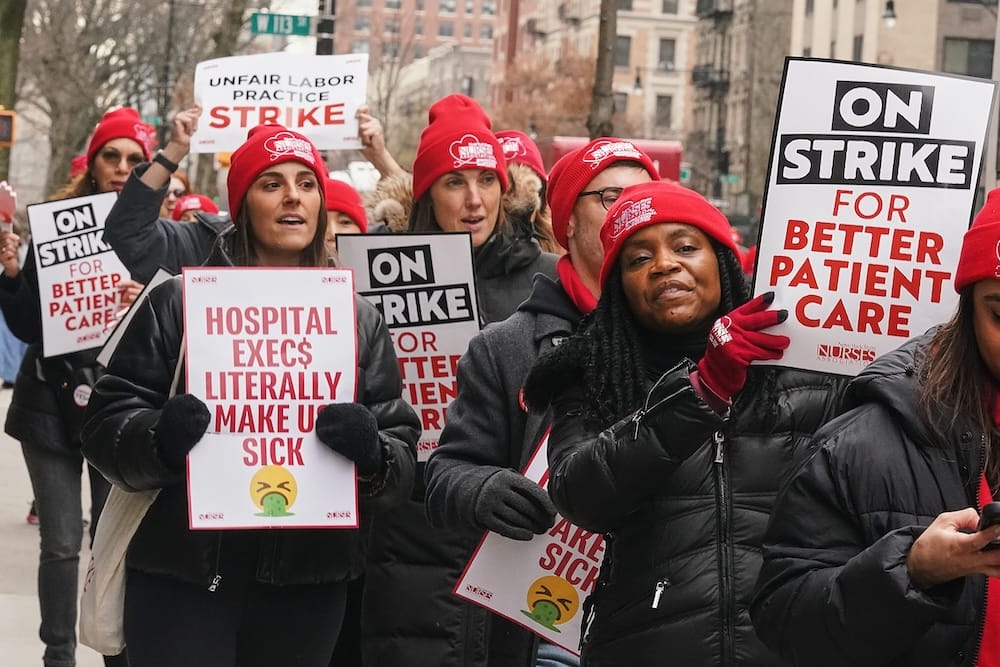
In New York City this week, almost 15,000 nurses have gone on strike, demanding more robust staffing, higher pay and more security at hospital entrances to reduce workplace violence. According to The New York Times, the nurses are also pushing for job security guarantees as hospitals expand the use of artificial intelligence.
This is the biggest nursing strike in the city in decades, and new research casts a light on why: A mental health crisis is engulfing the profession—one that is still overwhelmingly dominated by women.
The national survey of 1,000 registered nurses, conducted last year and published earlier this month by Joyce University in Utah, shows that 74% of nurses feel emotionally drained from work multiple times each week. Fifty-five percent of nurses said they regularly skipped meals or breaks because they were too busy to eat or rest; 47% have trouble sleeping most or all nights due to work stress; and 53% have seriously considered leaving the nursing profession at least once a month.
Among Gen Z nurses—the newest and often youngest entrants to the workforce—a quarter say that while they have access to employer-provided mental-health resources, they choose not to use them because they’re concerned about confidentiality and potential career repercussions.
Also extremely concerning: Nearly half of those surveyed—49%—said that they had been worried, once a week or more, that they might make a medication error or other mistake due to fatigue or being overwhelmed. A similar proportion—49.5%—said that they had felt unsafe due to verbal or physical aggression from a patient or a patient’s family member in the past year.
According to the American Association of Colleges of Nursing, nursing is the nation's largest healthcare profession, with nearly 4.7 million registered nurses across the country. As of 2022, almost 9 out of 10 registered nurses were women. Nurses also comprise one of the largest segments of the U.S. workforce, but for years, hospitals have been warning of a staffing shortage that could exacerbate work loads. Federal projections from late last year show that the U.S. will be short nearly 109,000 full-time nurses by 2028.
 Josie Cox