'There’s Always Something to Say'—Indian Women on Breaking Into the Rap World
Men might dominate the rap scene in India, but women there are taking the art form to new levels.

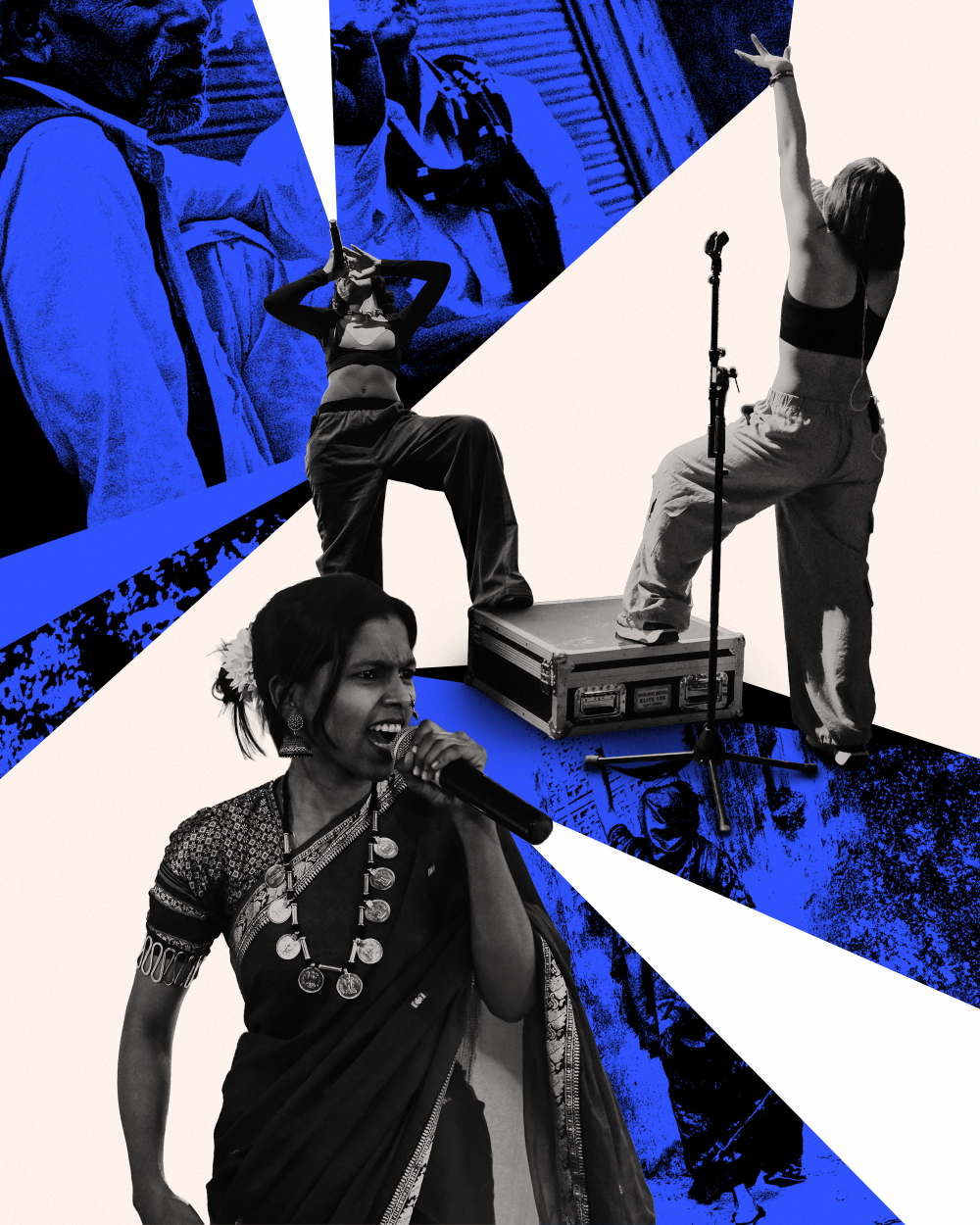
One of Madhura Ghane’s most vivid childhood memories is how her grandmother used to sing her folk songs. Although she was too young to fully understand them, the power of the words stayed with her, even when her family moved from her native village in Maharashtra in rural India to the city of Kalyan, near Mumbai. They have shaped her life ever since.
In college, Ghane, now 28, began writing her own poetry, and in 2019, she was inspired to write her first rap song, in response to a mass protest against new farming laws seen as threatening India’s age-old agrarian traditions. “I uploaded that first song on my social media account. It had only a few verses and at that time I didn’t have much of a following. However, my friends and family really appreciated my work,” she told The Satyashodhak, an Indian newsletter. Yet it was moving back to her ancestral village during the pandemic that inspired Ghane to write what she considers to be her best rap song to date, Jungle Cha Raja.
You wave the flag of progress
I raise nature with pride
…We rule the forest
The true guardian of the land
Trained (and still working) as an engineer, the contrast between Ghane’s city and country life could scarcely have been more marked. It inspired Ghane, also known by her rap name Mahi G., to write a song about the crucial role played by her people, the Adivasis, an indigenous tribe, in protecting the region’s dwindling forests.
They call us backward
development left us behind
No hunger for cities,
just the village on our mind
“Returning to live within the tribal community, the experience of that lifestyle, the culture in harmony with the forest, the water, the land, and even the struggles, it instilled a strong appreciation for my roots,” Ghane says.
Her video of Jungle Cha Raja, which shows the people of Ghane’s community herding livestock, gathering food and performing traditional dances in traditional dress, was produced by Rapboss, a rap artist with tribal roots. “He has helped me throughout my music journey and brought my vision and words to a much wider audience,” she said. Indeed, the rap song has garnered millions of views collectively on YouTube, Instagram and other social media platforms.
The song’s success prompted a commission from Greenpeace India for World Environment Day earlier this year. The result was Heatwave, which addresses the impact of global warming on the millions of Indians who work outdoors. “Heatwaves aren’t just a weather update,” Ghane told Greenpeace India. “They’re a daily reality for millions who work under the sun, with no protection, no spotlight. This wasn’t about making a song. It was about amplifying voices that are constantly ignored.”
His back burns in the kilns,
his blood boils in the scorching sun
The one whose sweat built your house,
he himself wanders homeless
 Josie Cox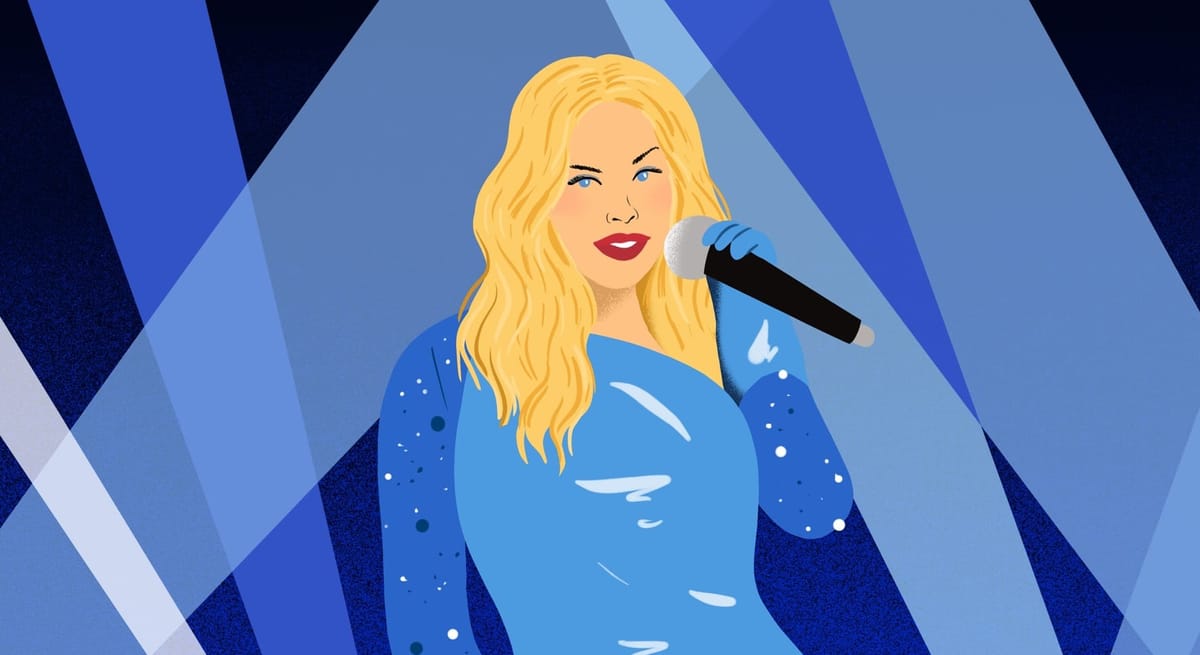
A long history of the spoken word
Hip hop and rap originated in the Bronx in the 1970s among the Black community. Yet it makes sense that it has found a growing audience in India, which has a long history of spoken-word poetry. But it wasn’t until 2019 that the genre was pushed into the mainstream by the popular Bollywood movie “Gully Boy,” about a kid from a Mumbai slum who dreams of rap stardom.
A few years on, while men still dominate the hip-hop charts, India’s female rappers are gaining a different kind of traction through songs that address questions of identity, the environmental crisis and women’s safety.
In 2022, the 20-something rapper Srishti Tawade gripped music fans with her appearance on India’s popular reality TV contest Hustle 2.0, performing Chill Kinda Guy.
I'm a chill kinda guy
Dariya-dil kinda guy
Got a self-esteem
Hard to kill kinda guy
A chill kinda guy
Tawade raps in multiple Indian languages on topics including religious tolerance, a hot-button issue and one that is under threat from India’s Hindu nationalist government. Although Tawade didn’t win, the show put her on the map and helped bring Indian women rappers to the fore.
“India's women rappers [speak] about issues that directly affect them,” says Yatindra Ingle, who is an expert in hip-hop studies, media and cultural theory, as well as contemporary youth movements.
“Women not only rap about the gender issues they face, but also about their communities and other social issues related to their identities,” he said.
Centuries of patriarchy
Ingle gives the example of Saniya MQ, a 19-year-old from a poor neighborhood in Mumbai, who raps wearing a hijab, using her art to highlight gender inequality and poverty.
In one song, Saniya raps in Hindi about the “centuries of patriarchy” that have imposed limitations on women; in another, she poses as a teacher lecturing a class about India’s history of religious tolerance.
Those who once walked with heads bowed
have now raised their heads high.
What can you do now, O world,
they will do as they please.
Yesterday their hands trembled,
today their pens speak.
“At first, she faced a lot of resistance to her rapping,” says Ingle. People told Saniya’s mother that she should stop her daughter from making videos; she was also criticized within her community for making music that is deemed haram, or un-Islamic. “But,” says Ingle, “she continued, even rapping about society’s perceptions towards her.”
 Josie Cox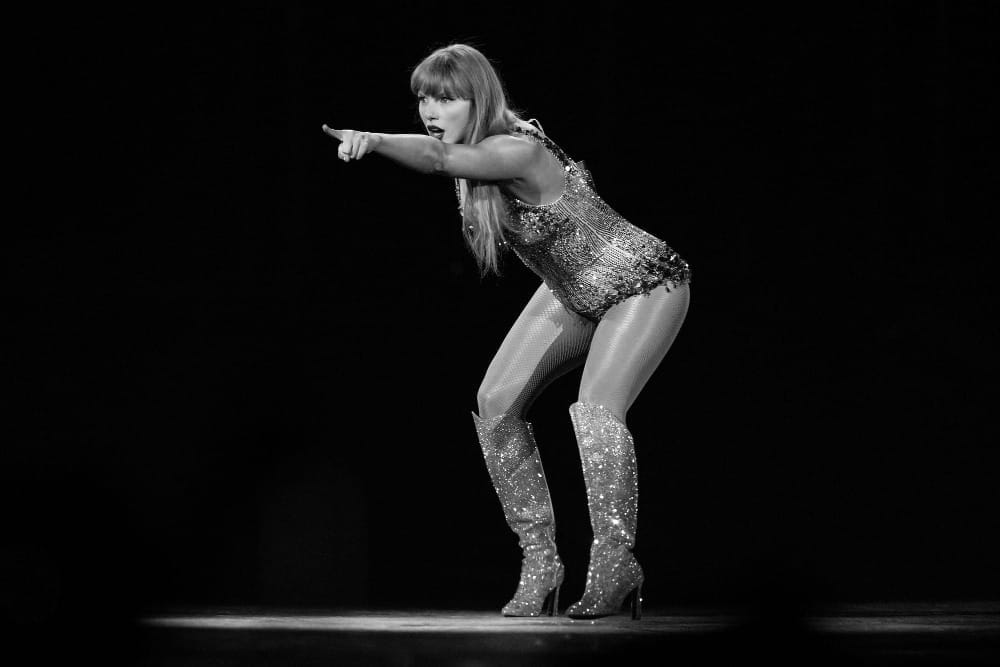
Many messages, many languages
India’s women rappers reflect the vast cultural and linguistic diversity in a country with 1.4 billion people. Many artists use a combination of English and their native language, reflecting the speech patterns of their audiences.
Ghane plays with language to shed light on issues close to her heart. Recently, she wrote a rap about India’s transgender community, known as hijras, in Hindi instead of in her native Marathi language, so that it would reach a wider audience and raise awareness.
I haven’t seen childhood
I have seen hustle
My helplessness
I used to beg for food
The rap artist Daiaphi Lamare, who goes by the stage name, Reble, raps in a mix of English and Jaintia, one of the local languages of her native city of Shillong, located in the mountains of northeast India. The region has a strong music tradition and a distinctive culture that both mark it out from the rest of the country and create separatist tensions that have at times turned violent.
In the video for her song “Terror,” Lamare, against a stunning mountain backdrop and in the traditional dress of the area, is alternately flanked by two men carrying swords, then seen running through a forest in modern military fatigues carrying a machine gun.
I come from the land of the abyss,
In a place, where the suns rise against the rain and the storms…
In an interview with The Persistent, she said her roots are important, “but my music is shaped more by my upbringing than my heritage—the environment I grew up in, my family, the people around me, and my experiences as a child and teenager—these are what define my sound,” she said. “Those moments and memories make me who I am and fuel the stories I tell through my music.”
 Anmol Irfan
Untapped potential
Despite how far women rappers have come in India, societal expectations still make it a tough place for them to succeed. As Ingle said, “Not many families would want to see their daughters as rap artists.”
But for Reble, at least, the lack of women in rap represents an opportunity.
“There’s so much untapped potential. I believe more women should step up and make rap music,” she said. “You can rap about the good life, the struggles, relationships, or anything else that matters to you. That’s the beauty of it. There’s always something to say, and rap gives you the outlet to say it.”
As for Ghane, she’s back in the city, still doing her day job as an engineer at a multinational firm. Being a woman in the music industry is hard enough, she said; making it in hip-hop sub-culture is harder.
Does that mean it’s not worth trying? It does not. “What’s always fascinating to me,” she says, “is how rappers can take a very big story and tell it in a few words.”
Want to hear for yourself? Listen to The Persistent’s Indian Women Rappers Playlist on Spotify.