This Bill in the Senate Could Disenfranchise Millions of Women Voters
Trump has renewed pressure for the Senate to pass the SAVE Act, which requires proof of citizenship to vote. For the 69 million women who have changed their last name, this would create a barrier to voting.

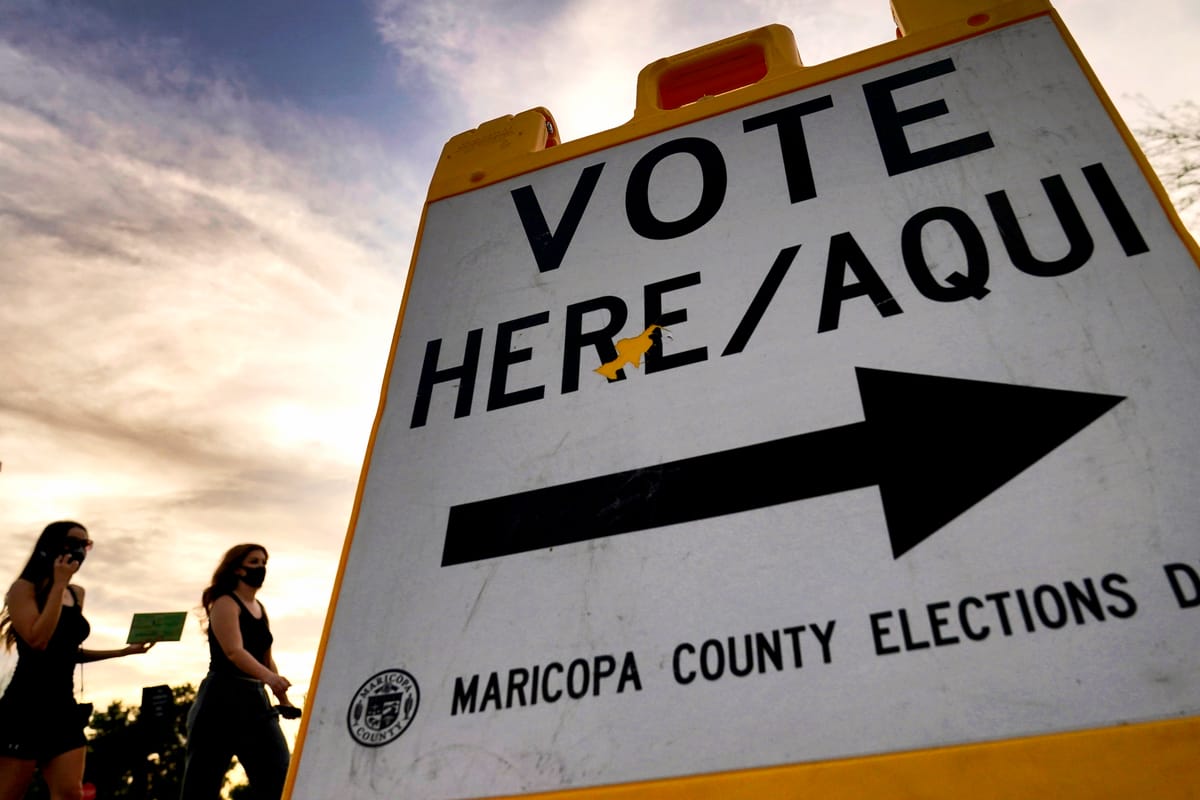
Wherever you stand on the political spectrum, the strongest way to make your voice heard is at the voting booth. Yet amid all the turmoil and horror playing out in the streets across the country right now, there’s a quieter, just as insidious plan that could disenfranchise millions of Americans (particularly women) come the November midterm elections.
The misleadingly named Safeguard American Voter Eligibility (SAVE) Act, is a Republican-sponsored bill that passed in congress in April 2025. It’s sat in the Republican-majority Senate for months but Trump is now putting new pressure to pass it. If it does pass, it could silence millions of voters by creating new barriers to voter registration by requiring in-person proof of citizenship (a birth certificate or passport) that matches the voter’s legal name. Since around 84% of American women who marry take their husband’s last name or hyphenate their surname, this means that an estimated 69 million women may have a legal name that doesn’t match their birth certificate.
Given that less than half of Americans even have a passport, and about 4 million adult U.S. citizens do not have access to their birth certificate (or other documentary proof of citizenship), that means 21 million Americans could be turned away at the polls. Just as chilling: Given SAVE’s proposed requirement that these documents be presented in person, the bill poses a serious threat to online, mail-in and automatic voter registration, options used by millions of Americans.
Inconsistencies and ambiguities
Legal experts also worry that inconsistencies and ambiguities in the bill will lead to uneven enforcement across the country. “Will marriage certificates be accepted equally across all jurisdictions? We don’t know, because some marriage certificates have different types of information on them, depending on the jurisdiction,” Keesha Middlemass, a political science professor at Howard University told NPR. “ The disenfranchisement—we won't know about it until after the fact.”
The prospect of such a drastic change to voter registration coincides with President Trump’s push to suppress voters. Last month, the president repeatedly posted on social media to “DEMAND VOTER I.D.,” urging action on the bill and reiterating his debunked lies about the outcome of the 2020 election. Elon Musk echoed those calls on X, where “Pass the SAVE Act,” trended last week. Also last week, the right wing Tea Party Patriots Action group put out a call to its members to pressure the 17 Republican Senators who have not yet cosponsored the SAVE Act. This week Semafor reported that Trump had convinced the few Senate Republican holdouts to vote to pass the voter ID bill.
If the act does pass, the stakes are high. “We've had very close elections in the last three cycles, so if you reduce potential voters by 1% or 2% that could change the outcome of the election," Middlemass said.
What can you do now?
What can you do now to keep the right to vote free and fair for all? If your legal name doesn’t match your birth certificate or passport, you’ll need to request certified name change documentation like a marriage certificate or divorce decree and check with your home state’s secretary of state that both your voter registration and proof of citizenship are up to date. The site USA.gov—the official website of the U.S. General Services Administration—for now urges those who have changed their name to update their voter registration online or by mail.
There's no certainty the bill will pass in the Senate, but if it does, voters will need to get their ducks in a row in advance of election day, since processing these documents can take up to 12 weeks, or longer if states have a backlog of requests. In the meantime, you can sign the League of Women Voters petition to senators not to pass the SAVE Act, or call your senator directly.