More And More People Believe Women’s Equality Has Gone “Far Enough”
Gen Z men are most likely to believe “a wife should obey her husband”, a new survey shows—as the UN warns of global “backsliding”.

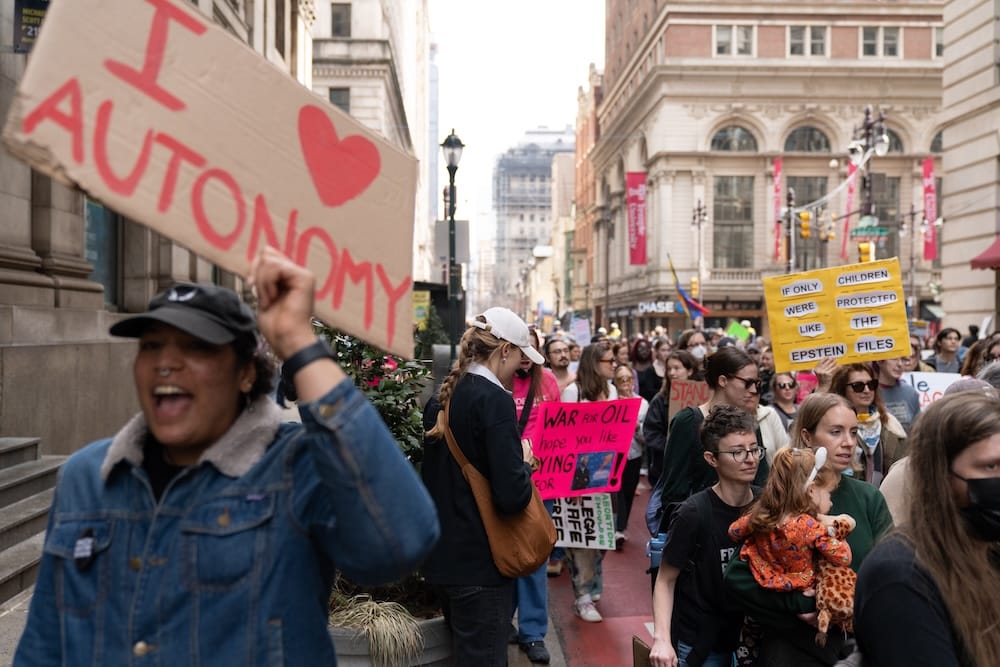
An increasing number of people around the world believe the fight for gender equality has “gone far enough” while Gen Z men are particularly staunch in their defense of traditional gender roles, despite evidence that women’s rights are eroding globally.
A new survey of more than 23,000 people across 29 countries, conducted by Ipsos in collaboration with the Global Institute for Women’s Leadership at King’s College London, found that 52% of respondents think that, when it comes to giving women equal rights with men, things have gone far enough in their country.
Ipsos conducts the survey annually. Of the 29 nations surveyed, 24 have consistently been included since 2019. Of those, 23 have—since 2019—seen an increase in people thinking things have gone too far. Spain is the only country in which the proportion has declined.
Responses this year varied by gender, with 54% of men across the 29 countries this year saying that they feel they are doing too much for gender equality, compared to 38% of women. There were stark differences by generation too. Gen Z men — or those born between 1996 and 2012 —were more likely than any other group to agree that “a wife should always obey her husband” and that “young men should try to be physically tough.”
The findings come against a backdrop of growing evidence showing that gender equality is under severe threat around the world.
“As the world navigates democratic backsliding, rising conflicts, economic pressures and shrinking of civic space, there is an increasingly organised pushback at gender equality and regression of women's rights,” Sarah Hendriks, UN Women’s director of policy, programme and intergovernmental division told reporters at a briefing in New York last week. “Justice systems do not stand apart from those pressures, they actually reflect them,” she added.
 Josie Cox
A 2025 report from the non-profit Women’s Refugee Commission, meanwhile, found that “recent actions by the Trump administration—its freeze on foreign assistance, its efforts to dismantle USAID, and its attacks on and withdrawals from United Nations institutions—is sending global efforts to protect women and girls, advance SDGs [sustainable development goals], and achieve gender equality into freefall.”
Violence against women has also increased in many parts of the world. In Afghanistan, for example, incidents have risen sharply since the Taliban returned to power in August 2021, spurred by the dismantling of legal protections, systemic restrictions on freedom, and deepening economic desperation. Countries including the U.K., South Africa, Canada, Australia and Brazil have declared violence against women a “pandemic,” “epidemic,” “national crisis” or “national emergency.” Earlier this month, a European Union-wide survey showed that physical and sexual violence affects roughly a third of women in the EU during their lifetime but most incidents go unreported.
The latest Ipsos research also found that more than four in 10 respondents—or 46%— say that men are being expected to do too much to support equality and that we have gone so far in promoting women’s equality that we’re discriminating against men.
 Claire Cozens