People Were Calling Me an Economist. And I Was Like, ‘Am I?’
In her book “The Double Tax,” the economist Anna Gifty Opoku-Agyeman explains why Black women pay more for their hair products and their homes, get paid less at work, and are underestimated at every turn.

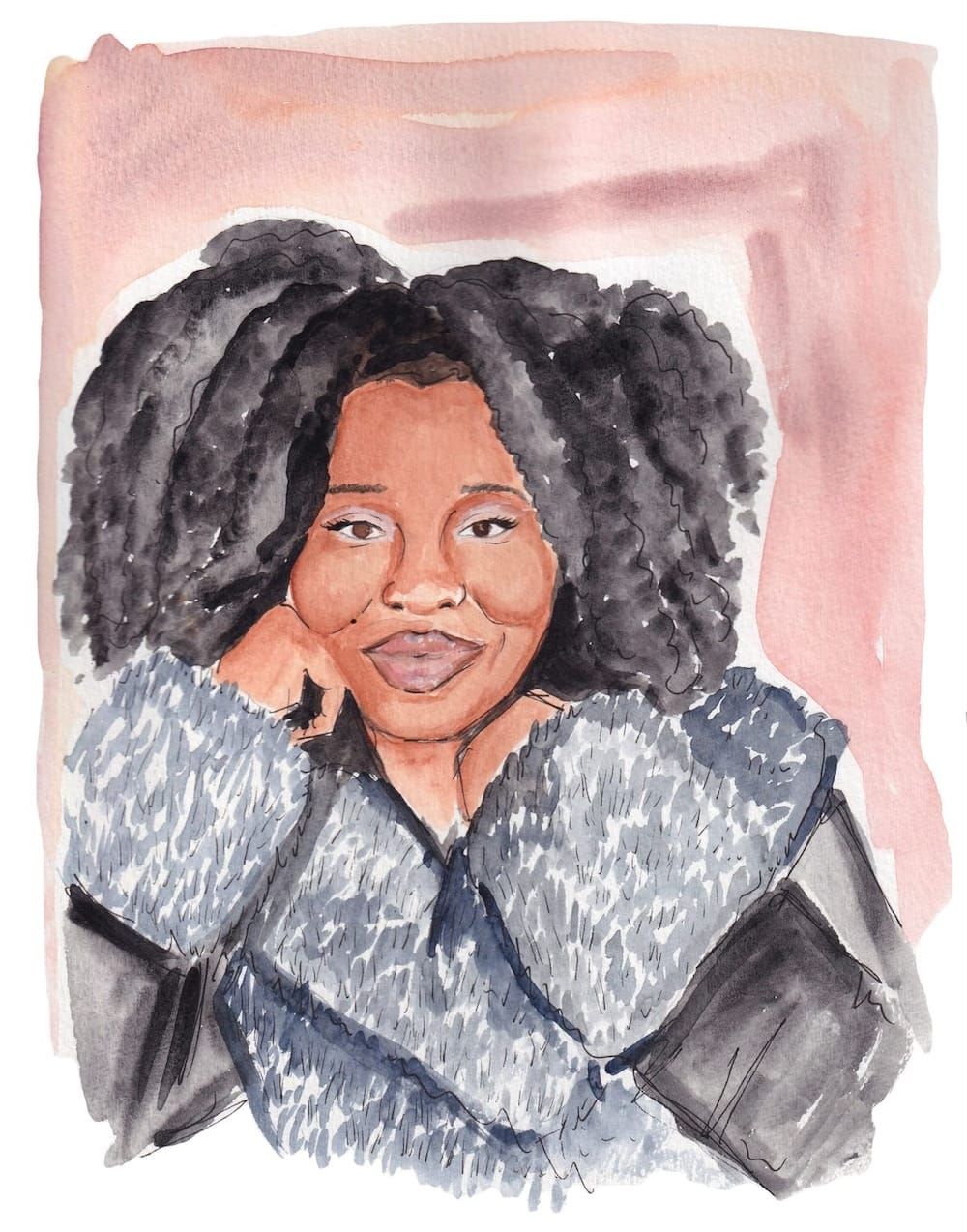
Who gets to be an economist? Technically, the path may be open to anyone, but actually walking that path is another matter altogether.
Anna Gifty Opoku-Agyeman, who graduated from college in 2019, was a student for whom numbers had just clicked. But when she floated the idea of pursuing math or economics by her professors, they weren’t exactly encouraging.
“I had older, white male professors tell me it was too hard. I had a math teacher say I asked too many questions in class. And I’m thinking: You don’t want an engaged student? I was asking questions and getting A’s!”
“I almost didn’t do economics,” she says.
No doubt, Opoku-Agyeman had the last laugh when she was invited to pursue her doctorate at the Harvard Kennedy School, focusing on economics and public policy.
But even once she was on the inside, it was challenging to “blast through people’s erroneous expectations ... by doing me, unapologetically” as she puts it.
Her experience at Harvard reflects a broader picture of economics and academia, and it’s bleak.
According to the American Economic Association, the total number of U.S. Black women who earned a Ph.D. in economics in 2024 was…three. Three! By comparison, the total number of economics Ph.D.s awarded to U.S. women of any background was 493. When you add men into the picture, that total number climbs to 1,408.
And still Opoku-Agyeman, who comes across as a relentless optimist, has plugged on — and thrived. She is no stranger to any of it. Indeed, she co-founded the Sadie Collective, a nonprofit focused on Black women’s underrepresentation in economics and related fields, all the way back in 2018.
Her first book, “The Black Agenda” (a collection of policy essays by Black scholars) came out in 2022. She published her second book, “The Double Tax: How Women of Color Are Overcharged and Underpaid” in 2025. In this book, she uses stories, charts and data (she is an economist after all), to show how life is more expensive for people — and most notably women — of color, not just in obvious ways, but also in countless hidden ways — all insidious, and all troubling.
“When I raise my hand in a seminar, sometimes everybody’s tense because they know I’m about to rock the boat. But those are the questions we need to ask.”
The questions we need to ask? Well, yes, exactly.
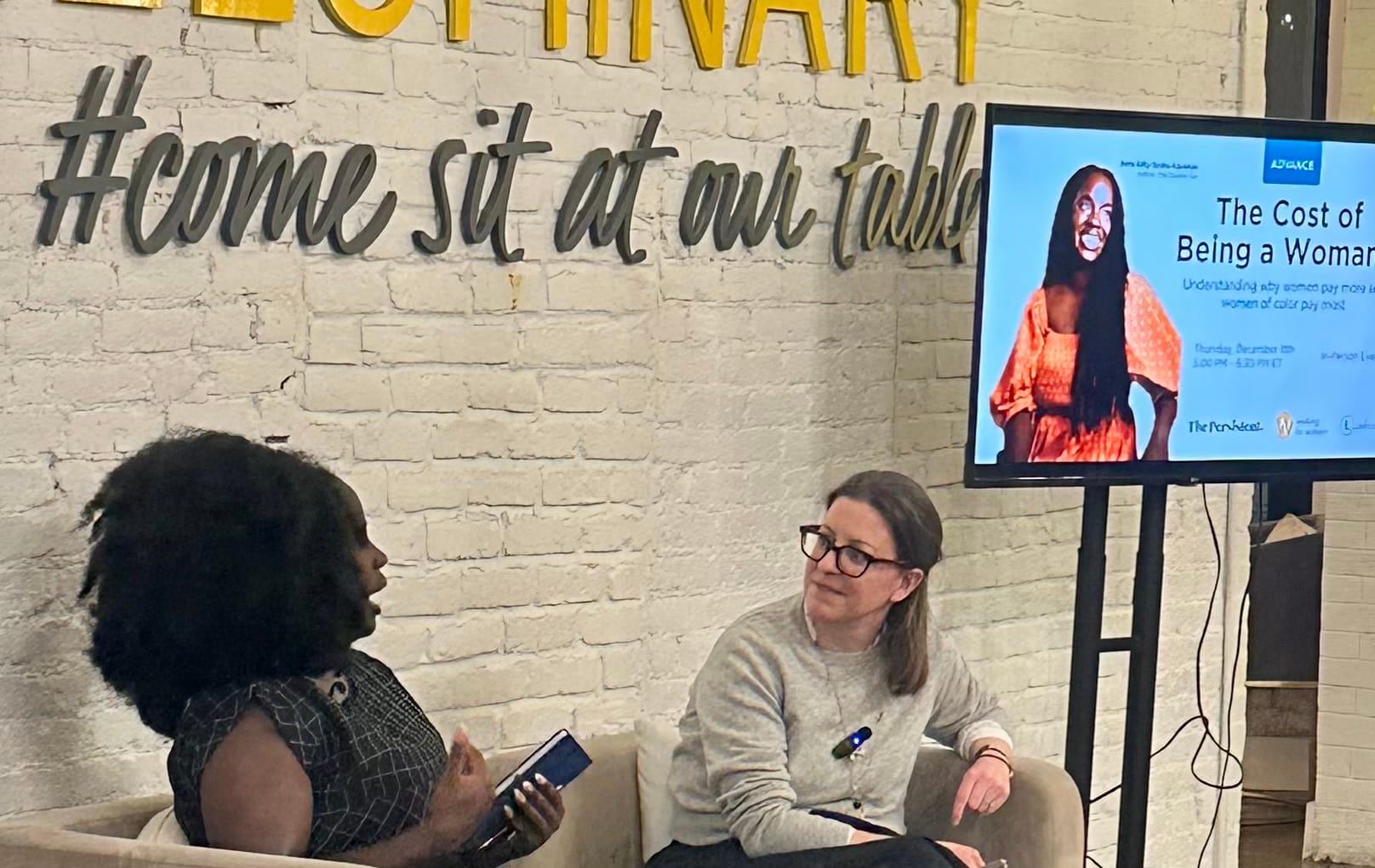
I interviewed Opoku-Agyeman at a live event hosted by Working for Women at Luminary, a coworking space and networking platform based in New York City. The interview below, which incorporates two audience questions, has been edited and condensed for clarity.
You describe yourself on the back cover of your book, “The Double Tax,” as a researcher. But let’s get real — you’re an economist. Aren’t you?
At the end of the European leg of the [book] tour, I realized people were calling me an economist. And I was like, “Am I?” I think there was a level of insecurity there, for some of the reasons I outline in this book — where you feel like you’re trying to hold your head above water and overcome people’s expectations and projections. And I allowed those expectations to limit how I saw myself.
By calling myself an economist, I’m owning my expertise. And I’m also infiltrating spaces [where people] don’t look like me. When you think about what an economist is you tend to think of a talking head on … CNBC. You don’t think of someone like me.
I gave an interview about my book at NBC, and I was thinking: There’s probably a young Black girl watching who will see it and think, wait—that’s what she does? I didn’t know I could do that.
Owning the title “economist” shifts how I see myself—and maybe how other people see themselves, too.
As a doctoral candidate at Harvard, it sounds almost like you had to defend your right to be there.
When I got into the Ph.D. program at Harvard, I had conversations with a couple of professors — all men. One man who was advising me said something I’ll never forget: “We almost didn’t accept you.” He said I was a “wild card.”
I didn’t fit the paradigm of what an economist looks like. I love fashion. I talk about pop culture and economics. People think that’s antithetical.
And they [weren’t convinced] I’d do academia; whether it was something I really wanted to do.
But I had mentors — like the Federal Reserve Governor Lisa Cook [whom Donald Trump tried to oust in August] — who showed me what’s possible. And now it’s bigger than me. Young people are watching.
Let’s level-set. Your book refers to the double tax, which is different from the pink tax. Explain.
The pink tax is when women are marketed the same products as men, but they’re up-charged for them. Go to any pharmacy and look at the razors — you’ll see it.
The double tax is the compounded cost of racism and sexism.
Take shampoo. A women’s product might be priced higher than a men’s product. But if you’re a Black woman, you might have to travel 45 minutes further to find shampoo that works for your hair — and even then there’s a chance it won’t be on the shelf. These daily costs become societal costs.
Can you explain how the “double tax” affects everyone?
[In the book], I argue that inequities [unequal policies] are perfected on the marginalized first — and then scaled [to everyone else]. They will reach [everyone] eventually.
Housing is a good example. Black women are more likely to face evictions than any other group. Our homeownership rates are lower than every other group. We’re targeted for predatory loans — sometimes even more as our incomes increase. People treat these issues like they’re “over there,” but now a huge portion of America is rent-burdened [because of these inequities]. If we addressed what was happening to the most impacted groups earlier, perhaps we wouldn’t be in a nationwide housing crisis.
Black women are a benchmark for progress — we’re a rising tide that lifts all boats. We sit at the center of a lot of overlapping identities: breadwinners, caregivers, highly educated, across income levels. So harm perfected on us hits others, too.
In your book you write about home ownership and how that hits Black people differently. Talk us through that.
If you’re a woman selling a home, you get about 2% less than you should. If you’re buying, you pay 2% more.
[But] if you’re Black, you face additional barriers: neighborhoods not wanting you; worse interest rates; appraisal problems. A huge percentage of appraisers are white — so how does value get assessed for Black-owned homes?
Black buyers may feel safer with Black real estate agents — but Black agents face bias in the industry, too. They’re advocating for clients while navigating the double tax themselves.
The data makes it clear: This country doesn’t want Black people to own homes.
Any other industries we see these imbalances play out?
The publishing industry, which is white. They’ll give huge [book] deals to a white guy for certain topics, but not to women, especially women of color. When we were marketing my book, my Black woman publicist and I were both dealing with the double tax, trying to access networks that aren’t built for us. Much of the major press I’ve gotten has come through Black women in the media.
Networks matter — and proximity to power matters. There’s an assumption that “If you just lean in, that’s enough.” Maybe for some people, but somebody has to let me into the building first.
We know that diverse teams perform better, but companies taking action in terms of hiring more diverse teams never seems to follow. What do we do about it?
Accountability works.
If you want to be a bigot in your bathtub, that’s your business. [But] the moment you step outside, I’m holding you accountable.
People aren’t [hiring] to be fair — they’re [doing it] to make money. But even when you present a business case, they may not believe it, because bias shapes their prior [beliefs] about who is “productive.”
My dissertation focuses on disrupting hiring discrimination. I start presentations with: This is illegal. We need accountability mechanisms.
There’s research showing that when women negotiate for their salary — and especially Black women — it can actually lead to a lower offer than the original. How do we overcome that?
First, we have to get over the idea that money is a dirty word. Silence is where power gets taken.
Second, we need tools beyond “just negotiate.”
Early in my career, an employer offered me a salary that was too low. The recruiter kept saying it was the highest they could go. I was ready to reject it. But a Black woman helped me by being transparent about what I should ask for. She told me: Take the offer and let me work behind the scenes. Two days later, the recruiter’s boss’s boss called and asked what number I wanted. That’s how much networks and pay transparency matter.
If we’re trying to raise the floor, we start there.