The Feminist Who Had a Face-Lift? That’s Me.
I’ve always believed that a woman should be able to do whatever she wants with her own body, so why couldn’t that include this?

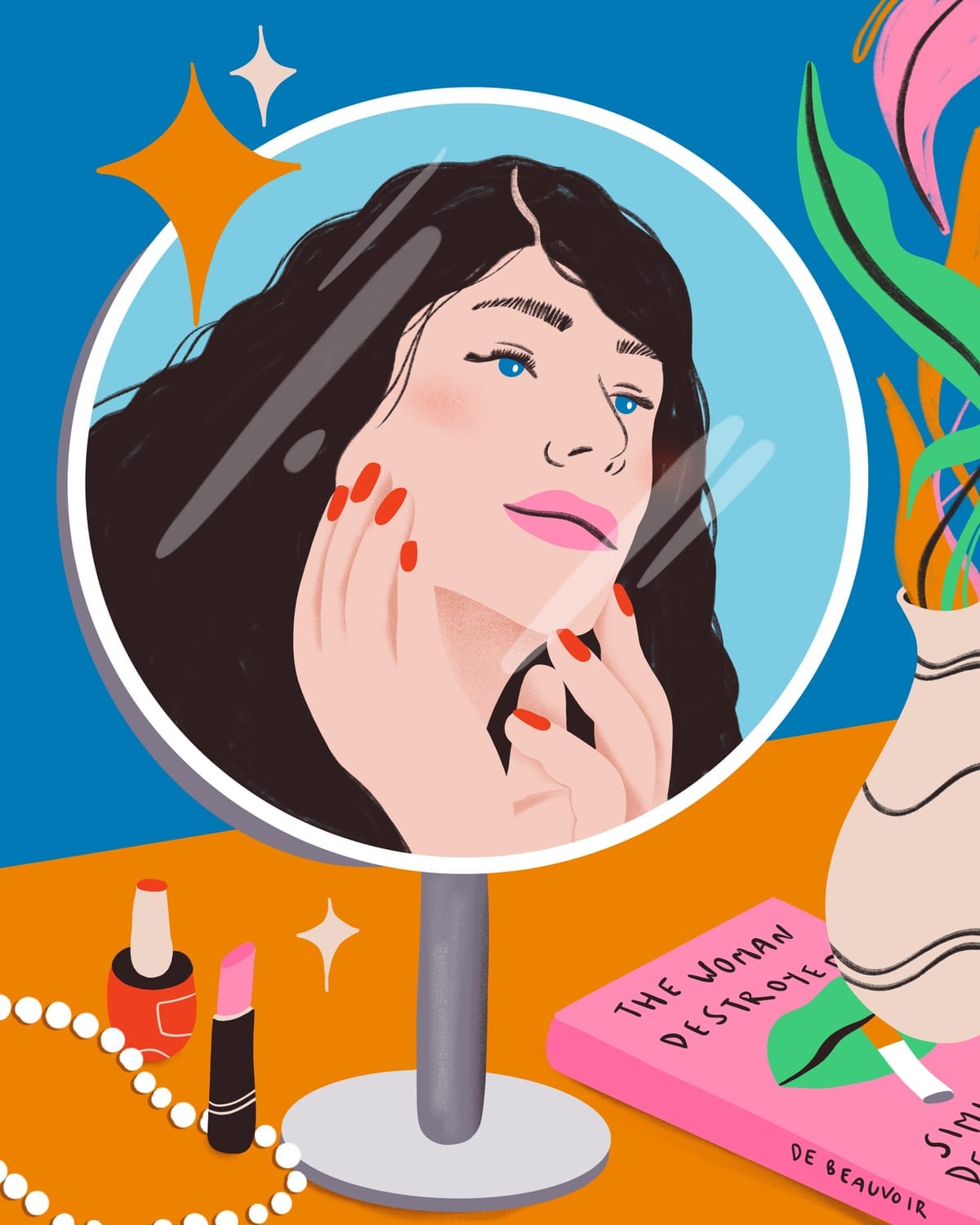
I am not a vain woman. I grew up in Colorado, where the look tended toward the rugged and natural, Levi’s and Chapstick. My mother was a ’70s-era feminist who rarely wore makeup except for an occasional swipe of brick-red lipstick before a party. I actively endorsed her opinion that our cultural standards of attractiveness were demeaning and oppressive. In high school, I competed in oratory with a speech railing against the American beauty culture. My first article for a national magazine was about cosmetic surgery gone horribly wrong.
Not surprisingly, all the way into my ’50s, I considered the idea of cosmetic surgery barbaric. I always told myself that I was happy my identity wasn’t based on good looks, but rather, on a sense of humor and smarts. Deep down, though, I wanted to be pretty.
Once, on a date, a guy told me that I was a “6 out of 10,” a ranking I accepted as the truth.
Once, on a date, a guy told me that I was a “6 out of 10,” a ranking I accepted as the truth. When I was single, I always played the wingwoman, friend-zoning myself to avoid the humiliation of premature rejection. And when a man was attracted to me, I felt overly grateful—so much so that I never stopped to ask myself whether I was attracted back, or even whether I liked him.
Tamping down my inner beauty
At a certain point, though, I began to realize that the way I showed up in the world—plain-faced, unadorned, dressed for invisibility—was itself a type of oppression, one I imposed on myself. My authentic self is more colorful and sensual. I longed to be free to choose whatever makeup or clothes made me feel attractive, and if friends and lovers also liked how I looked, well, that was a bonus. Attraction, I finally learned—helped along by a lot of dance classes and a man who loves everything about me—is more about a person’s energy, physicality, and attitude than static, subjective appearance.
And yet, I never once thought of having plastic surgery. As the daughter of a doctor, I’d always been taught that unnecessary surgery equaled unnecessary risk. Plus, I was a feminist. Why would I risk surgery if I wasn’t trying to appease the male gaze?
Unless it was my gaze that was the problem.
 Emma Haslett
My face and my neck
Then came the pandemic and a pending 60th birthday, and my “this is me, deal with it” attitude began to wobble. Like many, I was spending a lot of time looking at my face on Zoom, and I became more critical of how I looked. Indeed, I noticed that I was developing the same turkey wattle under my neck that my father had. It was as if I’d grown a whole new appendage, one that seemed to shriek to the world that I was about to turn 60. But as someone who was still actively working and seeking new gigs, I worried that my neck broadcasted that I was getting tired.
As for my face, it seemed to be melting like a candle. When I looked in the mirror, I found myself doing that thing women my age do: Pulling the skin up from the sides to make everything tighter. Still, when a friend mentioned that she was having a face-lift, I thought that was ridiculous; I thought she looked great. But she was also a single mom with kids in private colleges, and now that she was in her ’50s, she felt that she needed every advantage to keep her high-paying corporate tech job. In her line of work, that was simply the reality. I was worried that she’d come out of it with that look that, rather than making you prettier, just screams that you can afford to have a lot of surgery. In fact, after disappearing for a month or so, she came back looking refreshed. You couldn’t tell that she’d had any work done, she just looked more like the version of herself I’d met a decade earlier.
But though I was tempted, I knew her face-lift had cost about $30,000, which was out of my budget. Yet I wondered: As part of a culture that seemed ever more youth oriented, could a face-lift be a reasonable investment after all?
Dipping a toe in
Then I thought about having the procedure done in Mexico. Fifteen years ago, I built a small house in San Miguel de Allende, a town where plastic surgery is more the norm among the expat retirees than not. Could I find a surgeon there who was as good as my friend’s doctor? I considered this, stroking my wattle.
Just for the hell of it, I started researching surgeons in Mexico. I had a few requirements, the most important being that they had to be certified by the International Board for Certification in Facial Plastic and Reconstructive Surgery or the International Board of Aesthetic Medicine and Surgery. That narrowed things down quite a bit. Website photos also revealed a lot: Some featured women who were young, beautiful and made-up; others, women who looked real, like me. (I preferred the latter.) I also wanted to know if they did modern deep plane surgery (where the muscles are tightened up under the skin, producing a more natural result) or the old-school stretch-the-drumskin method.
“My main goal is to make you look natural,” she said.
I went on to interview three doctors, two men and one woman who were highly qualified and specialized in face-lifts. The two male surgeons were arrogant; both treated me as if I wasn’t really worth their time, maybe because I wouldn’t make a stellar “after” photo for their websites. The female surgeon was relaxed, looked to be in her ‘50s, and had a natural look herself. I told her I wanted to get rid of my sagging neck and some of my facial droop. She cautioned that she wasn’t going to make me “hermosa,” just more like myself. I liked that the photos of patients on her website looked like people I could be friends with, not glamour queens. “My main goal is to make you look natural,” she said, then gave me detailed information about the procedure and recovery time.
I liked the notion of being in the hands of a female surgeon, with a woman’s idea of improvements. Her rates were also reasonable, around $8500 to $10,000 once I added in the plane ticket and price of the recovery apartment. It was less than half of what my friend had paid, and everything was included. Still, the whole idea of a face-lift felt off-brand for me. Then again, I’d spent a lifetime feeling semi-apologetic about my looks. Wasn’t I entitled to give myself a psychological and physical boost? I’ve always believed that a woman should be able to do whatever she wants with her own body, so why couldn’t that include this?
 Emma Haslett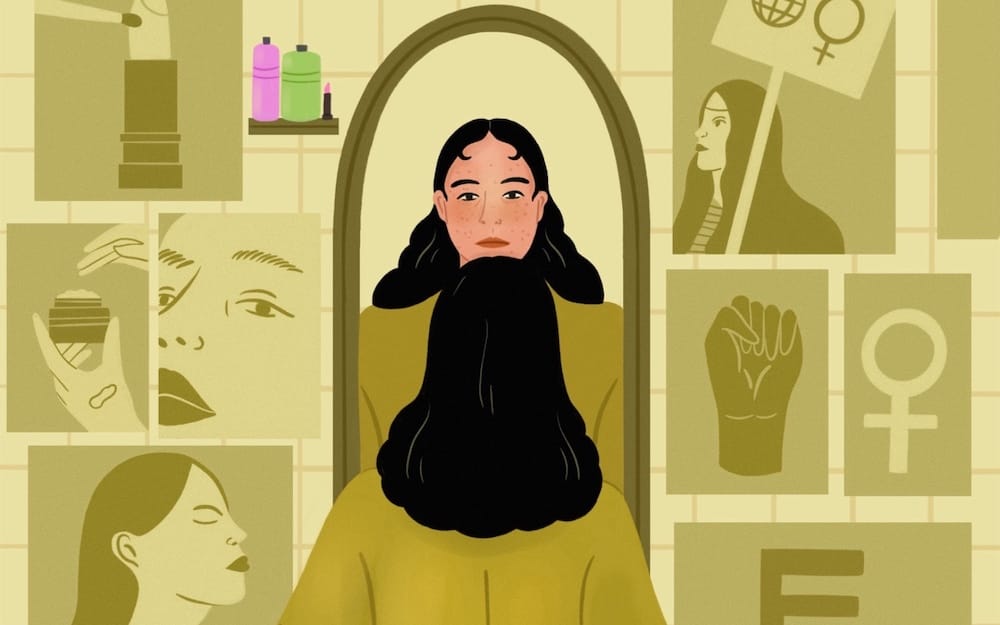
Decision time
Reader, I went for it. Within a couple months of my consultation with the surgeon, I was flying to Guadalajara for the procedure. The general hospital, ranked among the best in Mexico, was uber-modern, and the nurses were attentive and efficient. That I spoke fluent Spanish made the situation easier, though my doctor also had an international coordinator on tap for patients who spoke only English. The night before I watched a movie, wished I was allowed a stiff drink to calm a few butterflies, and fell asleep. In the morning, I was wheeled off to the operating room, where I was under for seven hours. When I woke up in recovery, my head was bandaged like a papier-mâché pumpkin.
The aftermath was more intense than I had imagined. I wasn’t in a lot of pain, but my face and eyes were monstrously swollen; I couldn’t even read. After a night in the hospital, I was relieved to be picked up by a friendly couple who settled me into a “recovery house” for 10 days, gave me meals and checked in on me while I iced my face, took pain meds and listened to the entirety of “Middlemarch” on audio. After five days, I felt well enough to go walking at a mall (I couldn’t get sun on my face); but I was still so puffy that I felt conspicuous, even (or perhaps especially!) in a big hat and sunglasses.
After 10 days, I flew home to San Francisco. My husband, who had left the face-lift decision entirely to me, was initially alarmed at how beaten up I looked. He had always loved the way I looked but as time passed and I slowly healed, he called the results “amazing.” I also booked an appointment with a masseuse who specialized in post-surgery lymphatic massage. She told me that my surgeon had done “a beautiful job.”
By week six, I was ready to start being seen by the world. The first thing I did was to change my usual long bob for a multi-layered, sassy shag. When I began going out again, everyone noticed—the haircut.
“You look amazing,” they’d say. “I love your hair.”
It’s not that I was embarrassed about my decision, it’s just that I didn’t want to have to explain it to everyone.
I was relieved that I didn’t have to answer any questions. It’s not that I was embarrassed about my decision, it’s just that I didn’t want to have to explain it to everyone. When I confided to one long-time feminist friend on a walk, she said she was “gobsmacked.” I told her I hadn’t done it for anyone but myself, and that I felt great. I had a chin again.
A toxic stew of beauty standards
Other than the people I told—a dozen of my closest friends (and now, all you readers!), it’s not like I kept it a secret. It’s just that no one suspected. On the one hand, I didn’t want to have to justify anything. On the other, why should I care? Are we really supposed to keep looking young and fresh or at least like we’re “taking care” of ourselves—but not have plastic surgery?
The truth is, there’s no right answer as to how we should age. Maybe the best we can do is tune into our own gut feeling. You know mine. What’s yours?