I Was Raised to Be a 'Good Ghanaian Girl.' A Dive Into African Cultural History Set me Free
I was raised to be a good girl, which meant marrying a man and being a good wife and mother. I’m giving my daughter a different legacy.

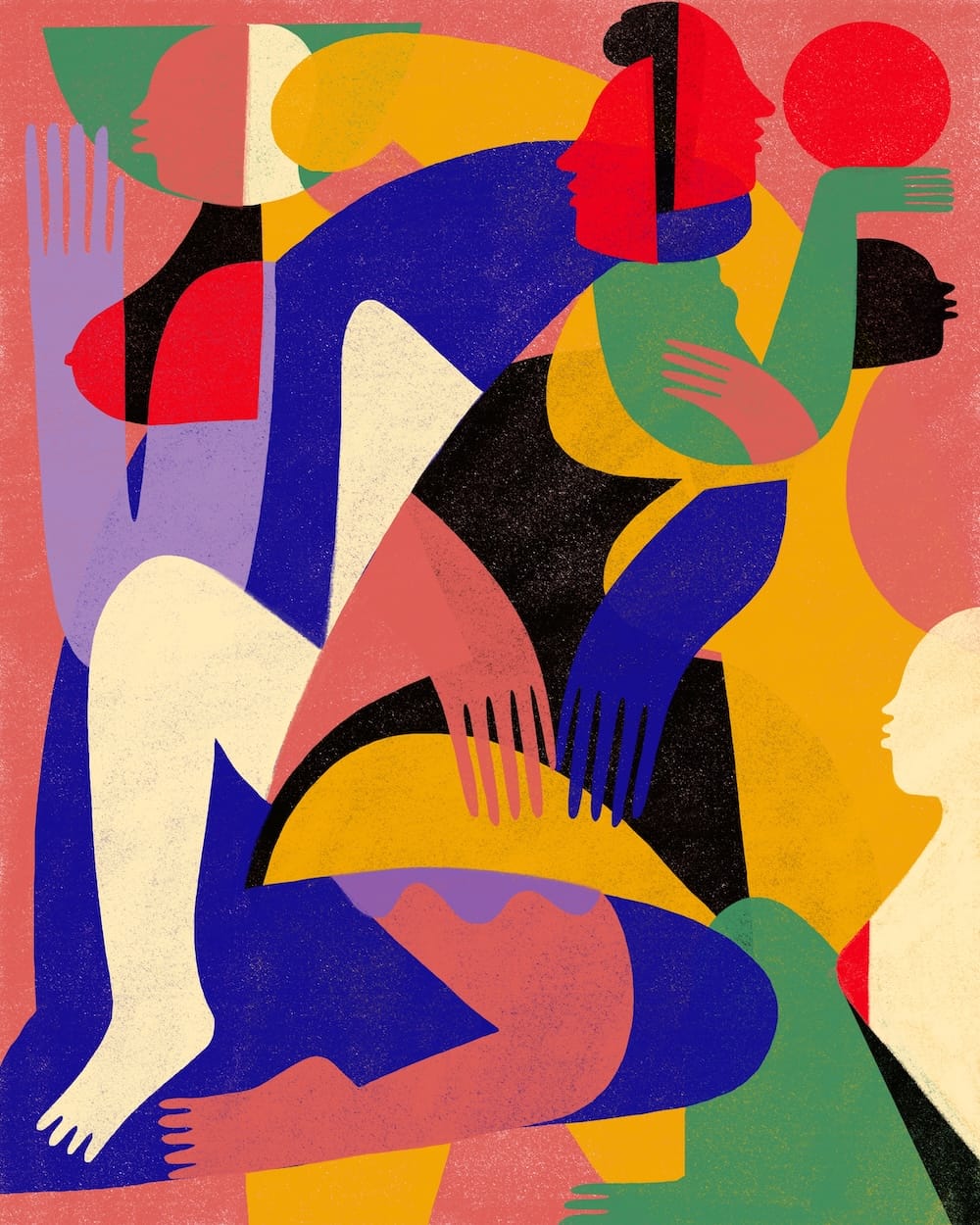
At the stroke of midnight on Jan. 6, 2009, I ran into the freezing Atlantic Ocean on the coast of Western Ghana, completely naked.
I was on a girls’ trip to celebrate my 30th birthday, and my sister-friends and I held hands as we sprinted, screaming into the shock-cold of the deep blue sea. I was newly divorced, and in the process of shedding a version of myself that had been stifled by the weight of respectability politics. Now, I look back and recognize that moment as my rebirth.
I come from Ghana, a country where girls are raised to be nurturers, with our value measured by how we care for the men in our life. We are also raised to be heterosexual—a legacy of British colonization—which codified homosexuality as “unnatural carnal knowledge.” While some African countries like Mozambique, Botswana, and Angola have taken steps to roll back homophobic colonial era laws, politicians in Ghana have sought to do the inverse, arguing that “homosexuality is un-African.”
For most of my 20s, I was still very much wedded to the idea of being a “Good Ghanaian Girl.” This, in spite of my introduction to radical African American feminist thought while I was at university in London, where I read bell hooks, Alice Walker and Michelle Wallace. Eventually, I found my way to Ama Ata Aidoo—an African feminist from my own country. In her book “Changes,” her portrayal of Esi, a gender non-conforming Ghanaian woman who chooses to leave her violent husband, made me feel that I, too, could chart my own course—though it would take me a decade to actually do so.
Shedding the shackles of respectability
My 30s marked what I now fondly refer to as my “ho phase.” By then, I had consciously chosen to shed the shackles of respectability, gotten divorced and was now free to explore my sexuality with people of all genders. Along with the writer Malaka Grant, I started a blog, now a podcast (hello, 2026!) called “Adventures from the Bedrooms of African Women.” As we reached hundreds, then thousands of readers across the African diaspora, the U.S., and Europe, it became clear we were onto something.
Soon, readers started sending me private messages, sharing their own intimate stories. The notes gave me a window onto all the wild, funny, and sometimes heartbreaking experiences that women were encountering in their pursuit of love, and sex. With the writers’ permission, up they went on the blog.
Beyond the stereotypes of African women’s sexuality
But the blog didn’t feel like enough. I wanted the whole world to know that African women’s experiences of sexuality went way beyond what I saw portrayed in Western media – which was largely confined to women who had been cut and no longer had access to pleasure; or women who were miserable with multiple children; or who were dying from HIV/AIDS. I wanted people to know that our stories were as vast and expansive as women are.
I learned that pre-colonial African societies were more open than many African nations are now, recognizing a variety of complex family and relationship structures
I began collecting these stories, and devouring them. There were stories from trans women; cis women; young women; old women; women who identified as lesbians; those who described themselves as bi, those who had no idea what any of those terms meant. The stories that stayed with me were by the women who seemed sexually free. Often, these women were older, queer, and non-conformist. They felt comfortable in their bodies, and, even in their 60s and 70s, still had great erotic lives. I started to think about how the rest of us could find a road map to the sexual freedom these elders had found, which eventually led to the publication of my second book, out last month: Seeking Sexual Freedom: African Rites, Rituals and Sankofa in the Bedroom.
The big takeaway for me? I learned that pre-colonial African societies were more open than many African nations are now, recognizing a variety of complex family and relationship structures including polygamy (admittedly not very women-friendly), but also woman-to-woman marriages.
 Anne Quito
'I don’t have to worry about a man telling me what to do!'
In various communities in West, Eastern, and Central Africa, for instance, women married other women in ceremonies with traditional rites and rituals. In 1994, researchers conducted a household study among Gĩkũyũ women from Central Kenya who were married to other women. One of the participants responded: “I ask myself, ‘What is it that women who are married to men have that I don’t have? Is it land? I have land. Is it children? I have children.’ I don’t have a man, but I have a woman who cares for me. I belong to her and she belongs to me. And I tell you, I don’t have to worry about a man telling me what to do!”
Other women in the study also mentioned freedom from the burden of patriarchy as one of the key benefits in their same sex marriages.
This resonated with me. I wish I’d known as a younger person that heterosexuality was not compulsory but that wasn’t my story.
Instead, I absorbed the lessons from my family and culture that were all around me, not daring to rebel. Often those lessons were transmitted right into my own living room. In the ’80s, when I was growing up in Ghana, my family and I watched a popular weekly TV show called ‘Obra,’ which translates as ‘life.’ The main protagonist in the show was a pastor, and his primary concern was how to live a moral life. A common storyline involved a disobedient young girl who would refuse to listen to the advice of her mother, and, instead, would run the streets with a neighborhood boy. The girl would become pregnant, be abandoned, and end up in a miserable cycle trying to care for her child. As if this lesson wasn’t clear enough, the pastor would deliver a monologue at the end of each episode admonishing young girls to be respectable.
I have a woman who cares for me. I belong to her and she belongs to me. And I tell you, I don’t have to worry about a man telling me what to do!
The show aired on Sunday evenings, when families were typically gathered around the TV together. And, invariably, at some point during the show, my mum would turn to me and say, “You see what happens to girls who run around with boys?” She meant well, I’m sure, but her reinforcement of the pastor’s message left me traumatised and also a bit confused about what messing around with boys meant. Incidentally, no similar message was dispatched to my brother. At no point in time did my mother (or my teachers) explain what sex was, or that pregnancy could be prevented with the use of contraceptives. Nor did they tell me that there were ways young girls could safely explore their sexuality—no boys needed!
The result is that all the way through my 20s, I was very much invested in being a good girl. I got married to the first man I had sex with. And it was only when that marriage ended, when I was 29, that I started to rethink all my previous life choices.
 Rupam Jain
A traditional (and non-traditional) re-education
And now, here I am at 48, when I now know that sexual freedom isn’t only about sex. It’s about physical confidence, including feeling at home in one’s skin. That means being familiar with all the parts of the body. It’s an inner confidence, one that allows us to explore our sexual desires and tap into the erotic power that lies within all of us.
But it can only exist in spaces that allow us to live our sexuality out loud, without shame or stigma, consensually with other adults that we desire.
Once we start looking around and listening, there are many surprises. For example, when I traveled across the African continent doing research for what would become my second book, I expected to find stories of girls being trained in very conventional ways for a life as a wife and mother. Instead, I found the seeds of rebellion in even the most stereotypically traditional African rites and rituals.
I was particularly struck by the tradition, practiced by the Buganda people in Uganda, of appointing a paternal aunt known as a Ssenga to take charge of a young girl’s sex education, acculturating her into the community of Buganda women. I first heard of the Ssenga through the feminist academic Sylvia Tamale, and learned that these Ssenga women are explicitly responsible for teaching girls about reproductive health and sexuality. Learning about the range of traditional rites—Dipo puberty rituals from Ghana, ‘Kitchen parties’ from Tanzania, Intonjane from South Africa and pulling from Uganda and Rwanda—has changed my own life, inspiring me to incorporate ritual into my own day-to-day routine. I now have an altar in remembrance of my father and my brother, and I am deliberate about making space and time for experiences that give me joy and pleasure. Rites and rituals are not only relevant for young girls or women getting married; they are intentional ways of being that allow us to create spaces for pausing, learning and reflection in life.
I’m excited about passing this way of being on to my own daughter. A few years from now, I plan to organize a feminist puberty rite for her, one that will teach her about her growing body, and will be a safe space for her and other young girls to learn from feminist women and gender non-conforming people. It is my hope that in doing so, my own daughter will grow up knowing that she doesn’t have to be a “good girl”; that pleasure is her birthright, whomever she chooses to share it with.