When It Comes to Caregiving, Acknowledge the Overwhelm
A completely candid, unapologetic conversation about caring for elder parents. You’re welcome.

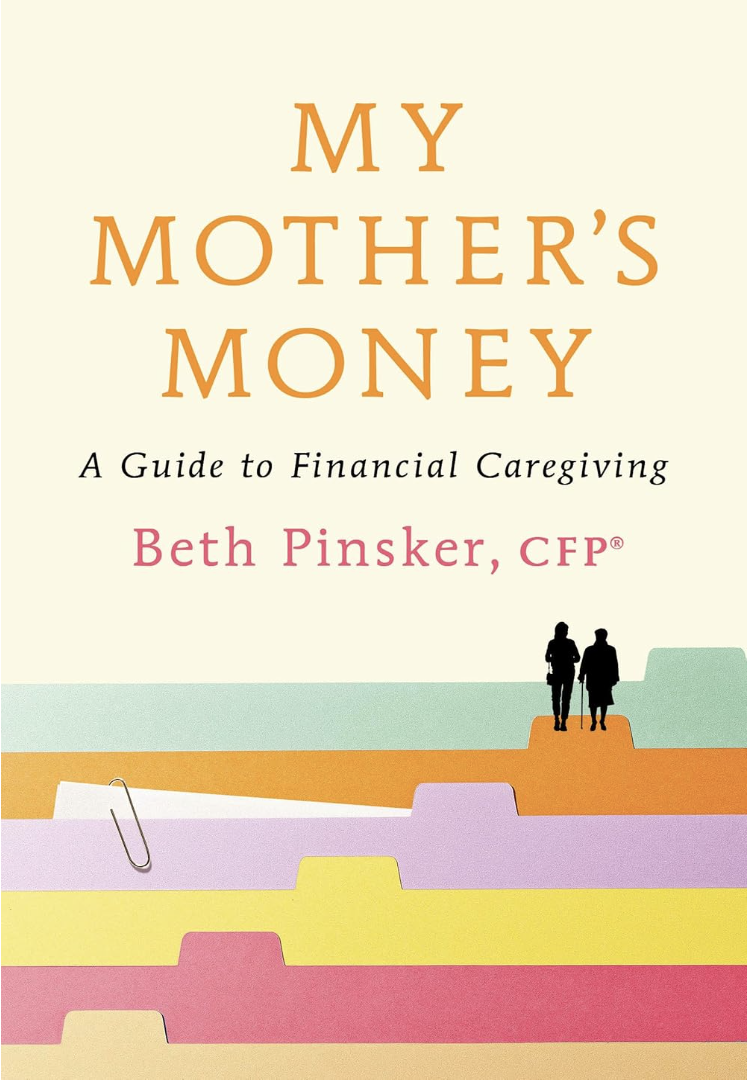
My assignment from The Persistent was clear: Interview Beth Pinsker about her book, “My Mother’s Money; A Guide to Financial Caregiving,” which chronicles the year she spent commuting between New York and Florida to care for her desperately ill mother.
I hoped she’d share a few smart ways to help caregivers, including tips for managing the financial complications that caring for an older parent can bring. But to be honest, I also wanted some insights to help my own mother manage her money.
Like Pinsker, who is a financial planning columnist for MarketWatch, I’d fallen into the chaos of caring for my aging parents a couple of years ago. But lately, as my 86-year-old mom has become more frail, I’ve found myself worried about how many loose ends my brother and I still need to tie up, particularly regarding her finances.
But when Pinsker and I got on the phone, she began telling me about her terrible week, which had involved two unexpected crises: one with her 19-year-old son (who’d recently had surgery) and the other with her partner whom she’d just taken to the ER with severe abdominal pain.
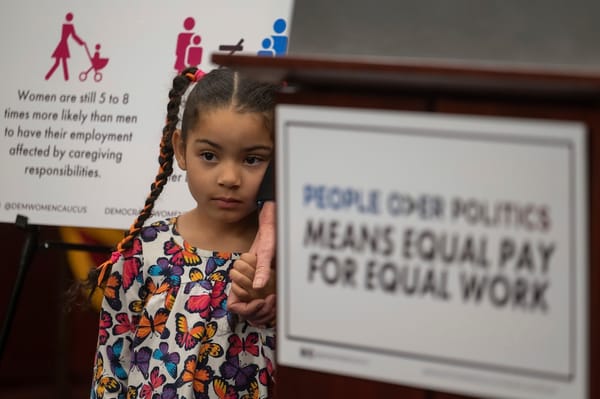
And with that, we fell into the commiserating rhythm of two stressed-out individuals juggling too many things in not enough time because of the societal expectation that women (yes, women) will keep stepping in, stepping up, and managing Every. Frickin. Thing. “I mean, how did we get here?” Pinsker asked me rhetorically, before answering herself: “Because we’re the doers. This is what women do.”
“I try not to be gendered about caregiving, because societally, things are changing,” Pinsker said, noting that more and more men are becoming caregivers. “Except in about 90% of the families I know personally, the ‘doer’ is a woman in her mid-50s, who has people on either side of the age spectrum depending on her. When the shit hits the fan, we're the ones who take hospital calls, the school’s call, the car rental place’s call — and we’re supposed to come to the rescue.”
“OMG, yes!” I say, and mentally toss out my interview questions about money, because, well, now we’re just talking about life and why women end up in the exhausting role of doing what needs to be done — which usually means doing too much?
Case in point: On the tail of her ER visit with her partner earlier that day, Pinsker relays a funny story, which isn’t really. When the ER doctor began examining her partner, it was Pinsker he peppered with questions, rather than the patient himself, who was perfectly alert and able to answer. “I’m like: He’s not my child. But they’re asking me what medications he’s allergic to!”
We know that women face this reflexive gender role pigeon-holing daily. But that pattern hits particularly hard when we’re talking about eldercare.
We know that women face this reflexive gender role pigeon-holing daily. But that pattern hits particularly hard when we’re talking about eldercare. Pinsker notes that for many of us, feeling responsible for others has become almost encoded in our DNA, metaphorically if not literally. “When I look at my own psychology and what makes me the ‘doer’ — like, why am I running back and forth between the hospital and still making time to do laundry — it feels like there’s a guilt factor,” she said. “It feels like we’re ‘supposed to’ take care of these things.”
Women also have a tendency to assume they can “take care of these things” better than men. Like me (and many women I could name pretty quickly), Pinsker feels as if “I see what needs to be done, and I do it.”
I have to wonder — are we bad at delegating, or is it just hard to trust other people?
But, I ask, what are we perpetuating when we keep taking the reins? My brother and I, who shared the caregiving for my dad before he died a couple of years ago, are now tag-teaming again as we take care of our mom. Still, I think my brother would agree that I tend to make the calls, set up the spreadsheets, and organize the majority of the appointments.
“I tell myself it’s because my brother is busier than I am,” I say to Pinsker. “But I have to wonder — are we bad at delegating, or is it just hard to trust other people?”
The ‘Doer’ Downer
Of course, letting go is hard, as is relying on others, especially when you’ve trained yourself not to. But sticking to accepted behavior patterns can work against women— especially when it comes to our long-term financial wellbeing.
Take the term “family caregiver,” a phrase that sounds altruistic and kind, but actually isn’t. In reality, the moniker is code for people who aren’t getting paid to do the work they do. Right now, some 37.1 million people act as unpaid caregivers to an adult over the age of 65. And according to the Bureau of Labor Statistics, roughly 60% of them, or 22 million, are women — many in their peak earning years.
Obviously, millions of men are in these shoes as well. But for female caregivers who downshift at work (or quit their full-time jobs) to take care of an older adult during those critical mid-career years, the long-term financial impact of lost time and lost wages can be severe, Pinsker notes.
Estimates vary, but some researchers put the cost of lost wages at about $107 billion per year. And a 2021 study by AARP found that caregivers shell out north of $7,200 of their own money each year to cover caregiving expenses and about $9,000 when caring for someone with dementia.
For women caregivers who already contend with the gender pay gap, the effects can be devastating.
 Josie Cox
You've Got This
In case you’re thinking: This is a lot, I’d have to agree. Fortunately, Pinsker also happens to be a certified financial planner, one who is working to level this particular playing field by making life easier for women in caregiving roles. Here are some of her pointers for alleviating caregiver stress in ways you may not have considered:
Her best and most important piece of advice: Nail down your parents’ essential documents while they are still alive. “Legally speaking, there are real limits on what you can do without the correct paperwork,” Pinsker says.
This includes key estate documents: health care proxy, financial power of attorney, and a will.
l knew this, but like many people, I waited until my mother was heading into surgery, before I said to my brother, “Let’s call a lawyer.”
For aging parents who are resistant, appeal to their sense of control: “If they become ill, financial or medical matters can’t be handled the way they’d prefer unless you have legal documents that express their wishes.”
 Grace L. Williams
Also, managing your loved one’s bank account, or their government or VA benefits, or their long-term care insurance may require additional legal documents beyond a power of attorney — each of which have to be signed and sometimes notarized in advance of their use.
The line between life and death is a legal one,” Pinsker told me. “The document that lets you pay the mortgage one day, stops working the next.”
No wonder so many caregivers find themselves scrambling to cover their parents’ expenses post mortem. “It used to be you had a few days after someone died to send out those last checks,” Pinsker says. “Now you don’t.”
Two other great pieces of advice:
Ask your parent to add you onto their bank account as a co-signer — or set up a Payable on Death (POD) designation — and keep enough cash in that account to cover expenses while you wait for the will or estate to be settled.
Be sure you can access your loved one’s phone. “Ask the person to create a beneficiary or ‘legacy contact’ in their iOS or Android settings, naming a family member as a legal entity to access data and documents on their phone after they die,” Pinsker told me.
Thankfully, my mom doesn’t have a cell phone (though she did give me the passwords for her computer and online accounts). But this advice did nudge me to make sure my husband and son would have access to my phone if I died suddenly. And I asked them to do the same for me.
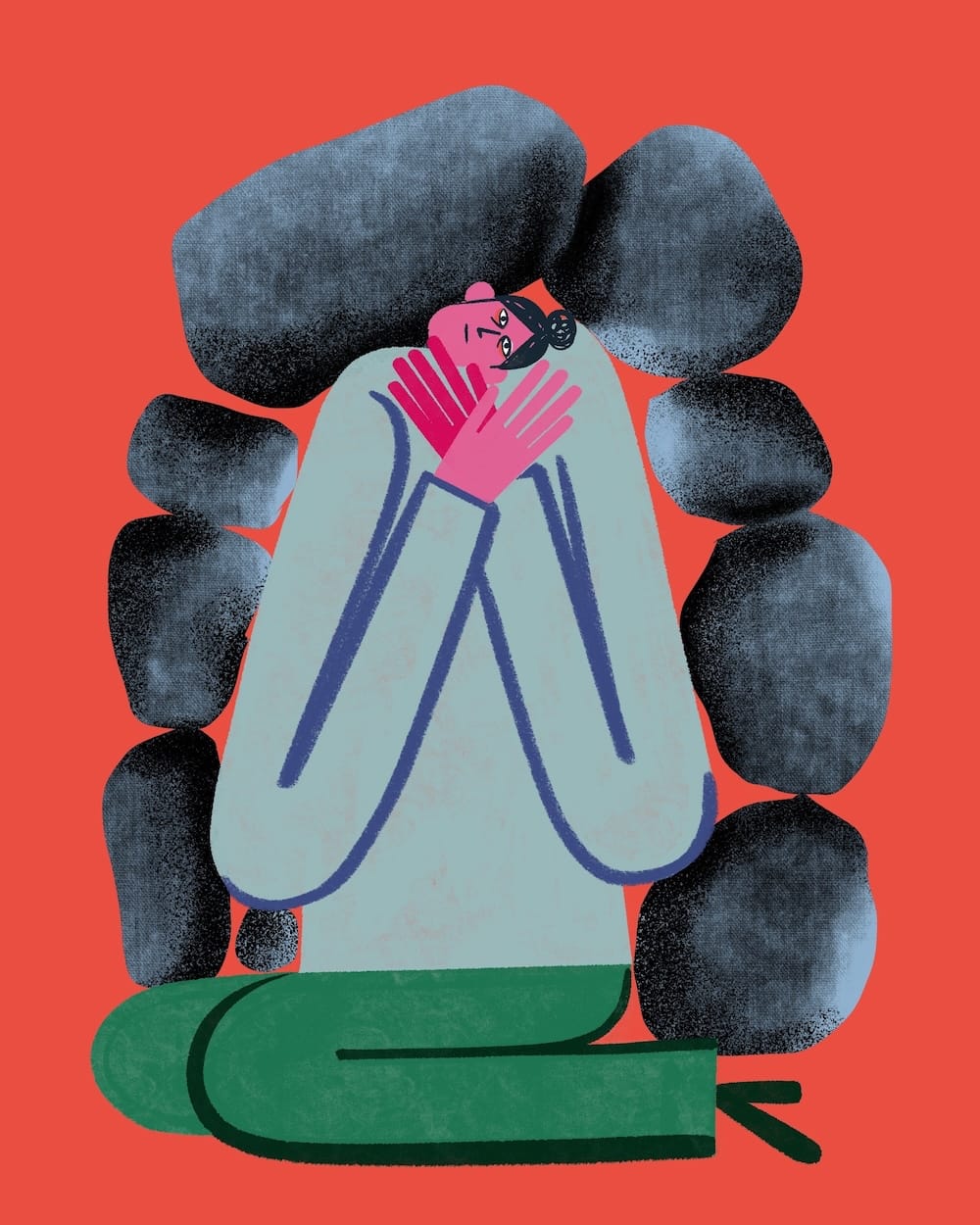
All of which brings me to what may be Pinsker’s most important point: Acknowledge the overwhelm so many caregiving women feel. Just doing that can become a kind of sourdough starter for regaining our sanity. In other words, Pinsker told me, we all need to stop believing in the power of powering through. That’s the lesson she took away from a year of caring for her mom and two teenage kids while working (and yes, she was a divorced single mother at the time).
“Every day, caregivers have to do stuff that is almost impossible,” she tells me. “At a certain point though, you have to accept what you cannot do,” she says. “So if you feel like you’re struggling, it’s not because you’re incompetent or a slacker.”
The truth is, “It’s just that hard.”
 Francesca Donner