When Words Fail On Infertility, There is Art
Infertility, so long hidden from view, is finally finding a spotlight in various contemporary art forms.

Editor's Note: This essay deals with infertility and loss which some of our readers may find difficult.
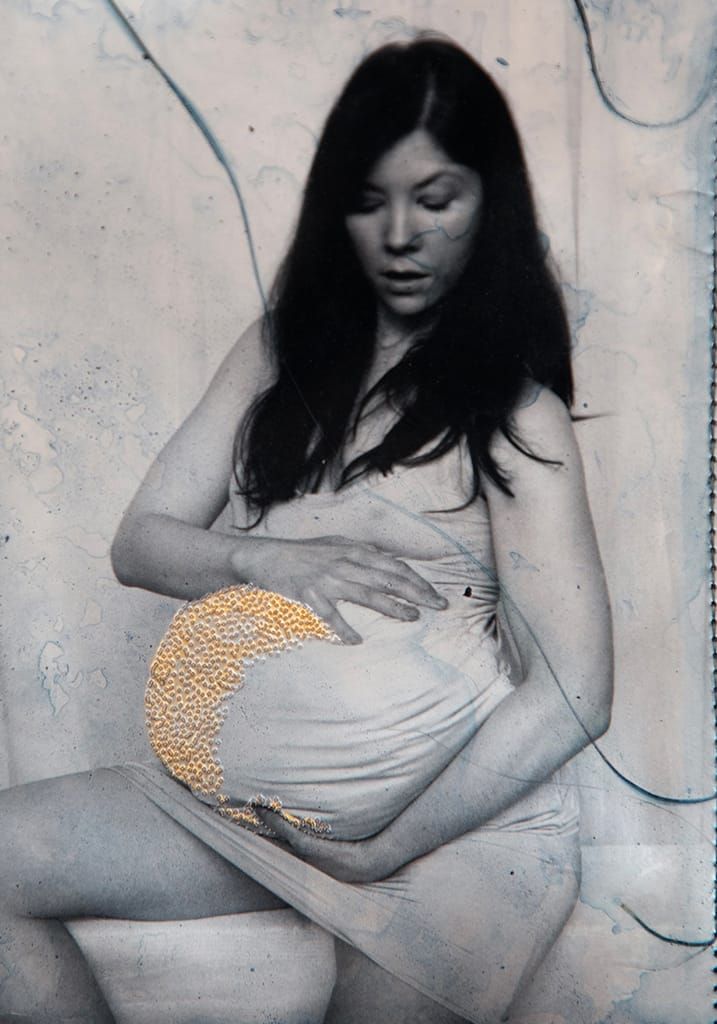
When Elizabeth Horn, a Michigan-based artist and photographer, was going through infertility treatments, she kept the news from most people. Because the words wouldn’t come, it was art that let her express her heartache.
Horn began ripping up pieces of paper, to help get her frustrations out, and used the paper in mixed-media pieces with acrylic and beads. The work allowed her to “be in a space where I could just sit with my grief,” she said. “It gave me a way to have something tangible that I could look at and that I could hold and I could see.”
At an infertility support group, Horn met other people who also happened to be using visual arts to process emotions around their diagnoses—encounters which inspired her to curate an art exhibition, held in 2013 in Jackson, Mich., with the subject of infertility at its core.
Not long after her art show, Horn co-founded, along with Maria Novotny, The ART of Infertility, an arts organization which has since produced more than 30 exhibitions around the U.S., as well as one in Switzerland. (ART is also an acronym for assisted reproductive technologies, which include IVF.)
Horn has since expanded ART’s remit, last year co-editing, also with Novotny as well as Robin Silbergleid, “Infertilities, a Curation,” a book featuring works by artists and poets from North America and Europe. “I really wanted a book that would push back at a lot of the myths, like infertility is an older woman’s issue or disease,” said Horn. The reality is that infertility doesn’t discriminate, she explained. “It impacts all kinds of people from all different backgrounds and experiences.”
Prevalent, but almost invisible
According to the World Health Organization, approximately one in every six people of reproductive age worldwide experience infertility in their lifetime. That number does not include social infertility—the idea that people might not be able to easily get pregnant because of their biographical background, say they are part of a same-sex couple or they are single—or those with underlying illnesses that can make pregnancy life-threatening. Yet despite its prevalence, infertility has not traditionally been openly discussed. One survey, from 2009, found that 60% of couples hid their fertility struggles from family and friends. And while social media has enabled more conversations, many people affected by infertility still choose to stay quiet.
“How do you find a language to talk about something that's so hard to talk about? Or how do you visualize something that's invisible?”
This reticence to document infertility, loss and grief, absolutely extends to the field of art—including painting and mixed media, photography, sculpture, performance and dance. Pregnancy and motherhood have long been a part of the global art history tradition, from Pre-Columbian-era sculptures of pregnant women through to 20th Century works such as Gustav Klimt’s “Hope, II.” But depictions of pregnancies that never happened or were cut short, such as Frida Kahlo’s painting of her miscarriage in “Henry Ford Hospital 1932,” are few and far between.
But that reticence is dissipating. Infertility as a topic is starting to appear across a range of contemporary art genres from photography to painting to video and film; even performance.
‘A platform to exchange, to mourn’
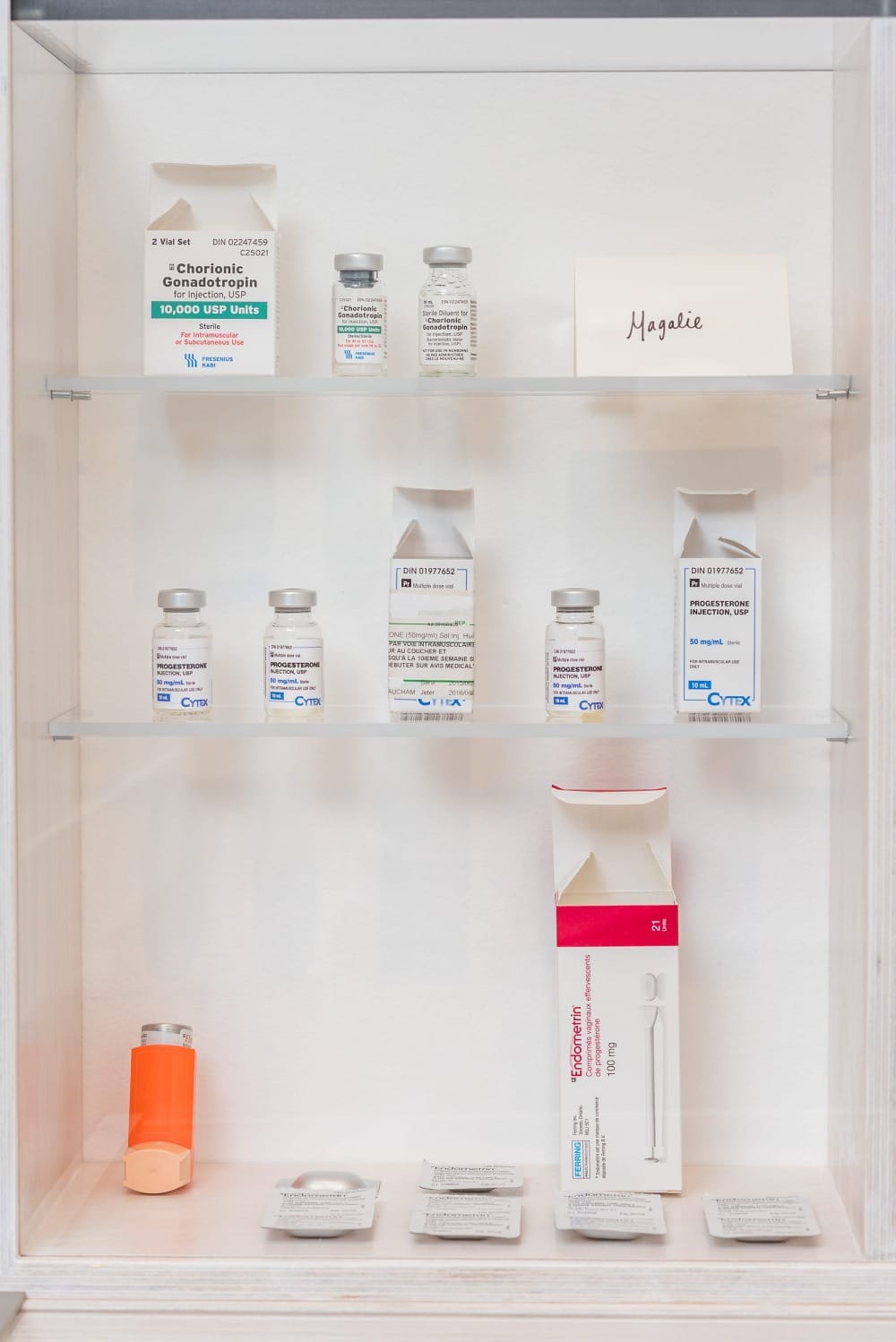
Heidi Barkun, whose sound and mixed-media installation “LET’S GET YOU PREGNANT!” featuring 27 women from six countries talking about their infertility, is part of the current National Biennial of Contemporary Sculpture in Quebec, says that when she began her infertility-focused work in 2014, she “couldn’t find anything” around infertility by other artists. Holly Slingsby, a British artist, had a similar experience.
She felt like stories of infertility needed “some kind of representation or articulation,” said Slingsby, who earlier this month performed a piece focusing on bodies and Christianity as part of a day-long show titled “Ritual/Bodies” in London. “It's like, how do you find a language to talk about something that's so hard to talk about? Or how do you visualize something that's invisible? That's a really interesting artistic problem for me.”
Artists are increasingly engaging with questions like these.
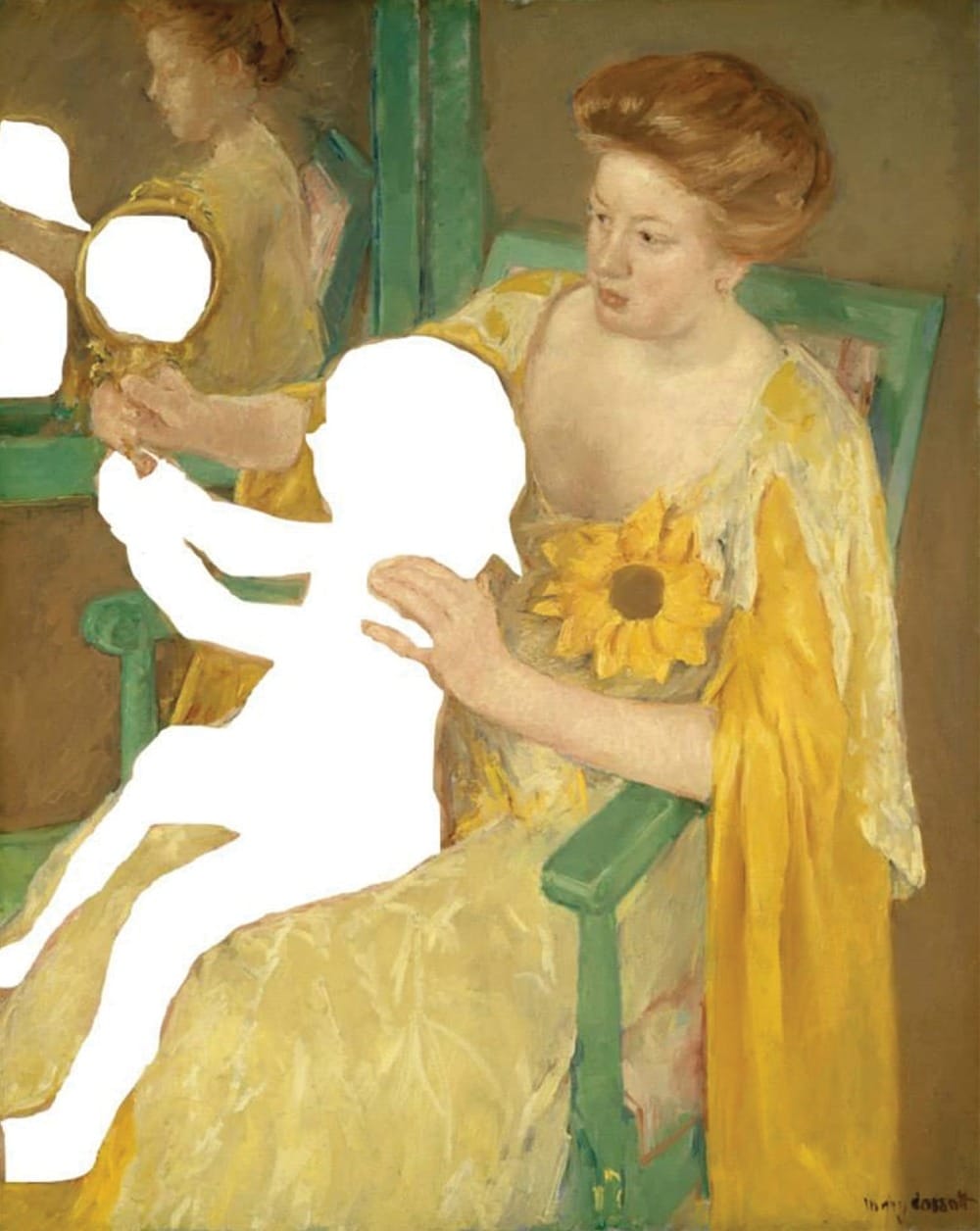
This summer in Britain “Acts of Creation: On Art and Motherhood”—a touring exhibition by the Hayward Gallery featuring a number of pieces examining infertility, loss and struggle—is showing at the Midlands Art Centre in Birmingham. A companion book written by the exhibition’s curator, Hettie Judah, is out this month, and a day-long symposium titled, “Picturing the Unseen: Grief and labour in and out of motherhood,” will follow in September.
“I’m looking at motherhood in the broadest possible sense,” said Judah, “because anybody who has ever had to worry about the fact that they are pregnant or not pregnant, has a relationship with motherhood.”
Meanwhile, the artist Sally Butcher will explore how women discuss infertility at a residency entitled “Visible Bodies” at Ikon Gallery in Birmingham.
Many artists say that, when they were going through their fertility treatments, they did not purposely create pieces around their experiences—yet their works nevertheless reflected what was happening.
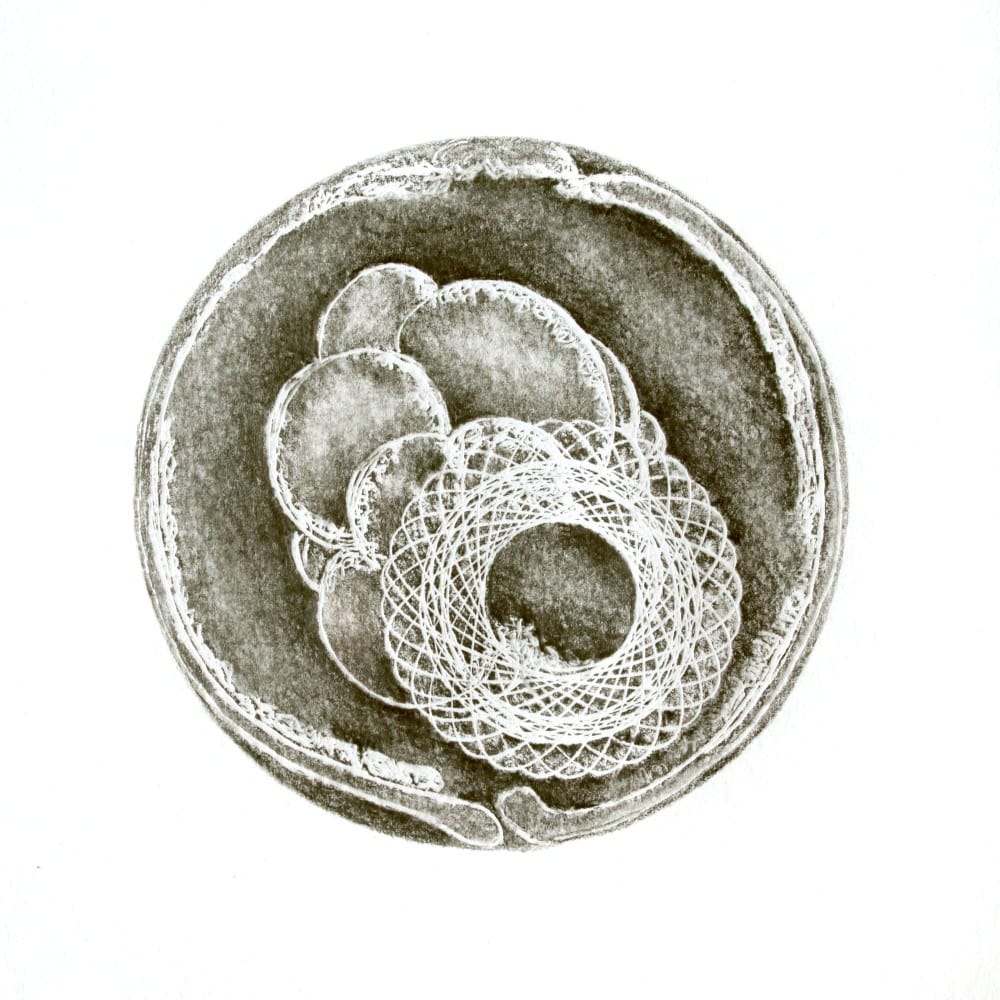
Looking at her own art, Melanie Stidolph realized there were strong connections to her fertility struggles in her earlier works. And her later works like “The next dawn, the next spring” (2023) are directly related to infertility. Her work, “Endless Reproduction,” is a photographic journey that Stidolph says plays on the concept of repetition and the kind of “trying and failing” sense you experience alongside the “attempts of IVF or attempts to fall naturally pregnant, and this frustration.”
The London-based French artist Anna Burel, who together with Isabel Davis, a senior academic in reproductive history at Britain’s Natural History Museum, is completing a two-year research project, which will culminate in an exhibition and book to be expected to be released later this year titled, “(Mis)Conceptions: A Cultural History of Pregnancy Indeterminacy,” shared similar views. “More than healing, there is just a need to make things a bit more material than in your head,” said Burel, who completed 85 collages for the book.
All of this is encouraging to Dr. Pragya Agarwal. The author of “(M)otherhood: On the choices of being a woman,” said it’s good to see artists finally leaning into the topic. “For so long there has been stigma and silence around it, shame associated with not being able to conceive easily and naturally,” she wrote in an email, “and artists are reclaiming something which is a fairly common experience for so many.”
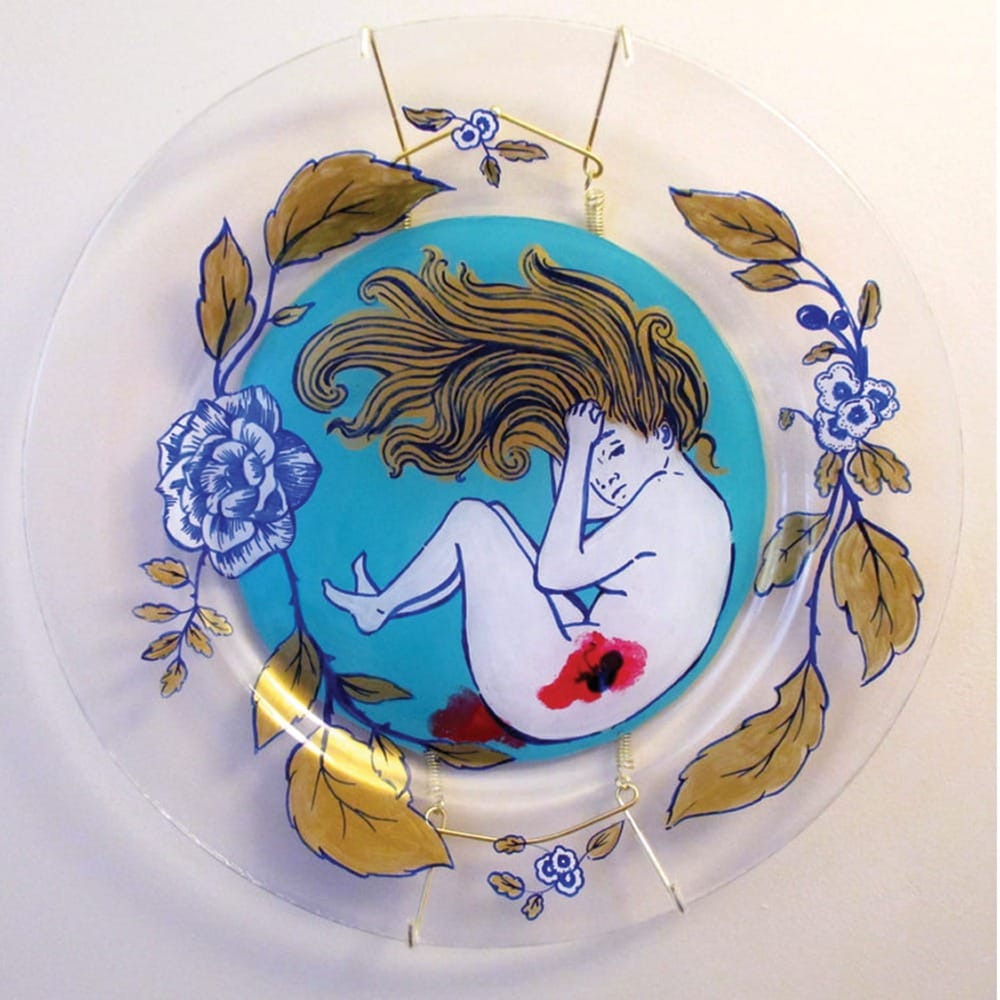
Tellingly, most of the artists focused on infertility these days are white women from Western cultures where infertility is discussed more openly. It’s also due in large part to the politicization of reproductive rights and its impact on IVF in the U.S. in particular.
“We don’t hear many stories from Black and brown women about infertility,” said Agarwal, who points to India as a good example. “In a pro-natalist patriarchal culture like in India, where fertility has been celebrated with rites and rituals, and childfree women shunned and stigmatized, it has taken a long time to overcome the shame associated with infertility.” Of course, we’re still not there yet.
Male infertility is another topic that’s barely touched on. Marta Jovanović, a Serbian artist, explored this in her 2016 performance piece, “Motherhood,” based around her husband’s infertility diagnosis and the implosion of their marriage. She says her work resonated with people and allowed them to open up about their experiences.
“The installation attracted numerous visitors who shared their personal stories with me—of infertility, abortions, stillbirths, miracles of life,” she wrote in an email. “It was a platform to exchange, to mourn, to celebrate, to be vulnerable, to be compassionate and human.”
And isn’t that really the purpose of art?
Ginanne Brownell is a London-based arts and culture journalist. Her second book, “Elusive Mommyhood: an investigative reporter's personal journey into IVF and surrogacy,” comes out in January 2025.
More from The Persistent.
The Day I Walked Out of The Kitchen