When Mirrors Are Minefields
My old self left the building when I received a diagnosis of Stage I breast cancer. And while it’s true I survived, I can’t bring myself to quite love the body that walked back in.

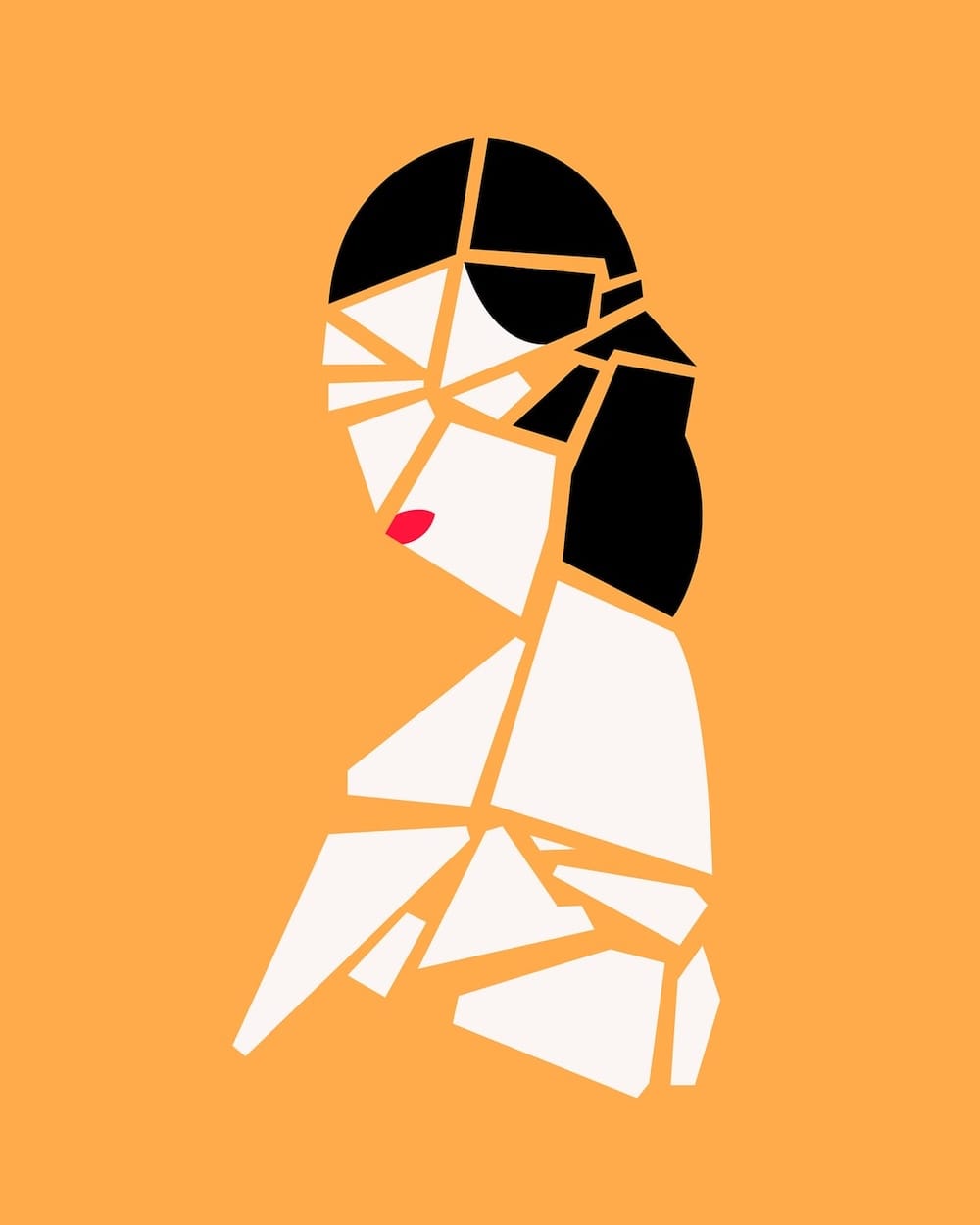
There was a time when I thought that greeting myself in the mirror and saying, Hey, girl. I love you, was my middle-aged right. It felt good.
It doesn’t anymore.
These days, for me, mirrors are minefields. That’s because my old self left the building in 2022, when I received a diagnosis of Stage I breast cancer. And while it’s true that I survived, I can’t bring myself to quite love the body that walked back in. At best, I feel indifferent to her. That’s because my treatment, which included radiation, multiple surgeries including a double mastectomy, and surgical reconstruction, altered not just my body but the very essence of my being.
Immediately after my breast surgery, my surgeon performed a reconstruction technique known as DIEP flap reconstruction, which stands for Deep Inferior Epigastric Perforator, which uses a patient’s own tissue to restore the breast. It’s a long-standing alternative to going flat or inserting artificial implants following a mastectomy.
In a DIEP flap procedure, after the original breast tissue is excised and discarded, a plastic surgeon removes a football-shaped section of abdominal tissue, along with the eponymous “deep epigastric perforators,” which refer to blood vessels located deep in the abdomen. The surgeon then uses this tissue to create new breasts, including connecting them to blood vessels in the chest.
The split halves of the abdomen are then stitched back together, minus a strip of midsection fat. It’s genius, really; the DIEP patient ends up with breasts that are soft and warm, since they have their own blood supply; breasts that live and breathe.
What the new breasts don’t have, however, is sensation. I knew that going in, but nothing prepares you for the mind-bending reality of the result.
Unless your surgeon performs re-sensation surgery, where the nerves are also re-attached (something I didn’t even know was an option at the time), or if you are lucky and your nerves spontaneously reconnect (which can happen eventually in some cases) you end up with two permanently numb breasts, plus a numb zone around your middle.
What does this mean?
It means I can feel itches, but not my efforts to scratch those itches. It means I am vulnerable to sunburn in the numb spots even under a bathing suit—women like me are warned away from wearing dark-colored swimsuits, which can concentrate the sun’s rays and cause burns that we cannot feel. Mostly it means I can’t feel the touch of my husband. And yes, I miss that particularly.
My story is, I realize, more positive than some women’s. I survived the cancer, after all, and I recovered from the various treatments without serious medical complications
But healing from this surgery—any surgery—is, by its nature, imperfect. No matter how skilled your surgeon, you go to sleep on that table and you wake up in a different body. And it’s not just the scars which, after a second surgery to refine the results, are fading all the time. It’s about how my Franken-body behaves that makes me feel like I’m walking around in a stranger’s skin. I lean into the kitchen counter as I’m chopping onions for dinner, and I can’t feel where the edge hits my belly button. I stretch my arms over my head and feel an odd tugging where the new breasts attach to my chest wall. Lying flat on my back, if I touch my upper chest, my finger falls into a little divot where, I think, a bit of rib was removed to make way for the re-attached blood vessels.
Every day, I’m reminded that I’m not the same.
On the day of my surgery, heading to the hospital at dawn, I had a mild panic that I hadn’t written just-in-case goodbye notes to my sons. In retrospect, maybe I should have also penned a goodbye letter to my body—and my spirit.
Heading to the hospital at dawn, I had a mild panic that I hadn’t written just-in-case goodbye notes to my sons.
My old body was also imperfect, of course, but still, I had lived an extraordinarily physical life and I loved it. I played, danced, swam, and ran. When I learned I had cancer, at 55, my body and I had reached a kind of détente. I’d begun making accommodations to the inevitable physical as well as situational changes that come with the passage of time. Sure, I was no longer jetting around town in short skirts and high heels, but I could walk for miles and feel, with gratitude, the sun on my shoulders. I could practice yoga and feel tears well up as I pressed my hands to my heart center. I had no interest in working on Instagram-perfect muscle definition; my goals were strength and resiliency.
I was also sparing thoughts for the way other kinds of love alter with time, including for my husband of, now, 25 years. Our bond seemed to mature and deepen each time we wrestled through a rough patch. My love for our two boys also shifted as I took more of a back seat in their expanding lives. By 55, I was aware of all this. When I looked in the mirror, I could say I loved my body not in spite of, but because of what it had seen me through.
But cancer, I’ve discovered, is a rude interloper, an earthquake, a sick joke. In addition to its potential to steal life, it wields a cruel power to reshape time. It has been more than three years since my diagnosis and surgery, but it feels like many more. Cancer and its treatments propelled me into a liminal space; and now I’m trying to figure out how many years I actually lost. I believe that’s why, when I peek into a mirror or catch myself sidelong in a plate-glass store window, I’m startled. Who is that? I’m still scrambling to catch up.
Cancer is a rude interloper, an earthquake, a sick joke. In addition to its potential to steal life, it wields a cruel power to reshape time.
Some days, when I observe the stranger that is now me, I can barely look. Sometimes, I find myself crying like a child, wanting the old girl back. I once broke into tears when an empathetic physical medicine doctor at the cancer center asked, “What can we do to help you?” “I want my body back!” is what I told him. He had no answer to that.
But there are good moments, too, when I can stand in front of the full-length mirror I inadvisably bought and shrug at what scars remain.
There’s a scene in the third season of “The White Lotus” when the clearly age-mismatched Chelsea and Rick (Aimee Lou Woods and Walton Goggins) are about to have sex, and Rick takes Chelsea’s youthful breast into his mouth. Three years ago, this scene might have turned me on. Now, I had to turn away. And still, I couldn’t get the image out of my mind. I’ve lost my memory of what that feels like.
When I try to access those memories—of youthful sex, of nursing my babies—I can’t quite do it. They’re corrupted somehow, like the VHS tape of my wedding that I waited too long to digitize. I thought I’d always remember those details. I was wrong.
A couple weeks ago I stumbled upon the poem “Mirror” by Sylvia Plath. It is written, in a very Plath-ly way, from the perspective of the mirror, which she calls “a little god, four-cornered.” The mirror speaks its truth about the girl, and later woman, who gazes into its glass every day for a lifetime. It’s not a god at all, of course, but merely an object serving up a faithful reflection of her image, quietly marking time by noting the cycles of light and dark on the opposite wall. But like me, the woman flails, angry at what she sees. The mirror, imagining itself now as a clear lake, sees the woman looking at her reflection with an “agitation of hands.” In other words, she’s pissed.
In me, she has drowned a young girl, and in me an old woman
Rises toward her every day like a terrible fish.
Right now, I waver between nodding with recognition at the old(er) woman, mostly invisible, and fighting the terrible fish I’d rather not see. The fish keeps swimming into sharper focus all the same. Like the girl in the poem, I stared at my body in the mirror every day as it changed in step with my advancing years. Then, one day, it changed overnight. And I’ve been asked to greet this new me as if I know her; like I love her. But I don’t love her. Not yet, anyway.
For now, what I’m aiming to recapture is respect. I’d be content with that.