‘Obsession’ Might Not Be Feminist Exactly, But Could It Be Femin-ish?
Guy wants girl, girl wants guy way too much, terror ensues: it's a tale as old of time. But the low-budget thriller "Obsession" turns this trope on its head.

Almost 40 years before this summer’s hit movie “Obsession” took over the box office — earning a whopping $403 million globally despite its micro budget of $750,000 — a similar film, “Fatal Attraction,” was a cultural phenomenon.
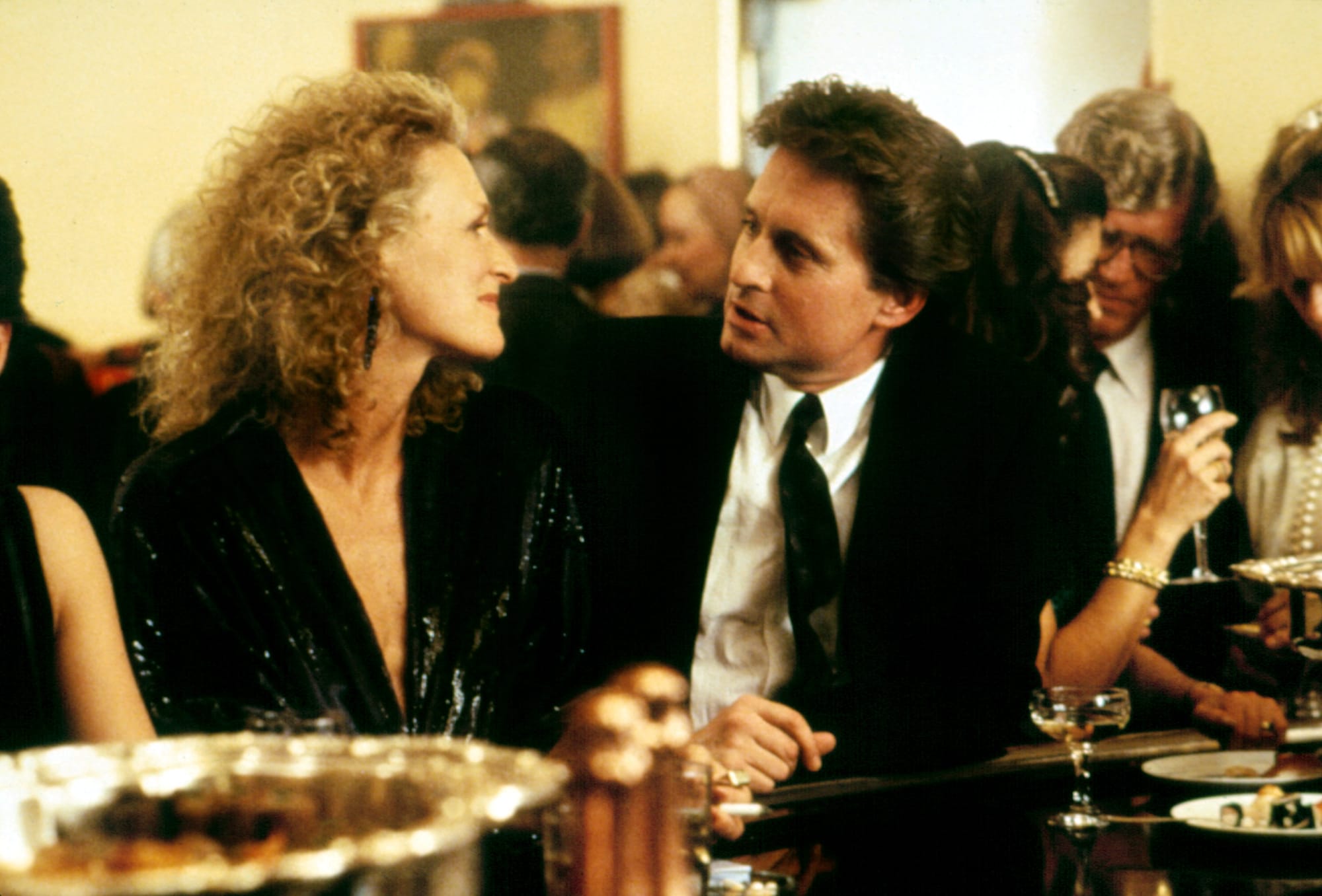
The latter tells the story of a married lawyer whose weekend affair has devastating consequences when the woman he rejects turns into a stalker. Starring Michael Douglas and Glenn Close, “Fatal Attraction” had moviegoers lined up around the block — you couldn’t buy tickets online in the late 80s, after all — and earned six Academy Award nominations, including Best Picture. Meanwhile, what Close as the unhinged Alex Forrest did to a little girl’s pet rabbit launched the term “bunny boiler” which is variously described as, “a person, especially a woman, who is considered to be emotionally unstable and likely to be dangerously vengeful.”
Was “Fatal Attraction” a caricature of a woman spurned? Sure. But apparently, this characterization is catnip to audiences.
“Obsession,” which was written and directed by the YouTube star, Curry Barker, has arguably struck an even bigger chord with the familiar premise: Guy wants girl, girl wants guy way too much, terror ensues. But the movie’s most satisfying twist isn’t part of the plot, it’s the way Barker turns the familiar trope on its head, thus creating a film that may not be feminist, but is, at the very least, feminish.
Instantly amorous
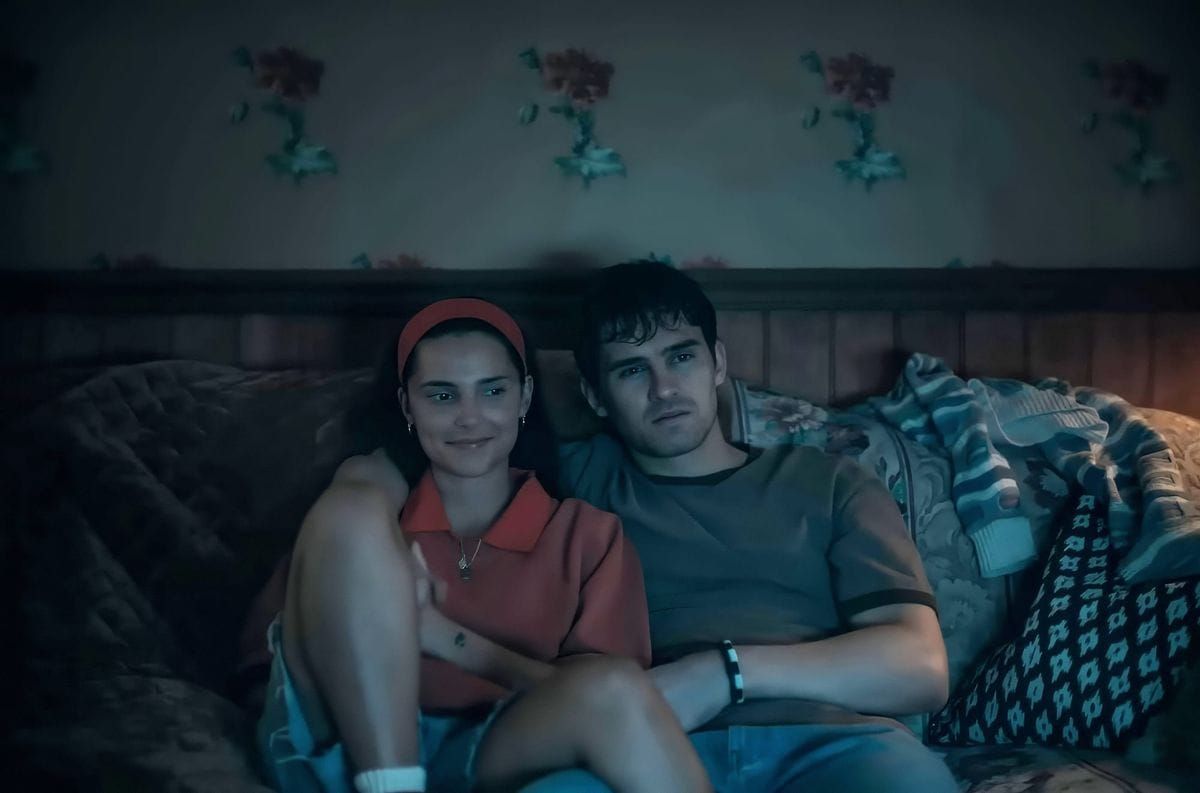
“Obsession” tells the story of Bear, played by Michael Johnston, a milquetoast guy who lacks agency and favors ho-hum vintage-style knits. He’s had a crush on his gorgeous friend Nikki, played by Inde Navarette, since high school but can’t muster up the courage to tell her how he feels. (Even when she asks him directly if he has feelings for her, he lies and says they’re just friends.)
In a fit of self-perpetrated frustration, Michael turns to a novelty gift called a “One Wish Willow” that he has purchased on a whim at a New Age shop earlier in the film. Following the instructions, he takes what looks like a simple stick out of the box, breaks it, and says his wish aloud: “I wish Nikki Freeman would love me more than anyone else in the world.” To his — and our — surprise, the wish is granted … except, not in a good way.
 Emma Haslett
Nikki becomes instantly amorous, first insisting Bear take her home with him, then getting into his bed and begging him to sleep next to her. Her love escalates from there, as did my pulse rate while watching the film at a sold out show in West Hollywood. Nikki’s attempts to keep Bear in her orbit span the gamut from overly sincere declarations of affection — the audience recoils when she tells Bear she loves him “so, so, so, so, so much” — to restaurant freakouts to creepy poetry recitations to, in a particularly grisly scene, bashing her face with a vodka bottle. It turns out the powers the One Wish Willow possesses come with a twisted sense of humor: Yes, Bear gets his wish, but in the most deranged way; a besotted Nikki is a terrifying Nikki. I still can’t talk about what she did with the cat.
I also can’t help but point out how alike “Obsession” and “Attraction” are in terms of the setup. Like Bear, Douglas’s Dan Gallagher has a secret wish, albeit unspoken, for sex. Not married sex, which he is apparently barely getting, but adventurous, wanton, no-strings-attached sex.
The director, Adrian Lyne, took great pains to set Dan up as a decent guy who appears to be suffering from what I’ll call mid-life married syndrome. When he’s beckoned into the bedroom by his wife Beth — played by Ann Archer — it’s not because he’s going to get lucky, it’s because it’s time for him to walk the dog. Perhaps it’s no surprise then, when he agrees to go out for a drink with the wild-haired Alex while his wife and kid are out of town?
But shortly after they have the libertine sex he was craving, Close’s character starts calling Dan over and over asking if they can spend more time together. Next thing we know, she has bloodied wrists in her bathtub. Like Nikki, her affection for a man makes her obsessed and needy, to the point of being totally unhinged. When Alex tells Dan she’s pregnant and that the baby is his, Douglas’s character becomes indignant. (He assumed Alex was on birth control and didn’t bother using a condom, but still, it’s not fair.) The next thing we know, Alex is pouring acid on Dan’s Volvo, that steadfast symbol of domestic fortitude. Then, she picks up his daughter from school and takes her on an ominous rollercoaster ride. And then, the rabbit gets it.
Rewatching the film, which I hadn’t seen since the early 2000s, I was struck by the way it perverted late-80s feminist talking points: A successful single woman with a good job and a cool loft is dangerous, the movie says, and, if she’s pushing 40, her biological clock is ticking. (Doubly dangerous, no doubt.)
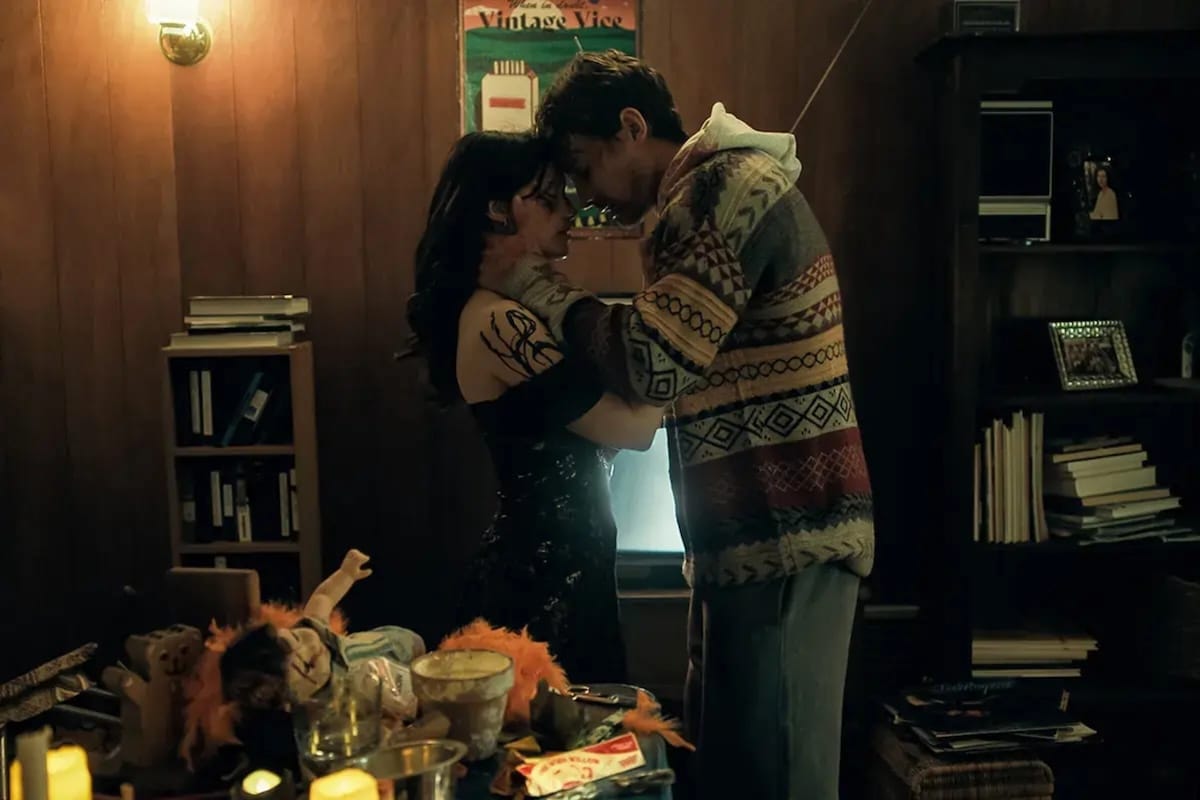
Part of the allure of these films is how women like Nikki and Alex embody the male fear of engulfment, and if men can’t tell what women are thinking most of the time, these two reveal untold depths. To make matters worse, they steal a man’s autonomy and control, and they do it, in what is the horror of horrors for some men, because of feelings.
Deviating from the trope of a woman obsessed
But what makes “Obsession” feel brand new is that it quickly deviates from the conceit of a woman obsessed. After Bear’s wish is granted, Nikki asks to stay the night not because she has actually fallen in love with him, but because her autonomy has been taken away.
Director Barker makes this clear when, the moment their lips touch, Nikki screams and recoils, as though some part of her knows this isn’t what she wants. “What the hell was that, Nikki?” Bear asks. She has only weak excuses to offer: “I thought I saw something. I don’t know. I’m sorry!”
“You don’t have to be sorry,” he replies. “It just … made me feel like … I was doing something you didn’t like.” (To be clear, he’s not wrong.)
In fact, Bear is not the victim here. He’s the guy who allows the relationship to progress despite what he knows about Nikki’s inability to act for herself. It’s vile stuff. Meanwhile, he’s so constrained by his own passivity that he barely has the presence of mind to recoil from himself. But we know that Nikki never consented to this love sickness. Bear has sex with her while haplessly asking her throughout the film if she really loves him.
Then the director Barker takes even that hopeful delusion away in one of the movie’s most memorable scenes (SPOILER ALERT!): When Bear calls the One Wish Willow customer service line, a bored-sounding agent — played by Barker — puts the unadulterated Nikki on the phone. The mechanics of where she is are never explained, but as she screams in agony, we realize that her conscious mind is trapped in a kind of purgatory inside her own body. The adoring words she says to Bear aren’t hers, the things she does with him physically are not of her own volition and she is fully aware that she’s being used, all so that one mediocre man can live out his fantasy.
Barker never lets Bear off the hook, either, so, unlike Close’s Alex, who audiences famously hated — so much so that they reportedly burst into applause when she died at end of “Attraction” — we don’t abhor Nikki no matter how deranged she becomes. Even when she turns murderous, we know none of this is her fault. And while it’s never explicitly stated that Bear is, in fact, a rapist, his culpability is irrefutable.
When Barker was asked by The Hollywood Reporter about his decision to put consent at the center of his movie, he said, “There were companies that told me they would give me $2 million if I just rewrote the script to make Bear a hero…[But] I turned down more money to tell the story that I was more interested in telling.”
I’d like to think that future writers and directors will center the female character’s point-of-view the way Barker did, but something tells me that’s just wishful thinking.
For now, “Obsession” is staying with me, so much so that after watching the movie, I decided to take a look at the script. As I read, what happened to Nikki began to feel familiar in a way I found even more disconcerting than I did in the crowded theater. Like the victim in a true crime podcast, she’s entrapped, debased, and abused. In contrast, Alex, from “Fatal Attraction” isn’t positioned as a victim of anything other than her own inability to accept the fact that Dan doesn’t love her. Her suffering turns to camp, which, in a way, makes it bearable. In “Obsession,” the darkness that overtakes Nikki — because of what is done to her, not by her — evokes something too real to sit with alone.
 Josie Cox