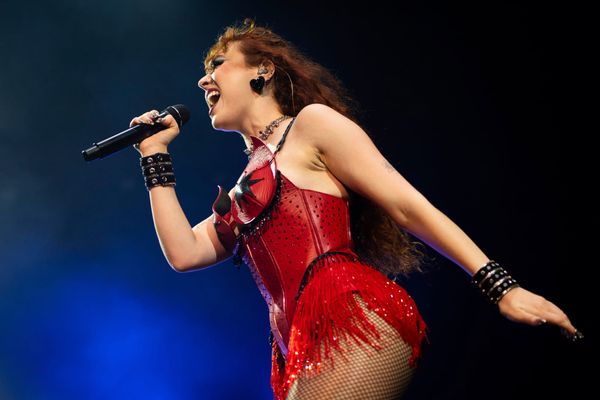
'The Devil Wears Prada 2' — Not As Glossy, But Still Shining
The sequel to the hit movie bemoans the decline of print journalism, but still manages to elevate the power of women.

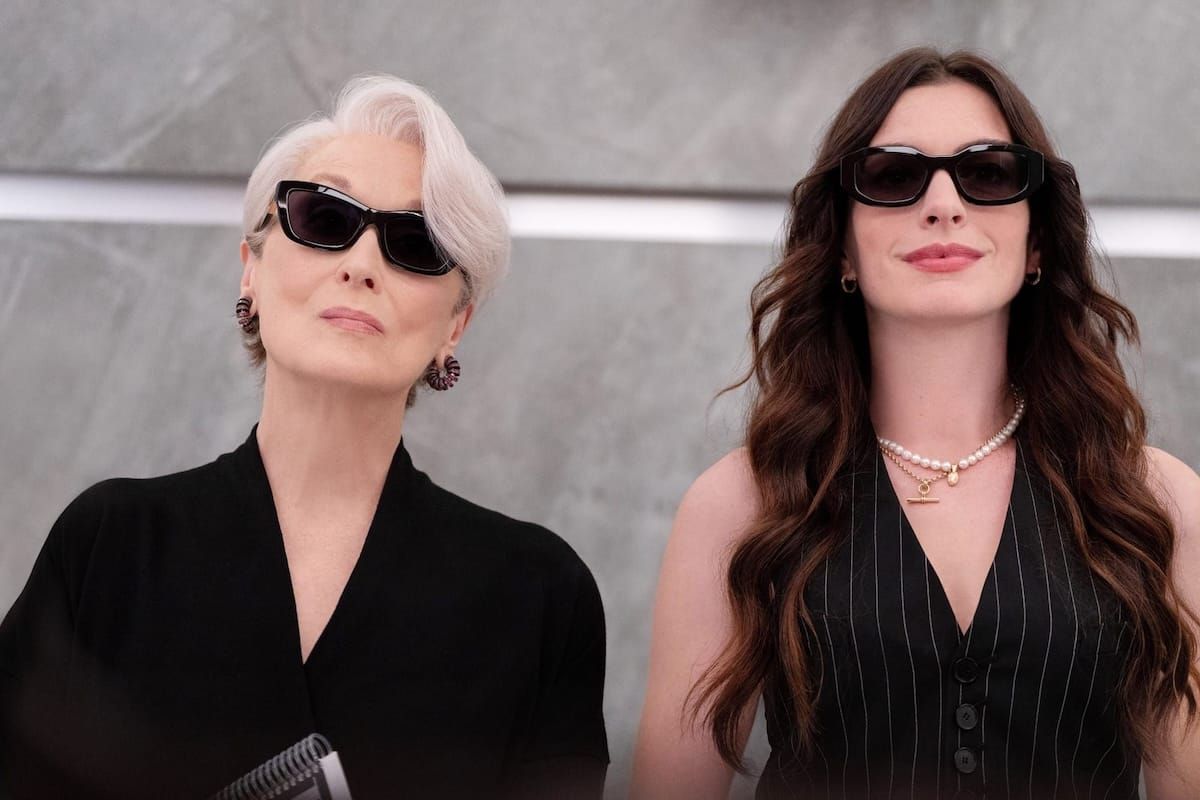
What a difference two decades makes.
When the credits rolled on the first “The Devil Wears Prada” movie in 2006, Andrea “Andy” Sachs, a wannabe reporter turned bumbling fashion assistant played by Anne Hathaway, quit the back-biting world of Runway magazine and landed her dream job in a bustling newsroom.
In the final scene, we see her striding through midtown Manhattan, where she spots none other than Miranda Priestly, Runway’s editor-in-chief/boss-from-hell, who was inspired by Vogue’s Anna Wintour and iconically played by Meryl Streep. Miranda is getting into her company-paid black town car, also once iconic in the perk-filled world of glossy magazines. Andy waves. Miranda ignores her. But, as the town car pulls away, Miranda’s ever-pursed lips curl into a small smile. This made for a happy ending; Andy, the heroine, and Miranda, the censorious villain with a soft voice and razor-sharp tongue, had formed a bond of mutual admiration. We, the audience, left the theater content in the knowledge that they — and the world of women’s magazines — would continue to rise, just like the page count in Vogue’s September issue, which was so chock full of costly advertisements that it was bigger than the phone book.
Except things didn’t go as planned.
In “The Devil Wears Prada 2,” Hathaway and Streep are reunited to great effect. But unlike the original, the new film can’t strut back into our lives with the insouciant swagger of a model at New York Fashion Week. Too much has changed.
I’ve spent a good part of my career writing for women’s magazines including Elle, Harper’s Bazaar and Allure, and I can tell you that these days the glitzy job once known for its town cars, clothing allowances, insider fashion sales, and free lunches, feels like it’s on life support.
Take Vogue’s aforementioned September issue, which, at its zenith, hit 916 pages in 2012. Last fall, it topped out at 376 pages. That’s nothing to sneer at, of course, but it’s indicative of the precipitous decline that print magazines across the globe have experienced over the past decade.
In fact, so many magazines have been shuttered or gone online-only that if you’re looking for a print version of Teen Vogue, Self, or InStyle, you’d best check eBay. Just last week, I went in search of a copy of Vogue at my local drug store. I scoured every aisle and finally found it not on the front rack by the register, where it once held pride of place, but in the back corner of the store across from — and my heart sinks at the thought — a melancholy rack of Hallmark greeting cards.
The budget has been slashed
Small wonder, then, that in “Prada 2,” when editrix Miranda Priestly is told in a meeting that the budget has been slashed for yet another photo shoot, she gripes that Runway’s September issue is “so thin you could floss with it.”
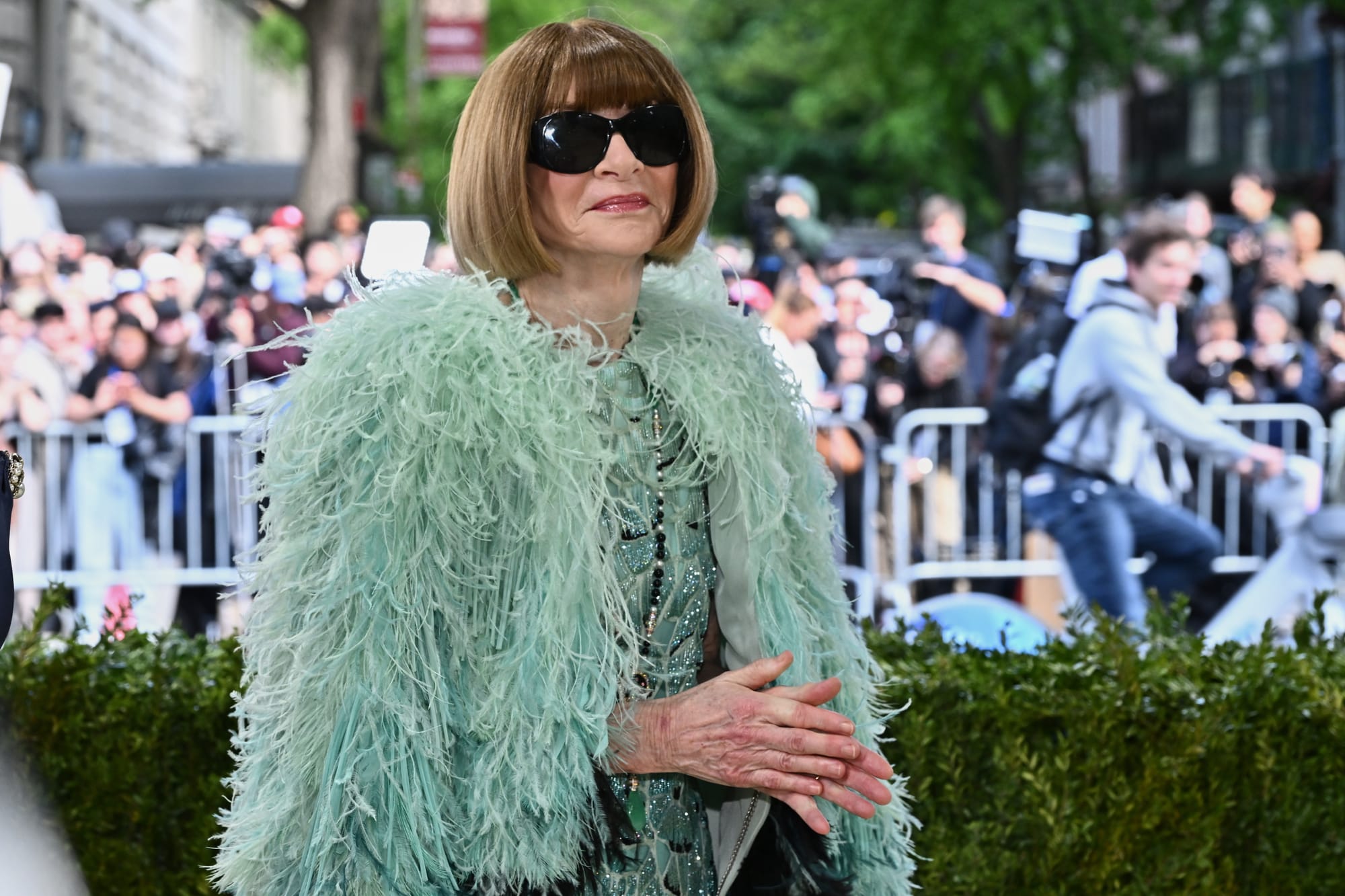
Miranda’s clothes are still designer and her sunglasses — like Wintour’s — are still their signature black and oversized, but 20 years on, she’s been defanged by human resources, which means she can no longer deliver zingers like this one from the first “Prada” — “I said to myself, go ahead. Take a chance. Hire the smart, fat girl.”
Meanwhile, in the sequel, we first see Andy, who has risen from Runway fashion assistant to investigative journalist, at an awards ceremony, where she is about to be recognized for her work. But before she even reaches the dais to accept the statuette, she — and every colleague sitting at her table — is fired via text.
Andy doesn’t have to wait long for her next gig. After Miranda finds herself being excoriated online for unwittingly promoting a fashion brand that uses sweatshop labor, her former assistant is brought back to Runway to help restore the brand’s journalistic gravitas — or something like that.
Really, the plot, which can get a little convoluted, is beside the point. Everyone knows you watch a “Devil Wears Prada” film for the clothes — Balenciaga, Dior, Dries Van Noten, though surprisingly little Prada. Not to mention the barbed comments when your outfit doesn’t measure up: “Look what TJ Maxx dragged in,” quips Miranda’s right-hand-man, Nigel Kipling, played by Stanley Tucci, when Andy first bursts into Miranda’s office. We also watch for the over-the-top fashion shows, which, in “Prada 2” take place in Milan, complete with an appearance by Lady Gaga.
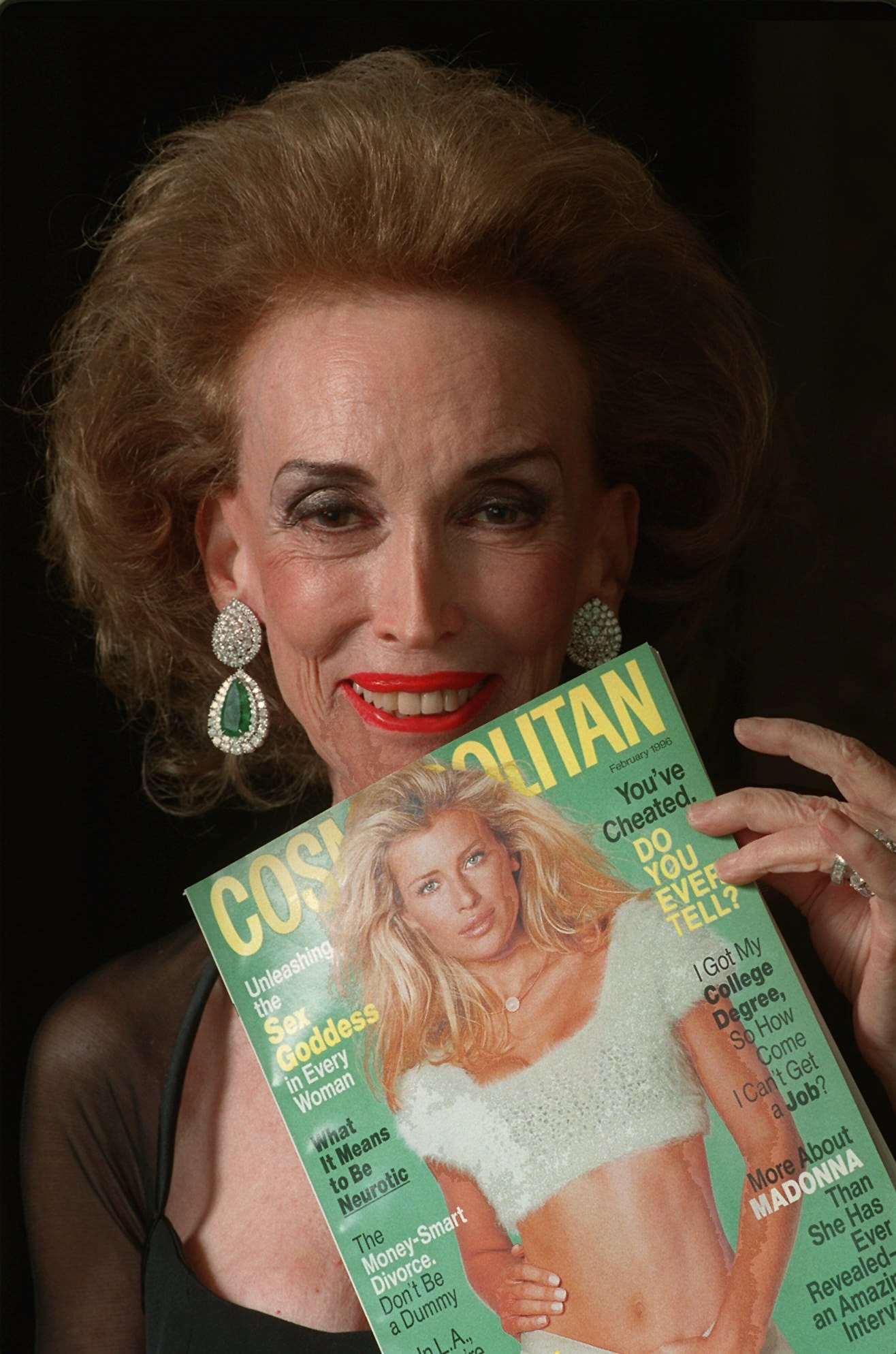
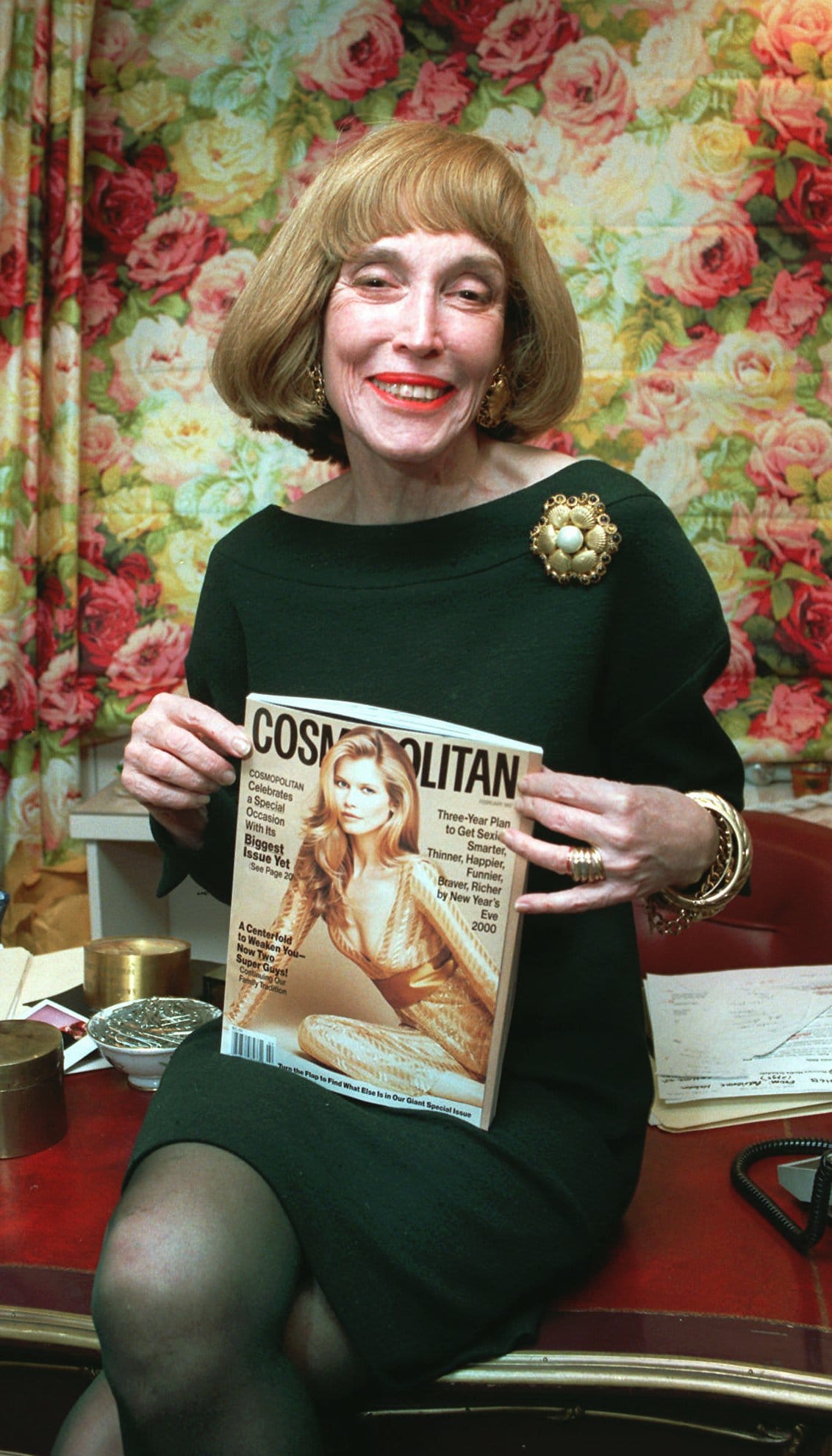
Helen Gurley Brown with Cosmopolitan in 1996 and 1997 (when she retired). | Photos: Associated Press
Why shouldn’t we turn out for such delights? From Helen Gurley Brown, who edited Cosmopolitan magazine from 1965 to 1997, and created the template for future publications that catered to single, working, sexually liberated women, to Diana Vreeland, who spent nearly 30 years at Harper’s Bazaar before taking the helm at Vogue in the early ‘60s, where she elevated fashion from mere clothes to high art and spectacle, the glossies were one of the few places where women could run the thing, write the thing, and, importantly, get paid for the thing.
The glossies were one of the few places where women could run the thing, write the thing, and, importantly, get paid for the thing.
Fashion magazines were never just about the next trend; they were a world where (mostly) women were in charge of creating a product that elevated and celebrated other women. The thousands who worked at these publications got not just a room of their own, but a large chunk of office square footage at Condé Nast, Hachette, and Hearst.
Was it a world of astounding privilege? Indeed. When I was at Elle I felt like the only writer who didn’t have a trust fund. Of course, few women could afford the ultra-luxury lifestyle that was splashed across a fashion magazine’s pages. (At the time, the buzzword for this kind of content was “aspirational.”) Meanwhile, it didn’t take a genius to notice that there were few people of color behind the editors’ desks — much less on the covers.
Nevertheless…
“Prada 2” — which has grossed $433 million world-wide as of May 11, the latest figures available — is still a testament to female enterprise and the economic power that can be harnessed when women’s stories are told. (Remember the “Barbie” movie which grossed $1,38 billion worldwide? Exactly!) Streep and Hathaway — both producers on “Prada 2” — are themselves an example of how far women can go when they take charge of the narrative.
Of course, at the end of the day “Prada 2” is just a comedy. But it’s also a rejoinder to the backwards idea that women shouldn’t be running things.
Digital slop
In the second half of the movie, Jay Ravitz, a nepo tech bro played by B.J. Novack, who has been put in charge of Runway’s parent company, tells Miranda that one day, Runway might be run entirely by AI. Her expression is a mixture of sadness and, perhaps worse, resignation. “How do you preserve the best in human achievement in the face of digital slop?” she asks him. He doesn’t give a real answer, because, as becomes clear, he doesn’t actually care.
And yet, there is still some light. Magazines like Runway may be facing extinction IRL, but the rewards of female economic, intellectual, and bodily independence are not so easily trumped by political grandstanding and the constant stream of algorithmic influence that grows less appealing by the day.
At the end of the movie, Miranda, Andy — and the magazine — live on to print another issue. It may not last but Miranda is un-cowed. “I just love my work. Don’t you?” she asks Andy, who’s inside the town car this time. Both women know there’s a reason women’s magazines had such a good run: We still want to be inspired, educated and informed, in whatever format we choose to devour next.
The party may be smaller — and considering the latest Met Gala perhaps it should be — but write, publish and create on we must. Or, as Miranda Priestly would say, “That’s all.”
 Emma Haslett