The Trump Administration Just Made it Harder for Workers to Fight Harassment
More than 70 organizations say the move undermines the agency’s mission and makes it more difficult for workers to challenge discrimination.

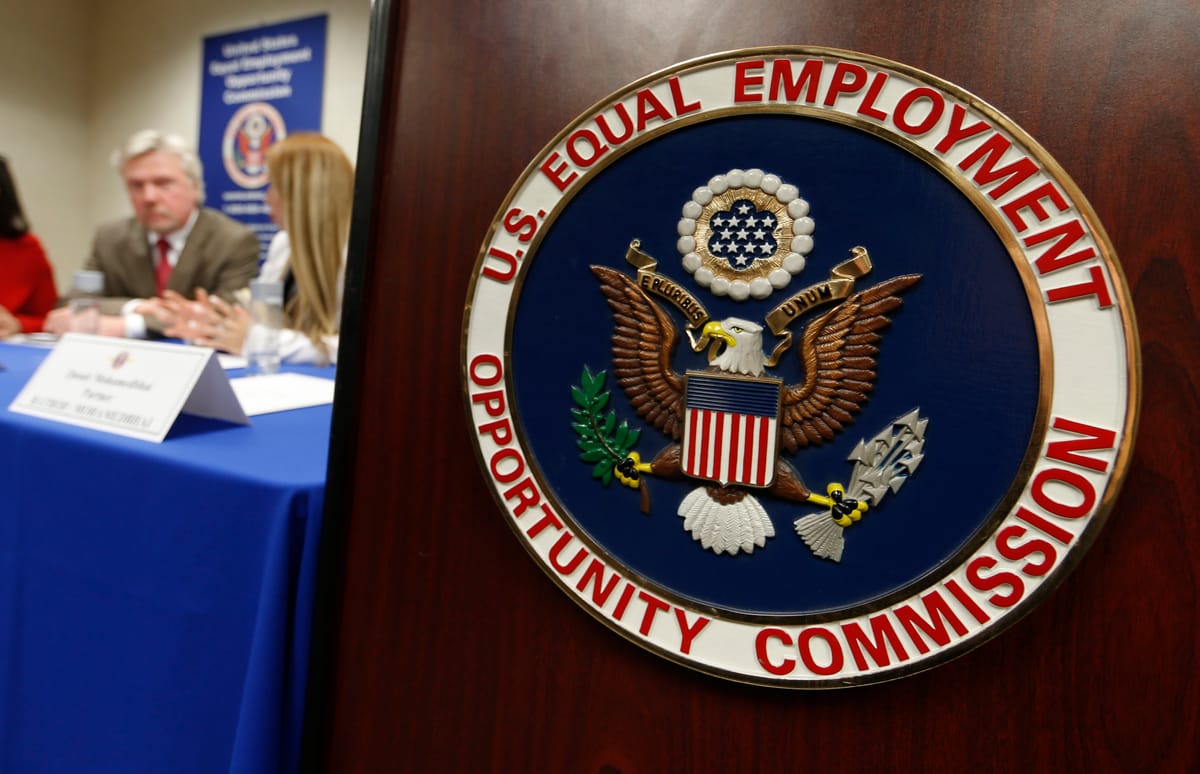
The Equal Employment Opportunity Commission (EEOC), the federal agency that protects private-sector workers from discrimination, voted on Thursday to rescind its harassment guidance, a move that critics say will make it much harder for employees to take action for being treated unfairly on the job.
The EEOC vote sparked widespread outrage from workers’ rights groups. In the lead-up to the vote, some 70 organizations including Human Rights Campaign, American Civil Liberties Union, and National Women’s Law Center had signed a letter warning of the dire consequences of rescission and describing the move as an example of the EEOC “straying from its core mission.”
The EEOC was established by Title VII of the Civil Rights Act of 1964 and went into operation in July 1965, with the explicit goal of enforcing laws against workplace discrimination based on race, color, religion, sex, and national origin, later expanding to cover age, disability, and genetic information, ensuring fair employment opportunities for all.
“The [EEOC’s] Harassment Guidance is a critically important resource that helps ensure all workers can work safely and with dignity,” the letter states. It notes that the document was “the culmination of a years-long effort by the EEOC to strengthen harassment prevention, including by developing a bipartisan task force, holding stakeholder meetings, and producing an extensive report.”
A Clear Shift
The harassment guidance was formally issued in 2024, following a notice and comment period during which the EEOC received over 38,000 comments. “This document provided much needed updated guidance for the first time in nearly a quarter century,” the letter states.
But some conservatives, including the current Trump-appointed EEOC chair Andrea Lucas, had particularly taken issue with parts of the guidance that relate to the Supreme Court’s 2020 Bostock v Clayton County case on gender identity and sexual orientation. The guidance had, for example, noted that one type of prohibited conduct was the repeated and intentional use of a name or pronoun that an individual no longer uses.
Of the rescission, Gaylynn Burroughs, vice president for education and workplace justice at the National Women’s Law Center said, “This will be yet another action by this administration to erode the EEOC—a critical product of the Civil Rights Act that has enforced civil rights for over half a century.”
Earlier this week, to mark the first anniversary of Donald Trump’s second term in office, the National Partnership for Women and Families issued a report outlining the 53 ways in which the administration is harming women and families.
Among them, it noted that the administration had already “taken actions to kneecap the EEOC’s true purpose of enforcing civil rights laws and anti-discrimination provisions and worked to weaponize the office to investigate employers that President Trump has a personal vendetta against.” It added that “the EEOC’s priorities and limited resources are clearly shifting to align with the President’s false claims of systemic discrimination against white men.”
In January 2025, not long after coming into office for a second time, Trump fired EEOC commissioners Charlotte A. Burrows and Jocelyn Samuels. Both had been appointed by President Joe Biden and confirmed by the Senate to serve terms that had not been due to expire until 2028 and 2026, respectively.