The Oldest Woman Ever to Fly to Space
Wally Funk, who was barred from becoming a NASA astronaut in the 1960s despite passing every test, finally flew to space at age 82.

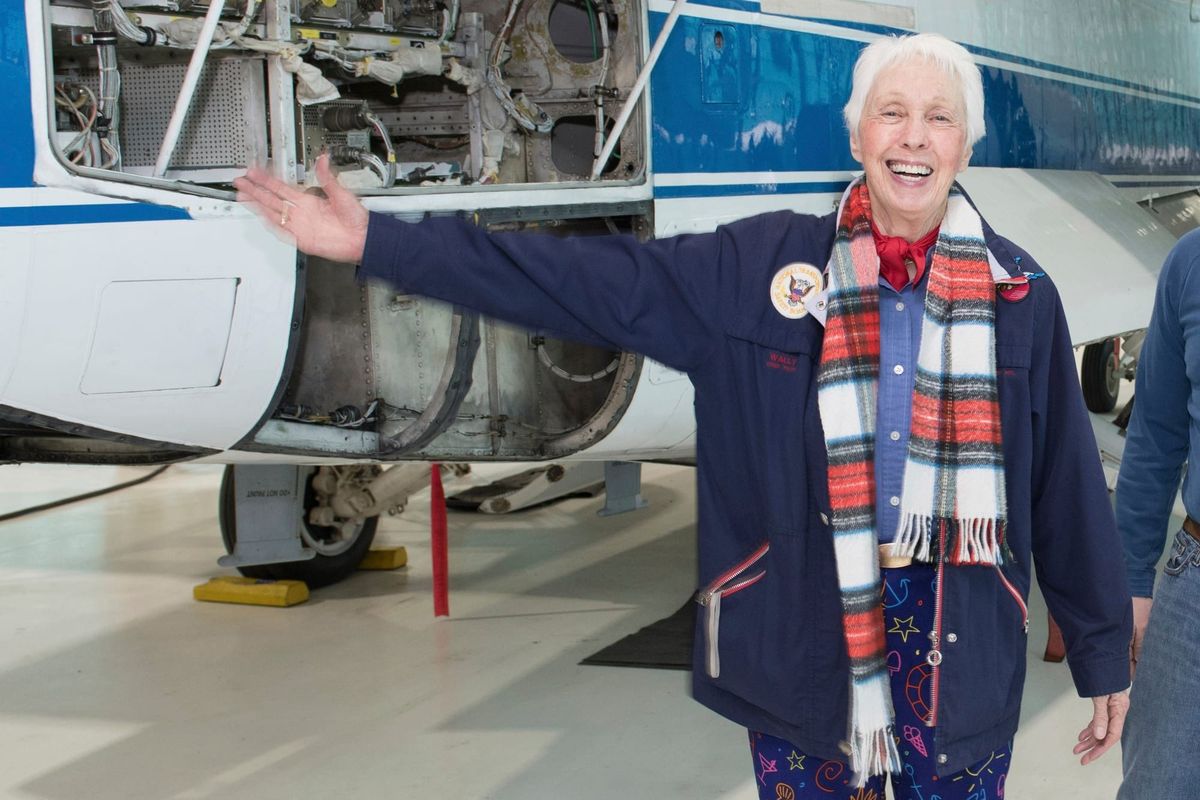
It lasted just 10 minutes and 19 seconds, but Mary Wallace Funk had waited 60 years for it.
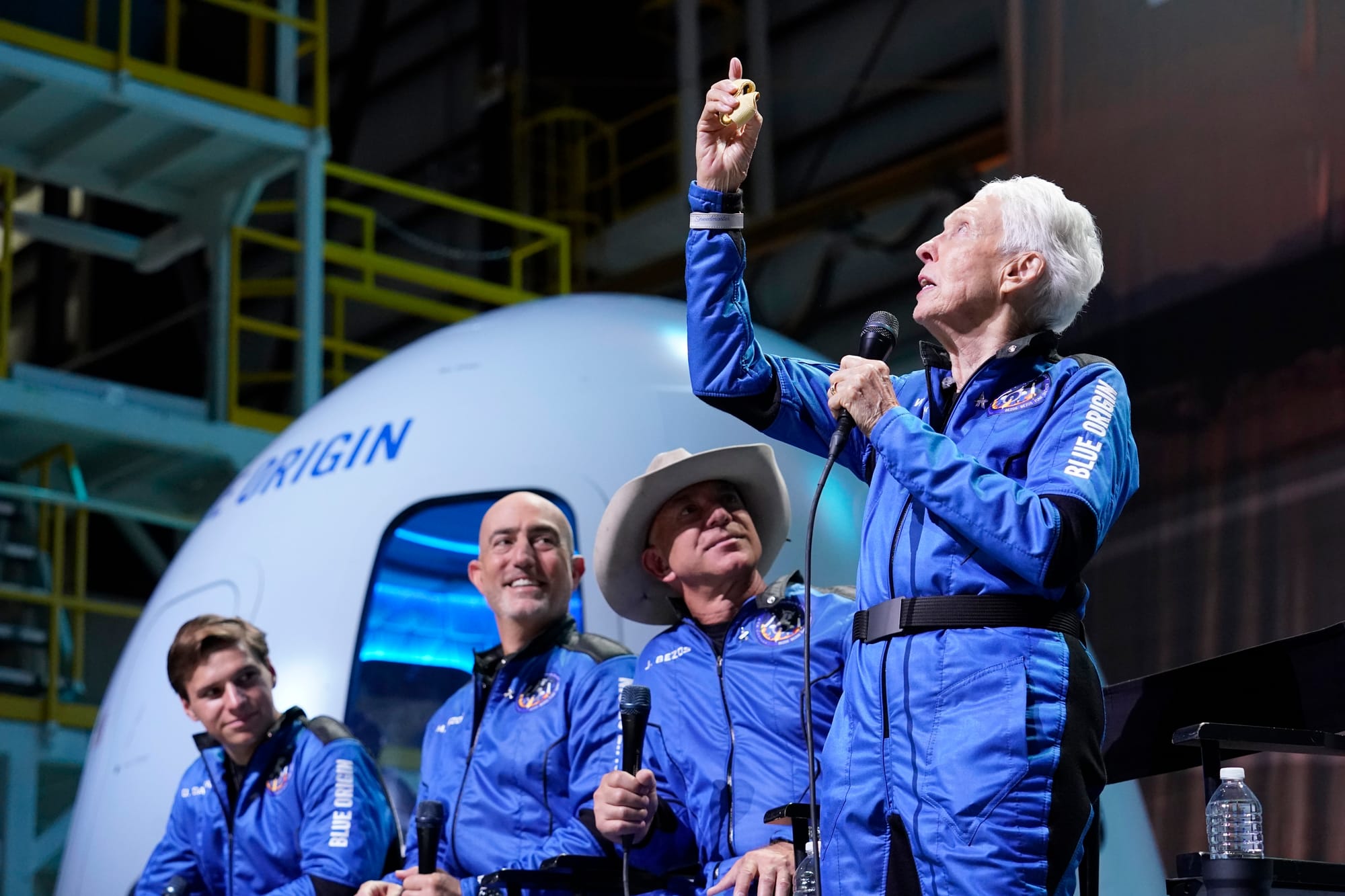
In July 2021, Funk, who only ever went by “Wally,” joined three other passengers — including Jeff Bezos, his brother Mark and an 18-year-old Dutch student Oliver Daemen. Minutes later, the spacecraft crossed the Kármán line, widely regarded as the boundary of space, before returning safely to Earth.
For most, it would have been the adventure of a lifetime. For Wally, it was the fulfillment of one.
She was 82, making her the oldest person ever to travel to space at the time — a record later surpassed by the Star Trek actor, William Shatner and Ed Dwight, the first African American to be trained as an astronaut. Wally remains the oldest woman ever to fly to space.
Every ounce of strength
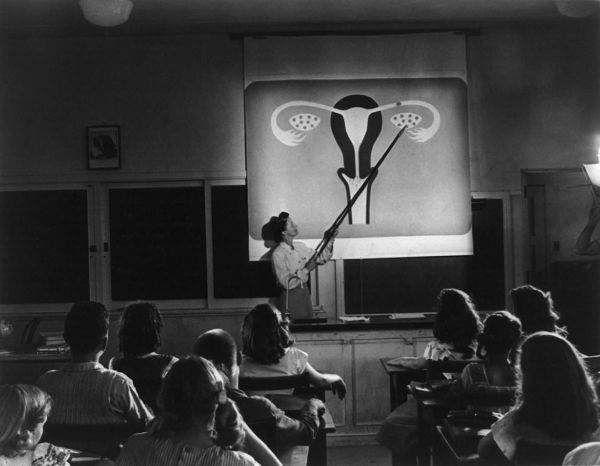
Sixty years earlier, in 1961, Wally had been one of 25 women — later whittled down to 13 — chosen to undergo the same rigorous astronaut screening developed for NASA’s Mercury astronauts as part of a privately run research program — the FLATS (First Lady Astronaut Trainees), also known as the Mercury 13. The program was run by the physician William Randolph Lovelace II, a private contractor to NASA. And although NASA did not sponsor or even sanction the program, the testing sought to determine whether women were physically and psychologically capable of spaceflight and there was a broad understanding among the women that it would prepare at least some of them for a NASA mission.
From the outset, Wally was a formidable candidate. She’d received her flying licence at Stephens College in Missouri and had then gone on to study education at Oklahoma State University, not least because she liked the name of the university’s aviation team: the Flying Aggies — a nod to the university’s original name, Oklahoma Agricultural and Mechanical College. “As a Flying Aggie, I could do all the manoeuvers as well as the boys, if not better,” she told The Guardian in 2019.
In early 1961, Wally, still a college student, heard about Lovelace’s program and wrote to him, volunteering to take part. Being in her early 20s, she was younger than other applicants, who were mostly in their mid-to-late 20s, but her credentials and experience set her apart, and she was accepted.
Convinced the Mercury 13 program could lead to a seat aboard a spacecraft, Wally threw herself into training, cycling eight miles a day and doing dozens of sit-ups and push-ups to prepare for the physical demands ahead.
“They measured every ounce of strength,” she recalled in a 1969 interview with the Illinois State Register. “We tried different diets [and] different ways of expending energy.”
The physical examinations were punishing. One test required candidates to pedal a stationary bicycle at full effort for 10 minutes. Wally later recalled pushing herself for 11 minutes before nearly collapsing. It didn't bother her, she said; she believed she had outperformed many of the men.
She was also subjected to a battery of academic, medical and psychological tests. In one of the most notorious, she spent more than 10 hours alone in a sensory deprivation tank designed to simulate the isolation of space.
“It could have been terrifying to anyone not mentally balanced,” she said. Instead, she emerged with one of the best performances of any participant, reportedly outperforming the famed astronaut John Glenn, the third American in space and the first to orbit the Earth when he circled it three times in 1962.
Later, in California, Wally underwent high-altitude chamber testing to simulate the low-pressure environment of space, endured centrifuge tests that replicated the crushing forces of launch and re-entry, and completed ejection-seat training. Nothing seemed to faze her.
One requirement, however, remained beyond her reach. NASA insisted that astronauts had to be military jet test pilots, a qualification women were barred from obtaining because they were prohibited from flying military aircraft. It was, in other words, an impossible standard for Wally to meet; and the technicality ultimately thwarted her long-held dream.
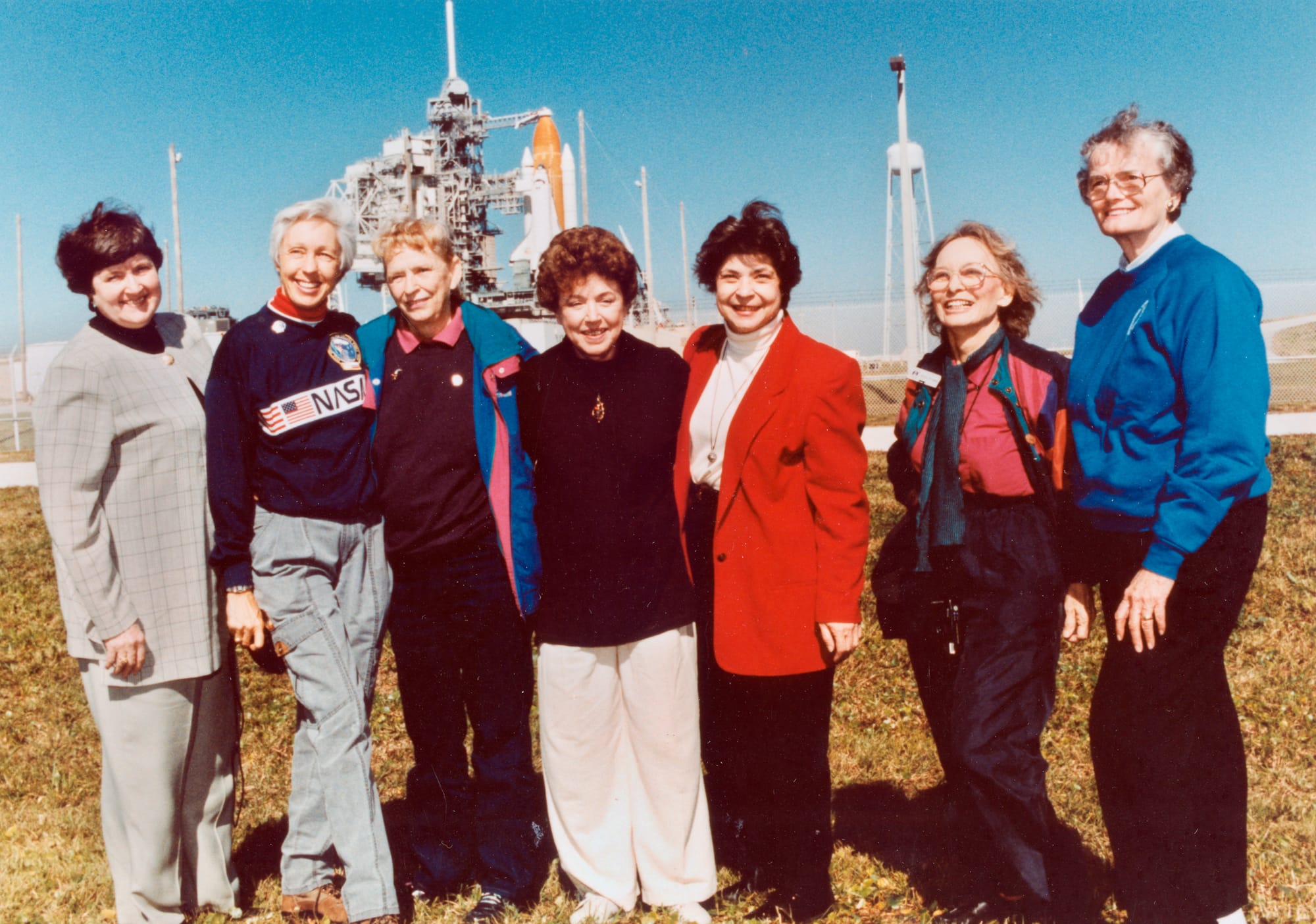
“Skill and ability should be what they're looking for,” Wally said in her 1969 Illinois State Register interview. “We have women right now who are ready to qualify but they can't. Airlines refuse to allow women in their jet training programs. I guess the male ego and the male image all have something to do with it.”
‘I’ll be flying ‘til I die’
Wally reportedly made other attempts to get accepted for NASA’s astronaut corps but was told she didn’t qualify because she didn’t have an engineering degree. In fact, NASA didn’t select its first class of female astronauts until January 1978, by which point Wally was 38. Five years later, in 1983, Sally Ride became the first American woman in space. (The first woman in space was the Soviet cosmonaut Valentina Tereshkova in 1963.)
Alan Shepard — who Wally noted in her 1969 interview hadn’t lasted the full 10-minutes in the bicycle test — became NASA’s first American in space in 1961.
Blocked from space, Wally built a pioneering career in aviation instead. She became the first female inspector for the Federal Aviation Administration and later the first female air safety investigator for the National Transportation Safety Board. She also logged more than 19,000 hours in the air as a pilot, taught thousands of students to fly and earned scores of aviation records and ratings over the course of her career. She owned, operated and taught at a flying school in Taos, New Mexico.
“Aviation has been my whole life,” Wally wrote in her 2020 memoir. “I eat it, and I breathe it.” In her interview with The Guardian in 2019, she spoke about still teaching. “I’ll be flying ‘til I die,” she said.
‘Godspeed, Wally’
When Jeff Bezos invited Wally, then 82, to join Blue Origin's first crewed spaceflight in 2021, she didn’t hesitate. “I've been waiting a long time to finally get to go to space,” she said before the launch. “I will love every second of it.”
Wally died on July 8, at an assisted living facility in Grapevine, Texas. She was 87. In an interview with the Associated Press, Grapevine City Council member Duff O’Dell, who described herself as Wally’s caregiver, said Wally was “the most eternally optimistic person” she'd ever known.
“She was told by many, many, many men, ‘No, you can’t do this. No, you can’t do that,’” O’Dell said. "And she never got mad about it. She just was more determined.”
In a tribute posted on X, NASA Administrator Jared Isaacman wrote that “Wally Funk never stopped believing that one day she would reach space.”
“Her passion for flight, perseverance, and love of exploration will continue to inspire generations of Americans,” he wrote. “Godspeed, Wally.”
Blue Origin also paid tribute to Wally, recognizing her as “the youngest of the Mercury 13” and someone who outperformed “nearly every test put in front of her.”
“We were humbled to be part of her journey,” the post reads. “Her story will continue to inspire generations of future explorers. Fly Wally, Fly.”