The Problem with Reality TV? We Forget It Involves Real People.
What once would have felt invasive, humiliating or cruel, now barely registers as remarkable. The spectacle escalates, viewers acclimatize, and the cycle repeats itself.


It’s a story that’s shocking for its inability to really shock us anymore: Earlier this month, the BBC reported that two women had come forward saying they had been raped during the filming of one of U.K. broadcaster Channel 4’s biggest reality TV shows.
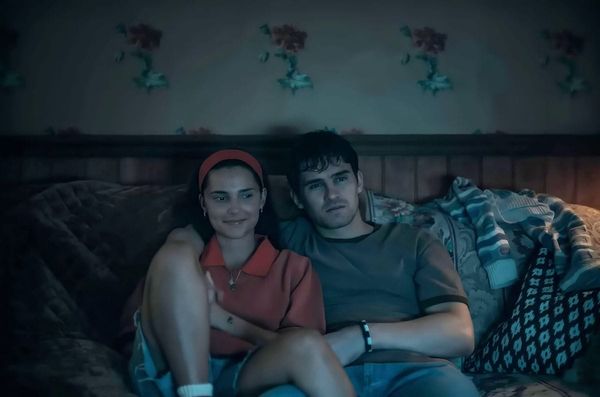
The show in question, “Married At First Sight UK,” is based on a series that first aired in Denmark in 2013, in which couples are paired up by relationship experts. The twist is that they marry — as the name suggests — the first time they ever meet.
When the show debuted in Denmark more than a decade ago, the program proved so compelling and commercially popular that it almost immediately became a global franchise. Offshoots have aired in at least two dozen countries, including Sweden, Spain, South Africa, Germany, Russia, France and Mongolia. The U.S. version premiered in 2014; last year, season 19 aired.
To me, the longevity of the concept tells us many things. On the one hand, as humans, we’re biologically wired to be intrigued by the lives of other people, and that includes their romances. We enjoy a bit of gossip. We can’t help but compare ourselves to the people we see on the screen. Are they better off than us? Worse off? Would I make the same choice, they did? A little around-the-campfire gossip for the post-watercooler era. We’ve always done it, we can’t help it.
I find it oddly comforting that, in this age of AI, when we’re turning to chatbots to help us with our decision making and even dating choices (and heck, some of us are even marrying the chatbots), one thing remains very clear: We still bask in vicariously living through someone else’s pure emotion — joy, heartbreak and everything in between.
On the other hand, the long-drawn out evolution of a show like “Married At First Sight” tells us something dark and uncomfortable about the state of the entertainment economy and what happens when the harsh pressures of capitalism crash up against decency and ethics.
That reality TV can be exploitative is, by now, a widely accepted truth. But when producers start turning one of society’s oldest and supposedly most sacred institutions into serialized entertainment, and when we start breathlessly tuning into it (even if we tell ourselves we’re doing so “ironically,”) that’s when it becomes uncomfortable.
In doing so we’re toying with, and ridiculing, people’s most innate desire for affection and connection. But the spectrum of exploitation is vast. Need I remind anyone of all the reasons why “The Biggest Loser” should’ve been scrapped at the very first drawing board? Some might also remember “The Swan,” which promised to make beauty queens out of “ugly ducklings,” or “Born in the Wild,” a show that glorified giving birth outdoors and unassisted by modern medicine. Some might call it entertainment, I call it awful.
Writing for The New York Times Magazine last year, the journalist Carly Lewis, observed that for Bravo, a U.S. cable television network known for its wildly successful reality shows, ethical lines that were at one time considered un-breachable had now completely disappeared. “Yes, the audience should still know that things like domestic and sexual violence are criminal — but now we seem interested in watching the resulting pain play out,” she writes. “It no longer suffices to laugh at trivial antics, judging cast members on scales of pettiness and cringe. We want to ogle chaos and trauma.”
Our collective predilection for ogling these issues is, as Lewis points out, horrid; but what’s more worrisome is how quickly the audience becomes inured to these ideas once the boundaries have been crossed. It’s no longer enough for a matchmaker to set you up with a stranger while the world is watching. You now have to be naked while the spectacle unfolds.
What once would have felt invasive, humiliating or outright cruel now barely registers as remarkable. The spectacle escalates, viewers acclimatize and the cycle repeats itself, largely because, in an entertainment economy driven by attention, there is almost no incentive to stop.
In the case of “Married at First Sight UK,” in the days after the BBC reported on the allegations, Channel 4’s chief executive issued an apology for any distress caused and said she had commissioned an external review to ensure the show was safe for those taking part. The British government, meanwhile, has written to both Channel 4 and the regulatory body tasked with overseeing broadcasters with questions pertaining to conduct, their response and future plans to safeguard participant safety.
But this is not the first time this has happened and it likely won’t be the last. A Netflix documentary last year revealed questionable ethics on “America’s Next Top Model,” and a crew member was fired from “Below Deck Down Under” in 2023 after they were caught on camera climbing into a cast member’s bed. The list of similar incidents is long and incomplete: Much of what goes on stays firmly behind the scenes.
I sometimes wonder whether we’ve forgotten something very simple: These shows only exist because people watch them. Audiences are not, and never have been, passive observers in this ecosystem. Our attention is the product being sold, and every view, click and viral clip communicates what we are willing to accept in exchange for entertainment. If humiliation, emotional manipulation and even allegations of violence continue to generate engagement, television networks and streaming platforms will keep testing the outer limits of what can be commodified. Why wouldn’t they? That is how capitalism works.
Amid these latest horrible allegations in the U.K., the conversation necessarily has to be about irresponsible producers and morally bankrupt networks. But it also has to be about us — about our collective willingness to consume increasingly intimate forms of suffering as spectacle.
At some point, viewers have to decide where the ethical limits are: not only for entertainment itself, but for the treatment of actual human beings placed inside manufactured psychological experiments for public consumption. Despite the genre’s name, the one thing reality television can make dangerously easy to forget is that the people on screen are, in fact, real.