Menopause Can Make You Better at Your Job. Now There’s a Thought.
Support for menopause at work isn’t just a nice thing to do. It’s an economic imperative.

Like most women, I remember the exact moment I got my first period (August 1992, in my great Aunt Donna’s bathroom).
Also like most women, I had absolutely no idea the moment menopause would sneak up on me. But there I was, on a winter Tuesday, sitting in a Senator’s office in Washington D.C. for a meeting on women’s health outcomes in his state. As I shared relevant statistics and stories, it took all of my self control — all of it — not to share this one too: Mere minutes earlier, in a bathroom stall down the hall, I had peeled off my sweated-through suit, bra, and underwear and realized with sudden clarity…my first hot flash! Luckily, I had a suitcase with me for fresh clothes.
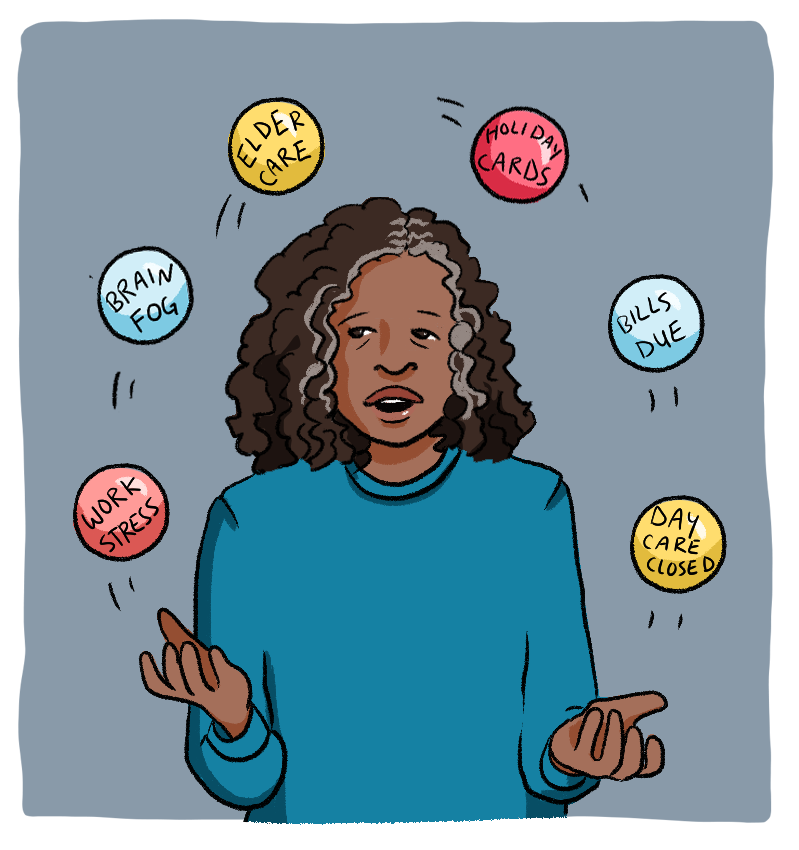
For months, I’d been showing up to work Zooms with bags under my eyes. I’d been short-tempered, especially with younger colleagues. I’d become overly dependent on my slides and notes whenever I gave a talk or an interview, unable to trust myself to remember multi-syllabic words like “discrimination” or “fallopian.” And my writing. Sob. Why couldn’t I write anymore? I’d sit with my laptop on my couch, a heating pad on my mysteriously aching hips, cursor blinking at me and wonder: Is this it? Is my best work behind me?
Of course it wasn’t. It was peri-menopause. Surprise! Aunt Donna, guess what?!
My life’s work — which includes the aforementioned writing and speaking — is to advance women’s equality in the workforce through support for caregivers. In short: I help women negotiate their needs, like time to pump breastmilk, or to drive grandpa to his weekly chemo, and then I help their employers understand the dollars and cents business case for supporting them (spoiler: the R.O.I. is 18 times). I have spent decades focused on this. Which is why it came as no small surprise to me that I’d somehow managed to miss the most obvious signs, symptoms, and needs of my very own menopause.
I’d somehow managed to miss the most obvious signs, symptoms, and needs of my very own menopause.
Like so many of the women I’d coached, I’d mistakenly assumed that my cranky incompetence was an individual problem to be solved by me. But, nope. It was biology, and insufficient systems of support.
And so, I had an idea. A beloved former boss, exactly 10 years my senior, had helped launch Midi Health, a virtual menopause care company. What if we partnered up to look at the work performance of Midi’s patients, who are either in or approaching menopause, before treatment versus after they started getting care?
There was already reams of research on the bad stuff: We knew that untreated menopause symptoms cost the U.S. economy $26 billion a year (a conservative estimate); that the menopause penalty causes a 20% decrease in women’s income; that women’s salaries peak at age 44 (a full decade earlier than men’s).
But what was missing was the counter-narrative — yes, you read that correctly: Numbers that show what’s possible for working women when they receive appropriate, comprehensive care for their symptoms.
What we found was that working women in midlife were hyper capable — skilled and ambitious as ever — especially if they had the support they needed.
Women exceeded their own expectations (and society’s) and were less likely to abandon the careers they’d built when they had easy access to healthcare providers who were actual experts in menopause; when they could try hormones and supplements under medical supervision and without judgements; when they felt able to ask for necessary accommodations at work.
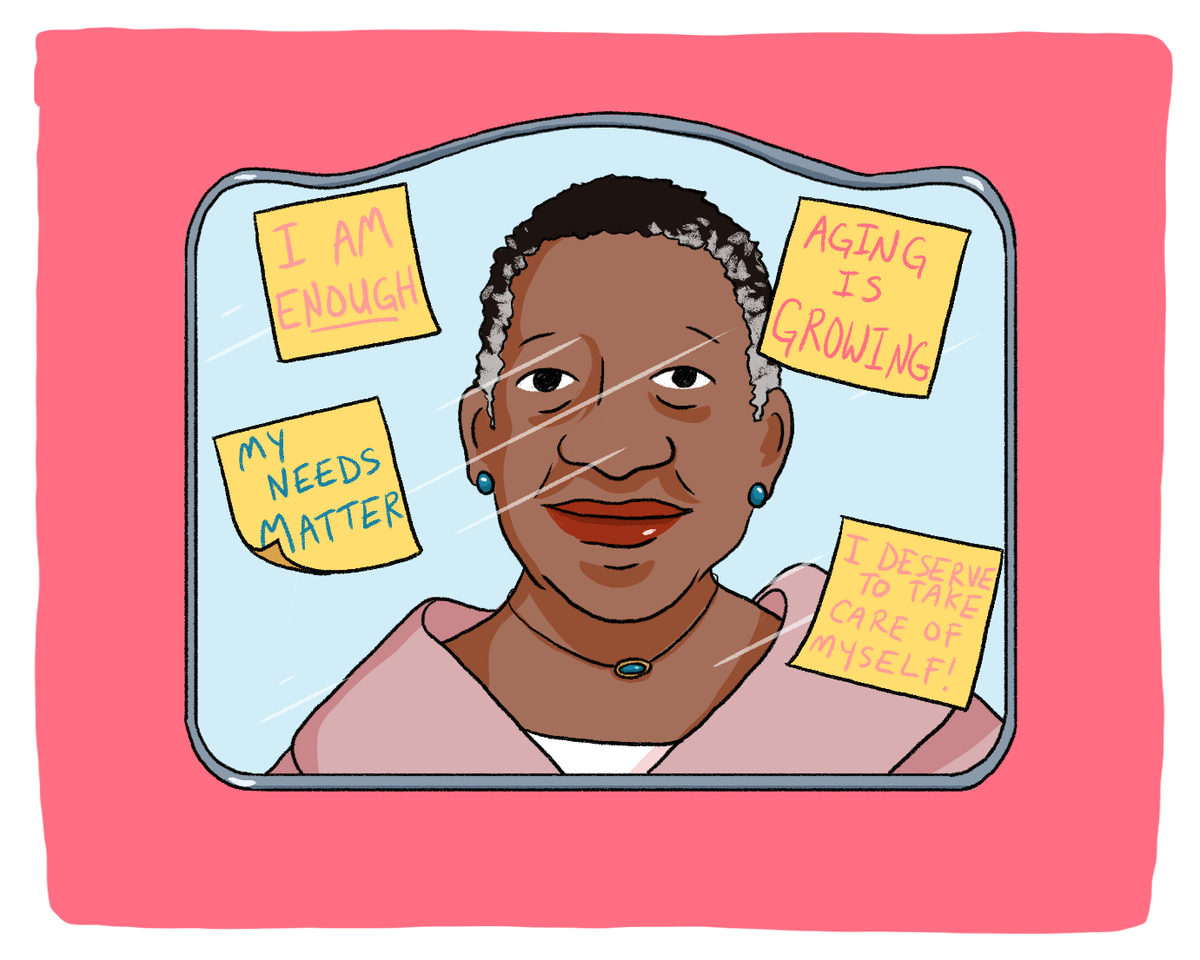
Was I surprised? Yes, my implicit bias was showing, and actually, I was. But the more I sat with the results, the more they made sense to me. And as I wrote up the findings in our resulting report, “The Unstoppable Workforce,” it became so clear that what had forever been billed as a mysterious, torturous evil wasn’t entirely true. Yes, menopause symptoms sucked. No, they weren’t at all a death knell for a woman’s career. Here’s what the surveying and case studies showed us:
Surprise No. 1: Women going through menopause aren’t actually underperforming at work.
Before treatment, most women actually were not underperforming at work, but they were suffering quietly, often while also doing the majority of unpaid labor at home.
The top three most work-disruptive symptoms — experienced by nine out of 10 women — were likely invisible to their colleagues: disrupted sleep (4 a.m. sweaty wakeups, hello!); brain fog; and “just feeling off.” Additionally, eight out of 10 reported anxiety or depression.
But a full 93% reported that even before getting treatment, they were (somehow!) meeting all of their job requirements, despite nearly three-quarters reporting they “always” or “often” felt unwell while working. Ah ha. They were getting it done, just at great cost to themselves. And at great risk to their career longevity.
Surprise No. 2: Getting menopause treatment can actually unlock new levels of ambition.
Here’s that counter-narrative we were thrilled to find: Once women felt their symptoms improve, they were nearly four times more likely to “meet or exceed” their job requirements and 65% less likely to turn down a promotion.
In fact, a full 86% said that getting care positively impacted their work performance. They were more productive and efficient (70%); better able to manage work stress (58%); more innovative, proposing more ideas (30%), better at mentoring (25%). And perhaps most meaningfully, 44% said they were better able to maintain work-life balance. They could keep going in their careers at a moment when they were most poised to advance.
Surprise No. 3: Menopause care encourages women to start practicing a host of other healthy behaviors.
This was really cool: Getting menopause care (and, perhaps, just feeling believed, seen, and supported) turned out to be a catalyst for all kinds of other good habits for a whopping 86% of women, with 44% reporting that they started exercising more; 37% drinking less alcohol; and 40% feeling like they had healthier family relationships.
Surprise No. 4: When women are supported with menopause care, work teams are strengthened.
Yes, really! And it’s not just because everyone is in a better mood! Survey respondents reported that menopause benefits were a cultural signal to all people (including men) that wellbeing matters. Typically, women felt that workplaces offered three times as much support for family planning and two times as much for parenting young kids as they did for women going through menopause. But midlife benefits can help correct that perceived falloff of support, at a time when sandwich-generation caregiving is busiest.
After receiving care, women were 74% less likely to consider quitting or reducing their hours, and a majority (55%) said that they would recommend their employer to others, and 46% would more enthusiastically recommend its goods and services.
I wish I’d had these numbers in my head in that Senate bathroom stall, as I scrounged through my suitcase in desperation. My body may have been on fire, but so was my motivation. As with every career transition I’ve been through pregnancy, new motherhood — it would have helped to have the data that proved what was possible. So now it’s here and it’s yours to use.
Support for menopause at work isn’t just a nice thing to do. It’s an economic imperative.
 Aubrey Hirsch