‘Pilates Girl’ is a Fantasy That Requires the Salary of a CEO and the Schedule of a Tradwife
A recent episode of the dating show ‘Love is Blind’ showed a man complaining that his new partner ‘doesn’t do pilates every day.’ That’s a problem.

I watch the Netflix dating show “Love Is Blind” with my brain switched off. Here’s the concept: Single women and men get engaged, sight unseen, after connecting only through conversations in isolated “pods,” then awkwardly meet face-to-face before deciding whether to go through with the wedding. Hilarity, inevitably, ensues. It's the show I put on when I don't want to think; the one that lets me sit on the couch and pretend for an hour the world is not on fire.
But then, this season happened. A 33-year-old account executive named Chris Fusco sat across from his newly-revealed fiancée, Jessica Barrett, an infectious disease doctor, and told her she wasn't his type. The reason: “To be totally honest, and without sounding like a f*cking d*ckhead,” Fusco obfuscated, “I date people who, like, f*cking do f*cking Crossfit and sh*t.”
“Mmhm,” Barrett responded, waiting for him to just say it. “I’m trying to, like, I don’t know,” he continued. “Someone who has a different type of…. I don’t know.”
Barrett finally gave in.“A different type of body?” she asked. Here, Fusco had the good grace to look ashamed. “It’s just somebody who does, like, f*cking, like, pilates every day.”
I sat up. Barrett is the kind of woman the world should celebrate. She is accomplished, ambitious, and committed to a career that saves lives. And here was a man on a reality dating show telling her she'd fallen short.
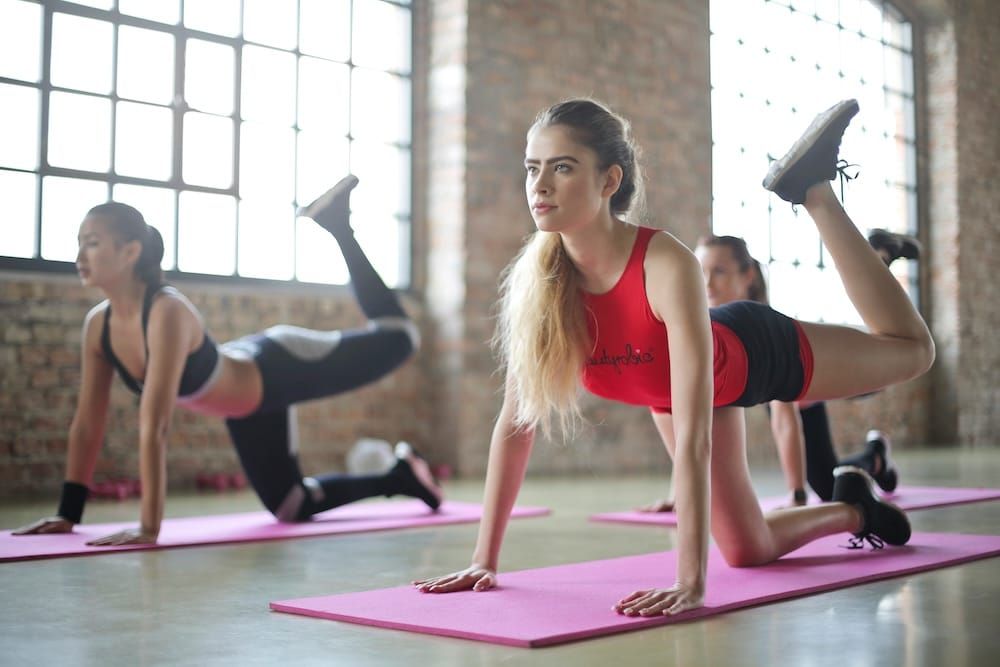
Fusco’s preference doesn’t come from nowhere. “Pilates girl” has become a cultural touchpoint for a generation of men. Google searches for the term have steadily risen since 2024, hitting an all-time high at the end of 2025. And pilates has been the most-booked workout globally on the popular fitness booking app, ClassPass, for three consecutive years.
But alongside this apparent fitness boom, something else has been brewing. What started as an aspirational wellness aesthetic that appeared to prioritize matcha lattes, neutral-toned legging sets and slick buns, has been co-opted by misogynistic corners of the internet with an altogether different agenda. On Instagram and TikTok, male influencers began using “pilates girl” as shorthand for a particular kind of woman they deemed acceptable for marriage.
As The 19th* recently reported, in the imagination of the manosphere, the so-called “pilates girl” prioritizes her physical appearance, choosing a workout routine that keeps her lean (not bulky) and surrounds herself with other women (which also means: not men). That makes her “wife material.”
What nobody is discussing is what this fantasy — the near full-time job of maintaining one’s body with daily Pilates and clean eating to maintain the aesthetics of a “soft life” — actually requires a woman to forfeit. The manosphere doesn't say “don't have a career” outright. It doesn't have to. The lifestyle it prescribes is the career. And that career is him.
 Emma Haslett
Pretty, Pleasant, Detached
What “pilates girl” provides for the manosphere, is a cover — a way to repackage the instruction to stay home in language that sounds like personal preference instead of ideology. Nobody can be canceled for finding pilates attractive, but by glorifying the “pilates girl,” the manosphere is really saying the ideal woman is skipping work to get to pilates, not skipping pilates to get to work.
But, oh the irony. Pilates is expensive. A reformer class in Manhattan can cost as much as $60. Add that up and “pilates girl” becomes a woman with the wealth of a C.E.O. and the schedule of a stay-at-home wife. The fantasy requires both the money and the absence of the work that produced it.
This fantasy has a history. The 1950s housewife was sold the same impossible bill of goods — the goods just looked different. Here the housewife was expected to keep up an immaculate home, have well-behaved children and greet her husband at the door with a cocktail, all while remaining slim, poised, and perpetually cheerful. This aesthetic can be seen today in the modern tradwife movement, where TikTok has become the home of women showcasing their sourdough starters, floor-length dresses and homestead-like lifestyles. But — as critics have pointed out — this lifestyle requires a level of wealth and leisure time that the majority of families cannot afford and the women selling it are hardly living off a single income. The most prominent tradwife influencers are building media empires: Nara Smith reportedly earns upward of $200,000 a month from TikTok alone and Ballerina Farm now employs 50 people. The aesthetic may be submissive, but the business model is not.
Emma Haslett
Ambitious, in spite of it
Of course as we well know, while the manosphere constructs the fantasy of the “pilates girl,” real women in real life are still very ambitious. Eight in 10 women want to be promoted to the next level and young women at the entry level are more interested in being promoted than young men, according to McKinsey and Lean In’s latest Women in the Workplace report. And when women have children — one of their highest callings, according to the manosphere — they become even more ambitious: Working mothers are the most career-motivated group in the entire American workforce, according to recent data from Gallup.
I have devoted my ambitious career to studying and advancing women at work, and I have not come across a ton of women choosing the “pilates girl” life. What I do see is a coordinated cultural and structural campaign straight out of the manosphere that judges, even berates women who choose well, whatever it is they want to pursue.
Barrett on “Love is Blind” was rejected because her success was visible. She represented the thing her partner’s fantasy cannot accommodate: a woman whose life is organized around purpose, skill and work that matters. In the manosphere, “pilates girl” serves as a job description for women: Look beautiful, stay agreeable, and never ever let your ambition take up too much space.