When a Heatwave Hits, It’s Women Who Pick Up the Pieces
Sun hats, sunscreen, hydration: It’s the primary carers dropping everything to keep everyone cool.


In late June, as a “heat dome” squatted sweatily over Europe, sending temperatures soaring into the three digits, my mums’ group chat morphed into a to-do list of things we should do to keep our kids cool.
My friends were inflating paddling pools, shopping for fans and ice cream and cooling pads; ensuring everyone had hats and sunscreen and loose clothing and bottles of water; and then triple checking that everyone was wearing aforementioned hats and applying aforementioned sunscreen and drinking aforementioned water. And then, came the task of fielding emails from schools. Simply put: Schools couldn’t cope, which meant parents — by which I mean mostly mums — needed to step up.
Ultimately, about 1,000 schools in the U.K. gave up and closed: a desk fan — the cooling method of choice in many schools — is no match for temperatures above 100 degrees.
“Son is home; daughters finishing at 1 p.m.,” wrote a friend in the chat, whose job as a government lawyer did not, needless to say, finish at 1 p.m. She was angry. “I feel like [my husband] has worked and gone into town every day and I have also worked but also dealt with the kids struggling, been vigilant about hydration etc.”
One month later, heatwaves are beginning to feel routine in the U.K., a country more geared for drizzle than for long periods of sunshine. This year we've already weathered three periods of intense heat, with another expected to hit this week, and the U.K.'s weather prediction service is warning of more to come before the summer is out.
In the U.K., seven water companies have now implemented hosepipe bans, which prevent residents from activities such as watering their gardens and washing their cars; arable farmers have warned of "crops wilting in the fields" and in Scotland and Wales, firefighters have spent days battling the "worst wildfires ever seen in Britain." Meanwhile, in France and Spain, well over 300,000 people have been evacuated from their homes as wildfires rage. It's horrifying.
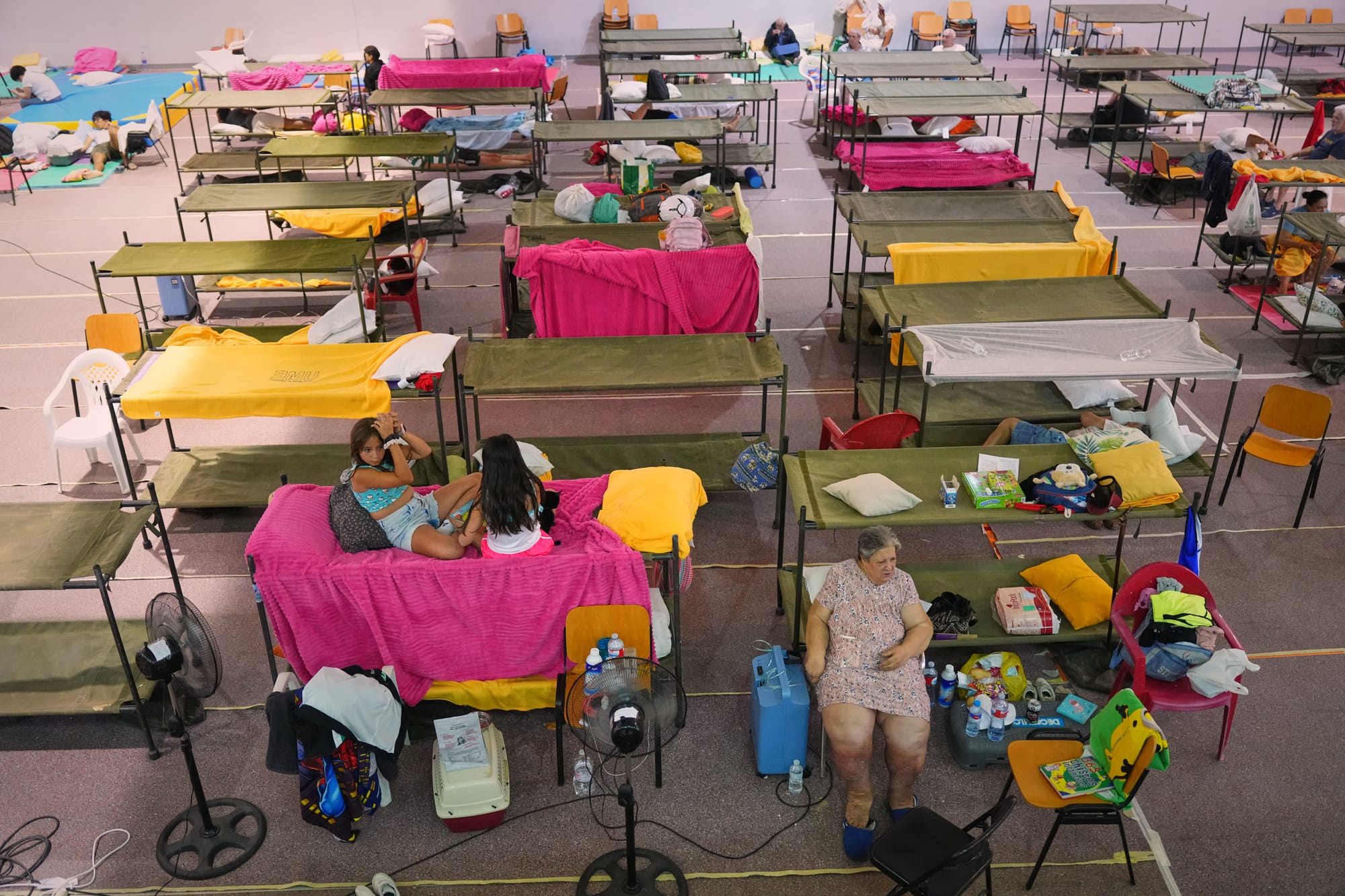
When daycare calls...
We’ve written before that heatwaves affect women disproportionately: Women are 14 times more likely than men to die because they don’t have the same access to information and mobility as men. There are also physical factors: Women sweat less and experience more strain on the heart when it’s hot. They’re also more likely to do housework than men, which puts additional strain on the body.
But physical perils aside, heatwaves also exacerbate inequality. We know, of course, that women are already disproportionately the primary carers — in fact, according to the Overseas Development Institute, across 37 countries covering 20% of the global population, women take on 75% of childcare responsibilities.
All of which means that when school or daycare calls, women are almost always the ones who are expected to drop everything. So it’s hardly surprising that it was my mum friends, rather than their male partners, who were expected to take on the added load of keeping kids safe.
In a letter to The Guardian, the social policy researcher Dr. Louise Lawson pointed out that inequalities between the genders “are intensified” during heatwaves. “Women are often left to pick up the pieces created by school closures, disrupted routines and increased care demands. For families already struggling with rising living costs, keeping homes cool, traveling safely or taking time away from work can create further pressures.”
As heatwaves become more common, it’s easy to extrapolate how profoundly women and their careers could be affected. Will the gender pay gap widen as employers become frustrated with women having to drop everything when schools close? (Probably.) What will that mean for the economy? (Nothing good.)
 The Persistent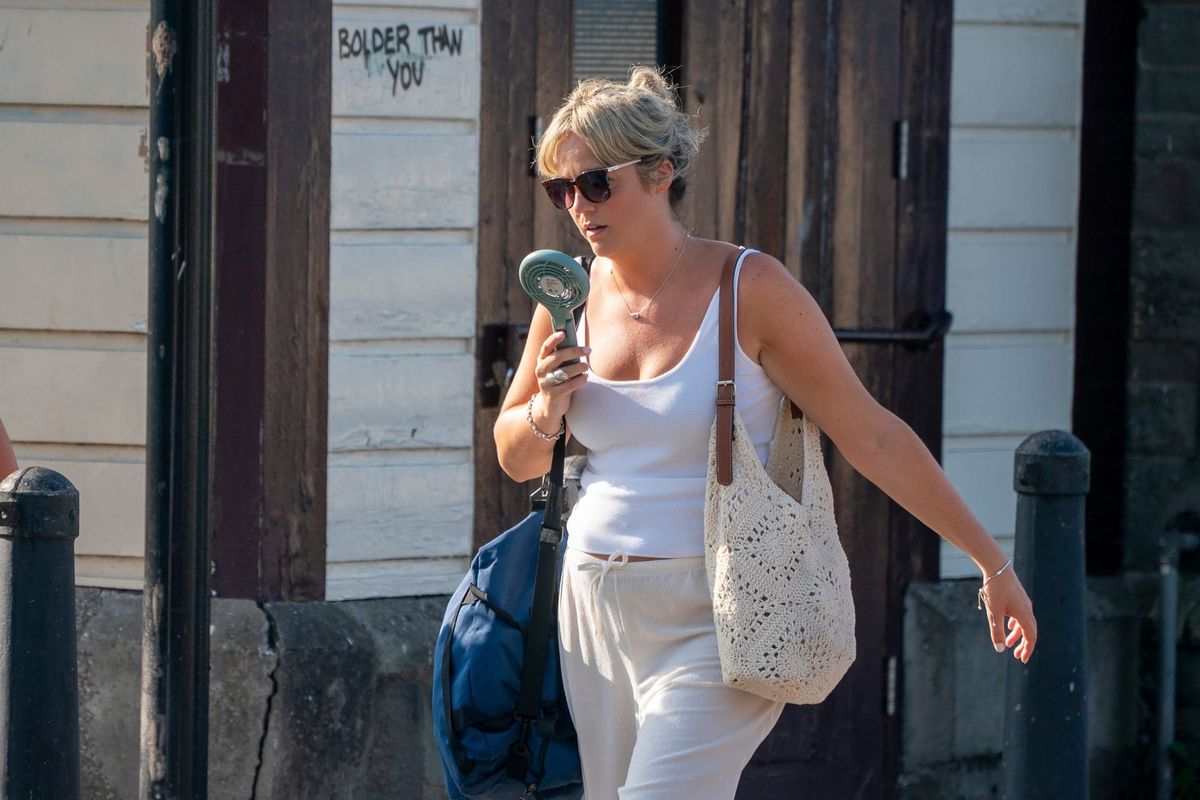
European economies are already expected to be badly hit by a climate crisis, with 5-7% expected to be shaved off output under the best-case scenario. Does that figure take into account a fall in productivity by women having to retrieve their children from school, or ensure elderly relatives are kept cool? Unlikely.
Still, economists are becoming increasingly aware of the long-term economic dangers of persistent heatwaves. A 2021 study suggested previous heatwaves had caused labor productivity to drop by between 0.3% and 0.5%. Until recently, this human cost has been almost impossible to imagine — but then 1,000 schools in the U.K. closed. The aggregate of all those mothers’ lost work hours adds up to a lot of labor.
And this isn’t even factoring the extra layers of hardship this can cause the more fragile members of our community — including those with underlying health conditions, the frail and the elderly.
So what now?
Take the lead
One immediate solution is for European countries to stop turning their noses up at air conditioning. In the U.K., just 4% of homes have air conditioning. And while there’s no number for schools, figures show that more than 1,300 schools in London, and 350 care homes, are at high risk of overheating. Some parents have taken matters into their own hands, buying air con units to keep their kids’ schools open.
Another is to place higher value on all members of society, not just those who produce the most economically. That includes children, the elderly, the sick — and the caregivers who look after them. Deaths in nursing homes increased more than a third during a 2022 heatwave in the U.K.
Finally, we could get ahead of the problem for all caretakers, instead of pushing them to the brink and waiting for the entire system to crack.
As we know, in times of crisis, women usually bear the brunt. Just look at the study which found, early on in the Covid lockdowns, that not only had the gender gap in mental health widened by 61% — but "the significant negative impact of state-wide stay-at-home orders on mental health scores [was] entirely driven by women.” Perhaps it's time to change that narrative.
In her letter, Lawson said governments would have to take the lead. The fact that women are being hit “feels profoundly wrong in one of the world’s richest countries,” she wrote. “Not because we lack resources, but because we have chosen not to value care.”
It would be so nice if, just once, governments would take action before millions more women buckle under the strain and stress.
Read More.
 Emma Haslett
 Emma Haslett
 Josie Cox