'Wine Moms' is Just the Latest Way The Right Has Trivialized Women-Led Activism
Women-centered forms of resistance have been reduced to laughable stereotypes by their detractors for centuries. The purpose? To put women back in their boxes.

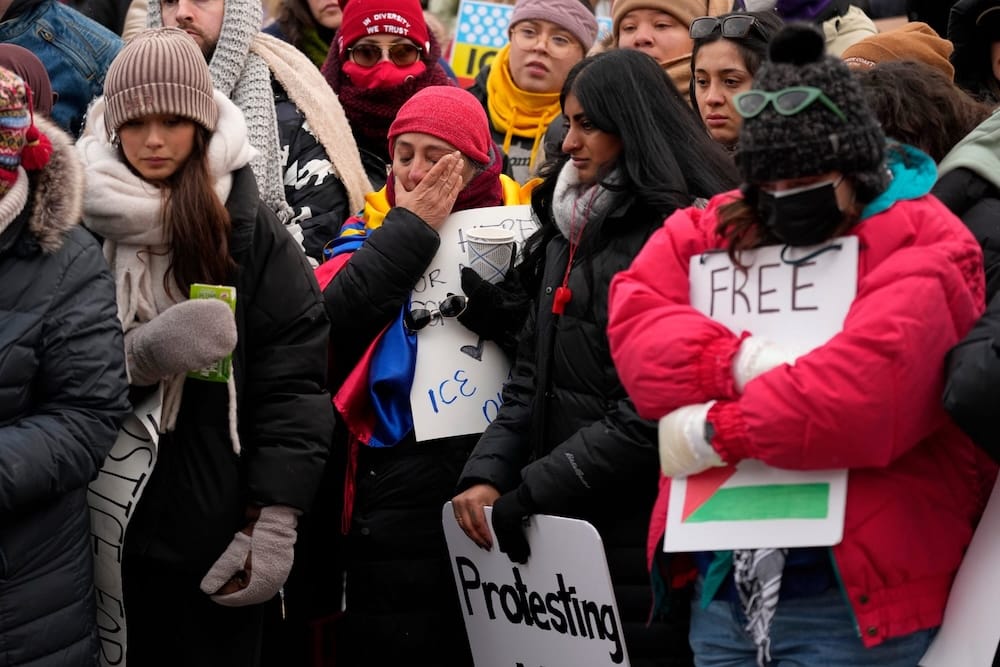
On a Monday night this winter, exhausted after getting my 1-year-old daughter and 3-year-old son to bed, I logged onto Zoom to join more than 4,000 women across the U.S.—mostly mothers—concerned about the violence unfolding in Minnesota.
Of course, so much has happened since then, and so much continues to happen—much of it terrible for girls and women (read: war in Iran and a school full of young girls killed; and, of course, horrific Epstein revelations every. single. day). But the one thing all of us had in common that evening, a thing that remains true now, is that we didn’t like what was going on and we wanted to do something about it.
From the outside, it might be easy to dismiss a gathering like this with an eye roll. I mean, what could a group of ordinary mothers bring to the table to stop any of it? As I settled in front of my screen, I could almost hear the chorus of (male) critics: “Stay in your lane, ladies.”
What better way to keep us women in our lane than to reduce us to a mere punchline?
The hope with this rhetoric is to say, 'These aren’t serious people who can make a difference; they’re just a bunch of silly floozies who lunch'
One of those punchlines, most often wielded by right-wing journalists and their supporters, has been to dub women like us “Wine moms”—or, more specifically, “organized gangs of wine moms.” The caricature is intended to trivialize our presence and our work, which, as I see it, is to speak out not just about the atrocities of ICE, about war, about abuses of women but also about childcare costs, economic insecurity, and the conditions shaping our kids’ lives. How funny is that?
Indeed, women have taken the “wine mom” moniker and run with it themselves. Jackie Ross, a member of the leadership team at Red Wine & Blue, is part of a national community of more than half a million suburban women working together to advance issues they care about. Founded in 2019, the organization has mobilized women around everything from school board races to voting and immigrant rights.
Across the country, Ross explains, women were already gathering in social settings—often over a glass of wine—where conversations would inevitably turn to politics. The name is a nod to the power of those informal networks and the discussions that happen among family members, close friends, and neighbors, rather than through traditional door-knocking and other voter-engagement tactics.
Ross thinks moms make effective political organizers for one simple reason: They know how to get things done. And those logistical skills are easily transferable to political movements.
“Moms have a lot of power in our homes and communities—far more than we’re given credit for,” says Ross. “People write moms off, but we are quietly using our power in ways that often go unseen, by design.”
And yet, the punchlines keep coming, each more sexist than the last. Take the term that emerged after the murder of Renee Good, who happened to be a suburban mom herself: I’m talking about the acronym AWFUL, which stands for “Affluent White Female Urban Liberal.” The term is meant to describe women activists as smug, entitled, and culturally disconnected. And while the targets may shift slightly—from suburban wine-drinking mothers to affluent urban women–the strategy remains constant: to transform our desire to organize and push back against what’s happening into a personality flaw worthy of being mocked, deliberately delegitimizing a group that threatens those in power with their demands.
The hope with this rhetoric is to say, “These aren’t serious people who can make a difference; they’re just a bunch of silly floozies who lunch,” the economist, author and famed debunker of motherhood myths Emily Oster told me over email. “This positions the entire group as people to be dismissed.”
Another goal of those who engage in name-calling of women is to discourage them from joining a movement in the first place, by implying that doing so is somehow embarrassing. The experts I interviewed were quick to reference the label “feminist” as a prime example of this strategy. Once a broad descriptor of political equality, the term has repeatedly been distorted (think: feminazi) to the point that many women—and men—hesitate to claim it, even when they agree with its goals.
A time-honored tactic
Of course, politicians and cultural gatekeepers have relied on ridicule to undermine groups perceived as threatening for centuries, particularly when those groups begin to organize effectively. Even more so when those groups happen to be led by women.
In the U.S., at least, using mockery as a political strategy dates back at least to the Founding Fathers, who were deeply insecure and fearful of losing power—either to Great Britain or really any opposing force, according to the sociologist and New York Times bestselling author on race, gender, and equity, Anna Malaika Tubbs. While America won the Revolutionary War, that newly-won independence felt precarious to our male founders, who, as a result, intentionally kept governing power in the hands of white men, she said.
And when Abigail Adams, a woman but also an insider, advocated that it shouldn’t just be men shaping the country, writing to her husband John Adams to “remember the ladies” while he was drafting the Declaration of Independence, he openly ridiculed and mocked her, writing back: “I cannot but laugh… we know better than to repeal our masculine systems.”
That scoffing did not stop with Abigail Adams. Entire groups of women who organized were treated similarly, their arguments dismissed and the lot of them depicted through caricatures that reduced them to “witches,” “shrews,” and “hysterical mothers,” shorthand for irrational, excessive, and socially deviant.
Tropes including “nagging housewife” and “welfare queen” followed, then later, “angry Black woman,” “Karen,” “MAGA mom,” and now, “wine mom.”
The labels may change, but the purpose remains the same: to put women back in their boxes by reducing them to laughable stereotypes.
“Every joke, every tactic of dehumanization, whether it’s mockery or something more serious… all of it is in service of protecting… American patriarchy,” said Tubbs, who is the author of “Erased: What American Patriarchy Has Hidden From Us.”
In more recent years, mockery of women and other vulnerable groups has increasingly become the right’s first line of defense, a way to trivialize the issues at hand rather than engaging with their substance. Who can forget, for instance, when JD Vance famously referred to women without children as a “bunch of childless cat ladies,” even suggesting that women without children shouldn’t be in government?
Good mom/Bad mom
The impossible standards placed on moms make them easy targets for this kind of criticism, the sociologist and Northwestern University researcher Linda Blum told me. In her work, Blum has shown how mothers are constantly compared to one another and judged against narrow ideals of what “good” motherhood looks like—usually putting children above all else, which requires staying self-sacrificing, agreeable and largely out of the political spotlight. She calls this the “mother-valor/mother-blame binary.” When mothers meet those ideals, they’re praised as selfless and heroic; when they don’t, they’re quickly blamed, mocked, or held responsible for whatever goes wrong. Comments from President Trump linking mothers taking Tylenol during pregnancy to autism in children is a textbook example of this blaming phenomenon.
“The ‘wine mom’ label is resurfacing now because moms are refusing to stay quiet,” explained Reshma Saujani, the founder of Moms First and the organizer behind the 4,000-mom-strong Zoom I participated in. “It sounds ridiculous, and it is, but that absurdity is deliberate. Turning frustrated, organized women into a punchline distracts from the real problem: broken systems that are failing families.”
There is, however, a subtle difference in the “wine mom” label, according to Blum. “Wine moms” works differently than the most dangerous versions of mother blame, which frame certain mothers as a burden to society because they can’t support their children,” she explains.
With “wine moms,” pundits are projecting broader fears about social change onto motherhood at a moment when most mothers are part of the labor force.” In this way, says Blum, “It functions as a form of social control…and contributes to the growing incivility of political discourse.”
 Holly Baxter
The organizing power of mothers
What these “jokes” and labels miss, however, is that the Zoom I participated in and other women-centered forms of resistance are what organized, effective, grassroots civic action looks like. And none of it is new. Mothers have long been a powerful force in American movements by necessity: They witness firsthand how policy decisions impact the safety, opportunities, and future of their community and family, from the suffragists who fought for voting rights to mothers who played central roles in the civil rights movement, to Mothers Against Drunk Driving and Moms Demand Action, which have mobilized millions around public safety and opposition to gun violence.
To be sure, maternal organizing spans the political spectrum, with conservative groups like Moms for America and Moms for Liberty fighting for book bans, against sex ed, more religion in schools and against LGBTQ rights. But what connects these women is the same refusal to accept conditions they consider unsafe, unequal, or, increasingly, unlivable for the next generation.
“At the core, it’s mothers who refuse to pass on this same country to our children,” said Tubbs. Or as Oster notes, “There is nothing more motivating than trying to make the world better for your kids.”
And if doing that with a glass of wine in hand makes it all a bit more convivial, then so be it. When Ross of Red Wine & Blue first heard about the resurgence of the moniker “wine moms,” she laughed. Her organization even put out a tongue-in-cheek Instagram post pointing out other names like “Chardonnay Antifa” or “nasty women.” We’ve heard it before and …[we] aren’t taking the bait,” Ross said.
Tubbs, the sociologist, has other concerns, however. The real target for this kind of ridicule, she says, isn’t the women doing the organizing. It’s a much larger group watching from the sidelines, people who may not be deeply involved in political movements at all. And still, they're forming opinions based on what they read in traditional and social media. In other words, when organizing mothers are framed as unserious or laughable, casual observers may absorb the message without realizing they’re being influenced by it.
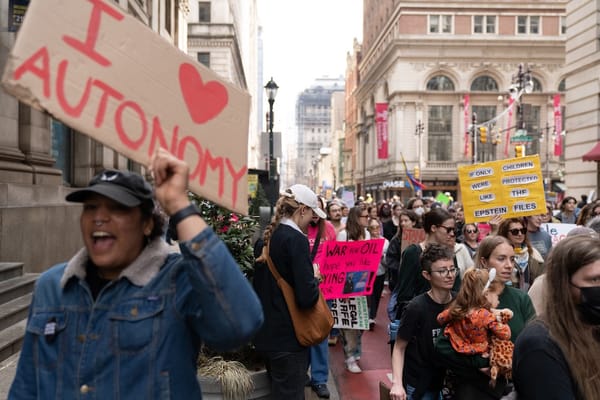
And yet, we women are persisting, coming out to protect neighbors in Minneapolis, marching for No Kings, and protesting against violence and war. Are we making instantaneous change? Not yet, perhaps, but when I closed my laptop and went to tuck my daughter in after that Zoom, I felt our potential. And I understood that any mockery being aimed our way wasn’t trivial. It was evidence that mothers organizing, however quietly, were being taken seriously. If that means I’m a wine mom, well, then fine, I’ll take it.
 Emma Haslett