In Kitchens, Markets and Homes—A Resourceful Feminism Emerges in North Korea
Long before North Korea signaled its next leader might be female, its women were quietly making change.
For months now, speculation has been growing that North Korea’s secretive leader Kim Jong-Un is grooming his young daughter to be his heir. Last September Kim Ju-Ae accompanied her father on a high-profile state visit to Beijing and in January she was pictured next to him on a New Year’s Day visit to the mausoleum where his father and grandfather reside. Although she’s thought to be barely into her teens, state media have shown her first firing a sniper rifle, then on a military parade, raising the question: Might a woman one day run North Korea?
North Korea, an authoritarian state whose citizens are ruled with an iron fist, is not known for its gender inclusion, and there’s no guarantee that a female leader would change that. According to Human Rights Watch, rigid gender stereotypes persist, domestic violence is rife and unpunished, and women make up the bulk of the hundreds of North Koreans who leave every year — a sign of the desperation they face, as well as women’s relative anonymity, which makes it easier to slip away.
Most of what we hear about North Korea focuses on the Kim family, which generates fascination even though (or perhaps because) so little is known about them. There’s never been any official confirmation of how many children Kim Jong Un has, although South Korean intelligence officers believe he has three, including at least one son. Ju-Ae is thought to be his second child.
Yet away from the spotlight that is permanently on the ruling dynasty, ordinary women have quietly become the driving force of the North Korean economy. Unlike the female members of the ruling dynasty these women rarely appear in state propaganda or international news. But they have reshaped everyday life through resilience, labor, and ingenuity, driving many of the country’s social economic shifts over the past three decades.
Some analysts have even suggested the heavy hints at a female heir for the ruling family may be a response to the growing economic power of women, although others suggest he’s actually grooming an unknown son as his heir. We just don’t know. But there are certainly signs that Kim Jong-Un is eager to show his appreciation for the role women play. Last month, he made his first ever speech marking International Women’s Day, praising their “tenacity” and “vigor.”
 Ruchi Kumar
The politics of being a woman in North Korea
Although there are powerful women in the Kim dynasty — including Kim Jong-Un’s younger sister Kim Yo-Jong – meaningful or true political power is concentrated almost entirely in the hands of men. The ideal socialist woman is expected to be demure, self-sacrificing, and obedient to her husband and the male-dominated and deeply patriarchal communist regime.
Yet the collapse of North Korea’s centrally planned economy and state rationing system in the late 1990s — and the famine that followed — created unexpected opportunities.
Under the North’s rigid social order, men were bound to state-assigned jobs for life, while married women were largely expected to stay at home. But as the economy imploded and wages and rations disappeared, men were still required to report to work — often for nothing. That left women to figure out how to keep their families alive when the country descended into the famine that left at least hundreds of thousands dead. Being left alone, and forced to get on with it, gave women the leeway to try new things.
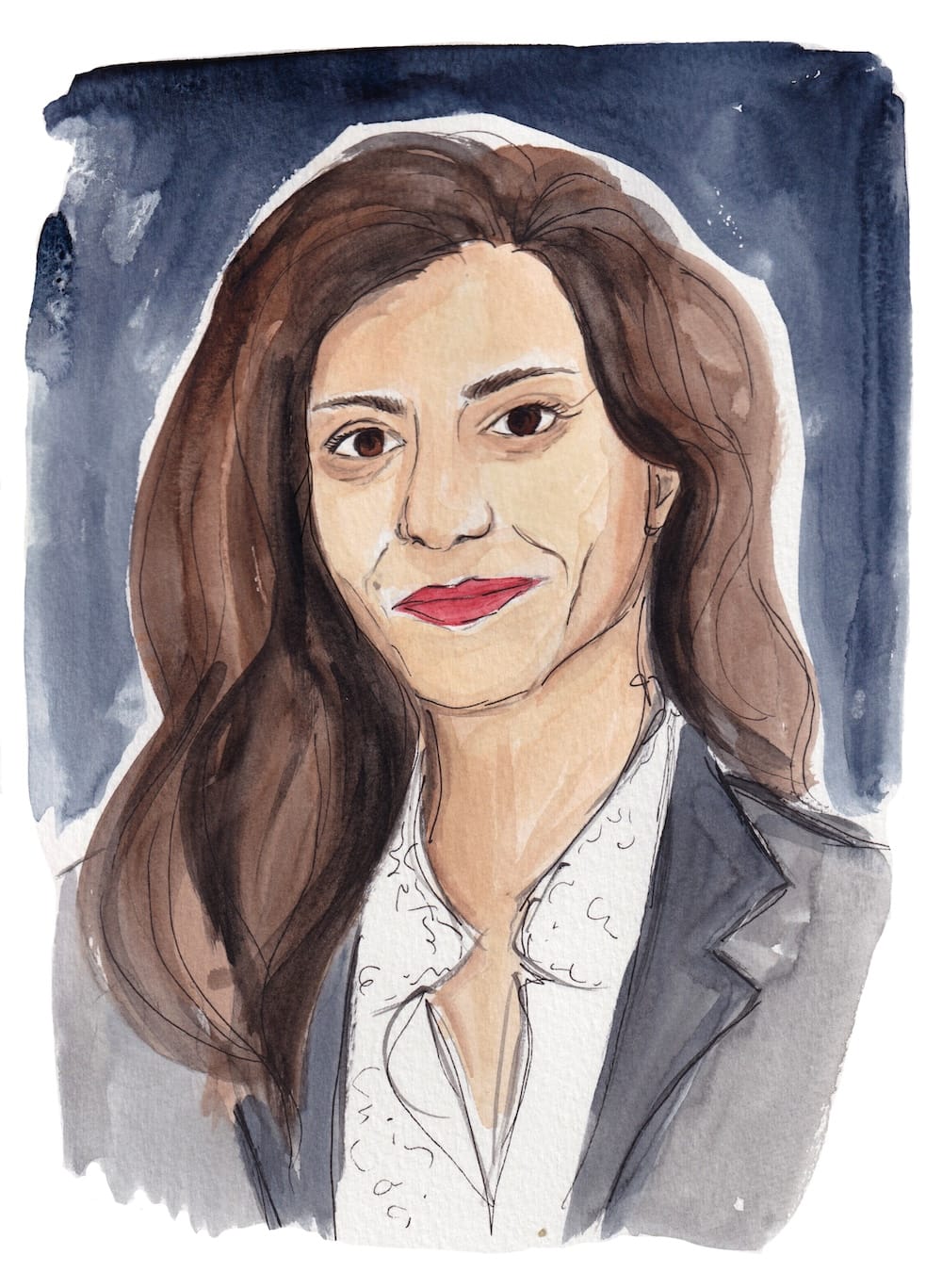
“Ironically, it was the North’s deeply patriarchal culture that opened up these opportunities for us,” said Seol Song-Ah, a former businesswoman who defected to South Korea.
“We were treated like second-class citizens undeserving of power, status, and the state control and surveillance that come with them. So women were better positioned to explore new ways of survival when the old system crumbled.”
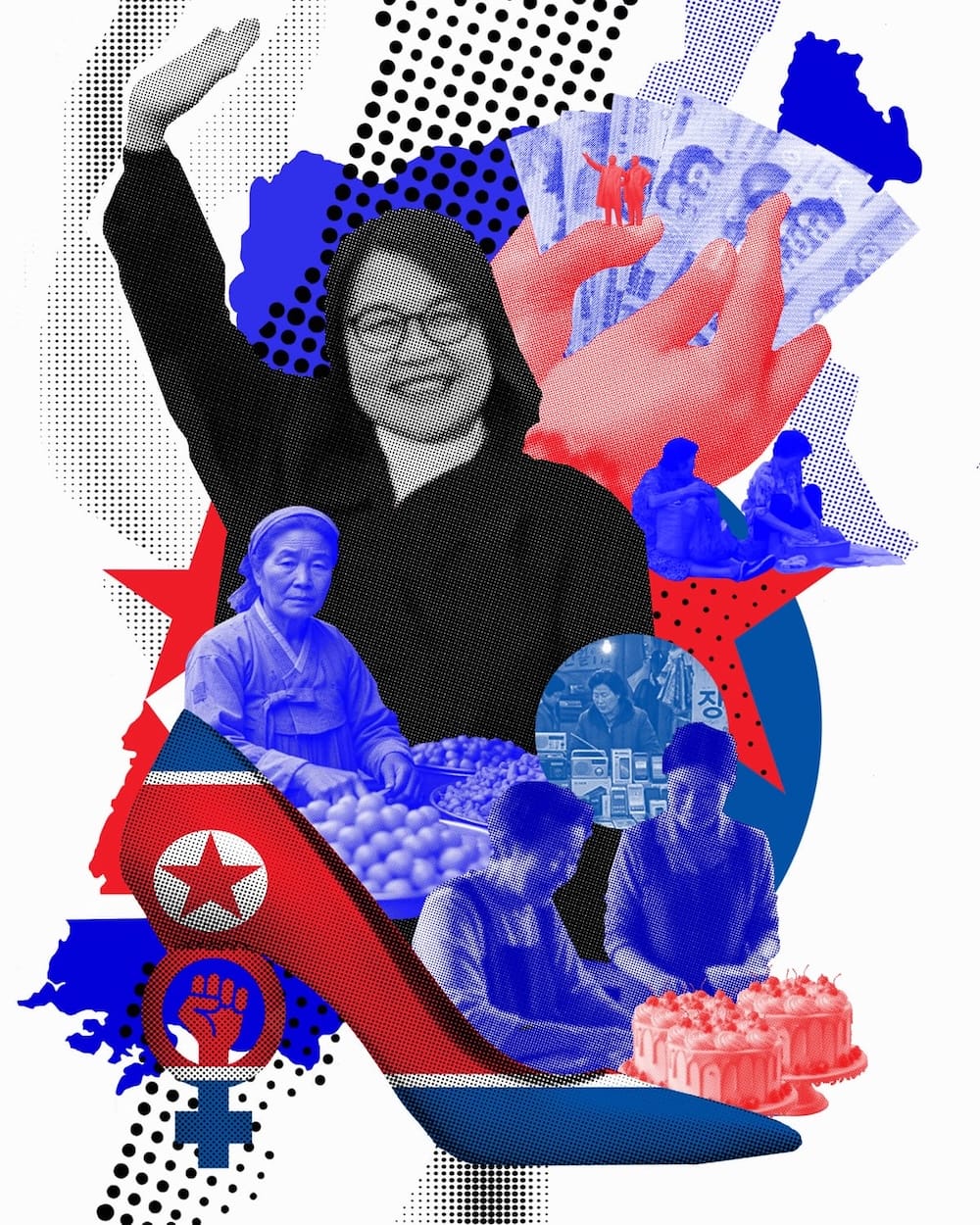
Out of this desperation emerged a fledgling grassroots capitalism, driven almost entirely by women. After the terrible famine of the 1990s, hundreds of private markets sprang up across the country. These outdoor bazaars sell everything from home cooked snacks like rice balls and rice cakes or noodle dishes to chocolate and candy to Chinese electronics — TVs, cell phones, rice cookers, stuff that had been hard to get. They came to exist all over the country, from big cities down to the smallest villages. Vendors were overwhelmingly women. The phenomenon became so widespread that, after the 1990s, a popular saying emerged: “One can survive only while husbands serve socialism and wives serve capitalism.”
One can survive only while husbands serve socialism and wives serve capitalism
Today. more than 400 such markets, or jangmadang (marketplaces), operate across the country, powered by more than one million vendors, according to multiple estimates. Initially illegal, they were formally recognized by the authorities in 2003 and are now regulated and subject to tax. These markets now underpin the informal economy, which allows personal profit and has increasingly overshadowed the state’s formal economic system in scope and vitality.
According to a South Korean government survey of some 6,000 North Korean defectors, 60% said their main household income in the North came from informal market activities. North Korean watchers have dubbed this transformation the “jangmadang revolution.”
“Many women in North Korea had to do whatever it took not to starve to death as the old world crumbled around us,” said Seol, now 56. “That’s how we opened our eyes to capitalism — as a means for survival — much faster than men did.”
She would know; she was part of that revolution before she defected, settling in Seoul in 2011.
 Claire Cozens
A chemist turned baker
Amid an acute medicine shortage that began in the 1990s, Seol sold homemade penicillin pills that her sisters made in their kitchen with help from their mother, a chemistry professor. Later, Seol opened a rare cake shop to cater to those eager to imitate the lifestyles they saw on screen in smuggled South Korean TV dramas —blowing out candles and eating cream-topped cakes to celebrate birthdays.
Ko Un Seong, a former librarian, also seized on new opportunities, first by selling smuggled TVs and recording devices, then switching to exporting seafood from her seaside hometown to China. Each day, she pored over state newspapers for any hint of diplomatic tension with Beijing so she could swiftly adapt to changes in currency exchange rates or border controls.
Her business eventually became profitable enough to support her entire family.
“I used to be a quiet, reserved woman,” said Ko, now 51 and living in Seoul after defecting in 2018 with her daughter in search of a better life. “But the experience with all the trades made me bolder. I gained confidence, and I have less fear of trying new things, no matter where I go.”
The vast majority of defectors — more than 70% — who fled poverty and repression in the North to settle in the South are women. The imbalance reflects North Korea’s gendered social structure: With men more tightly bound to state jobs and surveillance, women have slightly more freedom to move and, in some cases, flee lives of often dire poverty and extreme repression in the North for the freedom and prosperity of the South, often leaving their families behind.
The journey to the South is long and perilous. Most defectors travel through China, where they can be arrested and sent back if they are caught by authorities.
When they finally make it to the South and have managed to set up new lives and livelihoods, these women still support families back home. The money they send through underground networks of brokers sustains families in North Korea, and fuels the informal economy, helping seed new small businesses and boost consumption, experts say.
With economic independence has come subtle but meaningful social changes. About 60% of respondents in the survey of thousands of defectors carried out by the South Korean government said women’s status in families had improved or became equal to that of men, while 17% said women held more power. It’s hard to say definitively what’s driven these changes, but they have all come about since the advent of the informal market economy.
“Men used to have more authority when they brought home rations and wages (from state-assigned jobs),” one respondent said. “Now, women have far more say, while husbands are often mocked as ‘light bulbs in the daytime (a thing of no use).’”
The rise in women’s economic power has made them more powerful in other areas of life. For one thing, divorce is more common as women have become less willing to tolerate inequality or domestic violence, the survey of defectors found. Both were once considered normal.
And in keeping with trends across much of the rest of the world, women are also marrying later and having fewer children than before, especially those in cities or with higher levels of education. North Korea’s estimated fertility rate has plummeted from 1.91 in the 1990s to 1.38 in the 2010s according to the most recent data available, far below that of comparable low-income nations like Cambodia (2.38).
Experts and recent defectors say the reasons are complex. First, the devastating famine and extreme economic difficulties of the late 1990s and 2000s meant many people didn’t have children. Even after that, most people were too poor to sustain large families. And finally, the desire for economic independence led many younger women to avoid marriage.
Whatever the cause, these social shifts have alarmed the regime. There are signs it is trying to tighten its grip on market activities and to strengthen state-run businesses instead by, for instance, banning the private sale of rice and other common household goods and allowing only state-run stores to sell them.
Kim Jong-Un has called for “mother’s power” to halt falling birthrates and launched campaigns urging women to uphold “socialist traditional values” as dutiful wives, self-sacrificing mothers, and loyal supporters of the regime. State media promotes female ideals with “moral and cultural purity,” while the authorities have toughened rules on divorce and cracked down on abortions, which are banned in most circumstances.
Those who divorce for “selfish reasons,” such as personality differences, financial disagreements, or refusal to care for in-laws, can now face months in jail, the Seoul-based Korea Institute for National Unification said in a recent report, citing interviews with multiple defectors. Seol noted that her sister, who still lives in North Korea, was recently imprisoned after divorcing her husband, after an order from the ruling party to make it difficult for people to divorce.
A ‘quiet feminism’ born of experience
As more women challenge gender dynamics in family and economic lives, will this awakening — driven by necessity and quiet defiance — ever evolve into the resistance against the political status quo? In a country where dissent can mean death, the answer is almost certainly no — at least for now.
Still, North Korean women have already reshaped much of their country’s economic and social fabric. Seol describes this as a form of “lived feminism.”
“The quiet feminism emerging in North Korea is not something learned from abroad,” she said. “It was born from women’s own experiences — the double oppression of patriarchy at home and dictatorship from above — and their everyday struggle to survive within it by challenging these oppressions in their own ways.”
For a while, Seol made a living as a journalist for Radio Free Asia in Seoul, but she recently lost that job due to U.S. federal funding cuts and now works as a freelance journalist and researcher. She chronicles these stories through essays and fiction, reflecting the tension between state-imposed ideals of female obedience and the women’s newfound desires for autonomy, wealth, and love.
“If there is any meaningful change in North Korea, it won’t come from the ruling Kim family,” she said. “It will come from the women of jangmadang—those who survive, adapt, and quietly transform the country.”
Even if Kim Ju-Ae one day inherits her father’s power, she is unlikely to fundamentally change life for ordinary North Korean women. Real progress will come from those who have fought for it in their kitchens, markets, and homes.
 Claire Cozens