What It Means to Love America Today
Loving a place, like loving a person, means taking the good with the bad, and confronting the parts that disappoint and upset us.

Years ago, when I was in high school, I read Walt Whitman’s ‘Song of Myself.’ Although I remember very little about the poem, one line has bounced around my brain ever since:
“I am large, I contain multitudes.”
To me this means that we’re all complicated; that nobody can be reduced to just one thing. So here are some of my multitudes: I am a woman, I am a feminist, I am a European. I am somebody who will defend women’s rights with every shred of my being. I value democracy. I believe in civil rights, and I love America. I didn’t grow up here, but it’s my chosen home—a nation that is hobbled and flawed and unjust—but also exciting and brimming with so much life. It is a place I want to be.
When I complain about America’s politics, which I do frequently, people tell me I’m lucky because I “can just leave whenever I want.” Then I struggle to find the right thing to say. Of course it’s true, I can leave. I have not one, but two passports that allow me to live in countries with robust social security networks. I choose not to, because, for now at least, this is where I feel like I belong.
At the same time, I don’t forget for a moment that this is a country with a lot of contradictions and troubles. And as we reflect on the first anniversary of President Donald Trump’s second term in office, it feels particularly important to name these and reckon with them.
 Emma Haslett
A catalog of erosions
This week, the National Partnership for Women and Families, a national nonprofit, published a list of 53 ways in which the second Trump administration is harming women and families.
Reading the report, I felt like I was perusing a catalogue of erosions—cuts, some small and some large—that over time amount to debilitating injuries. Together, the 53 items sketch a portrait of a government choosing, over and over again, to turn away from its own people, especially from women and families. Here’s a selection.
Number 1 on the list relates to the way in which the Trump administration has “kneecapped” the Equal Employment Opportunity Commission, or EEOC—an independent federal agency tasked with investigating and addressing employment discrimination charges.
Number 6 on the list is about ways in which the administration has abandoned enforcement of protections for disabled federal contract workers, while number 7 explains how it revoked a $15 minimum wage guarantee for federal contract workers.
Number 18 spells out that the Trump administration’s efforts to withhold Title X funds and “defund” reproductive health providers have driven reproductive health clinic closures and exacerbated barriers to health care access. Number 19 elaborates on how the government has sowed mistrust in abortion pill safety and set the stage for future restrictions to access.
Number 27 is about the government pushing “junk science” and removing vital information on vaccines and reproductive health from government websites. Number 28 refers to the administration’s efforts to end data collection that allows us to monitor disparities in health equity.
The report also details how mass layoffs have threatened the livelihoods of hundreds of thousands, and it explains how the abuse of presidential power has pushed women and particularly women of color out of some of the most powerful positions. All of this, of course, is only a limited snapshot.
On the face of it, much of the harm might look administrative, procedural and bureaucratic, but it’s so very personal. It’s noticeable in the doctor’s office when medicine is unaffordable, in a school hallway filled with kids who don’t know what their future holds; on pay day when—in fact—the paycheck never comes; and at the grocery store where the price of bread has risen yet again. It’s evident in the thoughts that steal our sleep late into the night. It is a tide that pulls back to reveal just how much this country had—and has—to lose, and surely that’s why so many of us are grieving.
 Josie Cox
A dangerous indulgence
As someone living in New York City—still very much a liberal bubble—it can be tempting, easy even, to look away.
For periods of time, I can drown out the headlines by concentrating on the parts of America that fill me with awe: civil rights heroes, national parks, great innovations, and an astounding literary canon. Pauli Murray and the Rev. Dr. Martin Luther King Jr., and Jeannette Rankin and yes, Walt Whitman, too. I can try and feel better about what’s going on by referencing the past. Hasn’t America, after all, always survived the pendulum swings of history?
But loving a place means facing the parts of it that disappoint and upset us. So this week, that’s what I’m trying to do. I’m trying to hold in my mind two Americas—a nation focused on freedom, democracy, free speech. A nation that has welcomed so many seeking a better life, and still holds tightly to the idea that you can be anything you set your mind to; but also a nation that is getting muddled up in misinformation, where incivility is normalized, where political divisions feel impenetrable; where we are stripping away abortion access and allowing a gender-based labor force crisis to deepen.
I am trying to square America as both a place of breathtaking natural beauty and of receding civil rights; a place that welcomed me six years ago on the eve of a global pandemic, but a place that sometimes makes me feel like an outsider and where I’m not welcome at all.
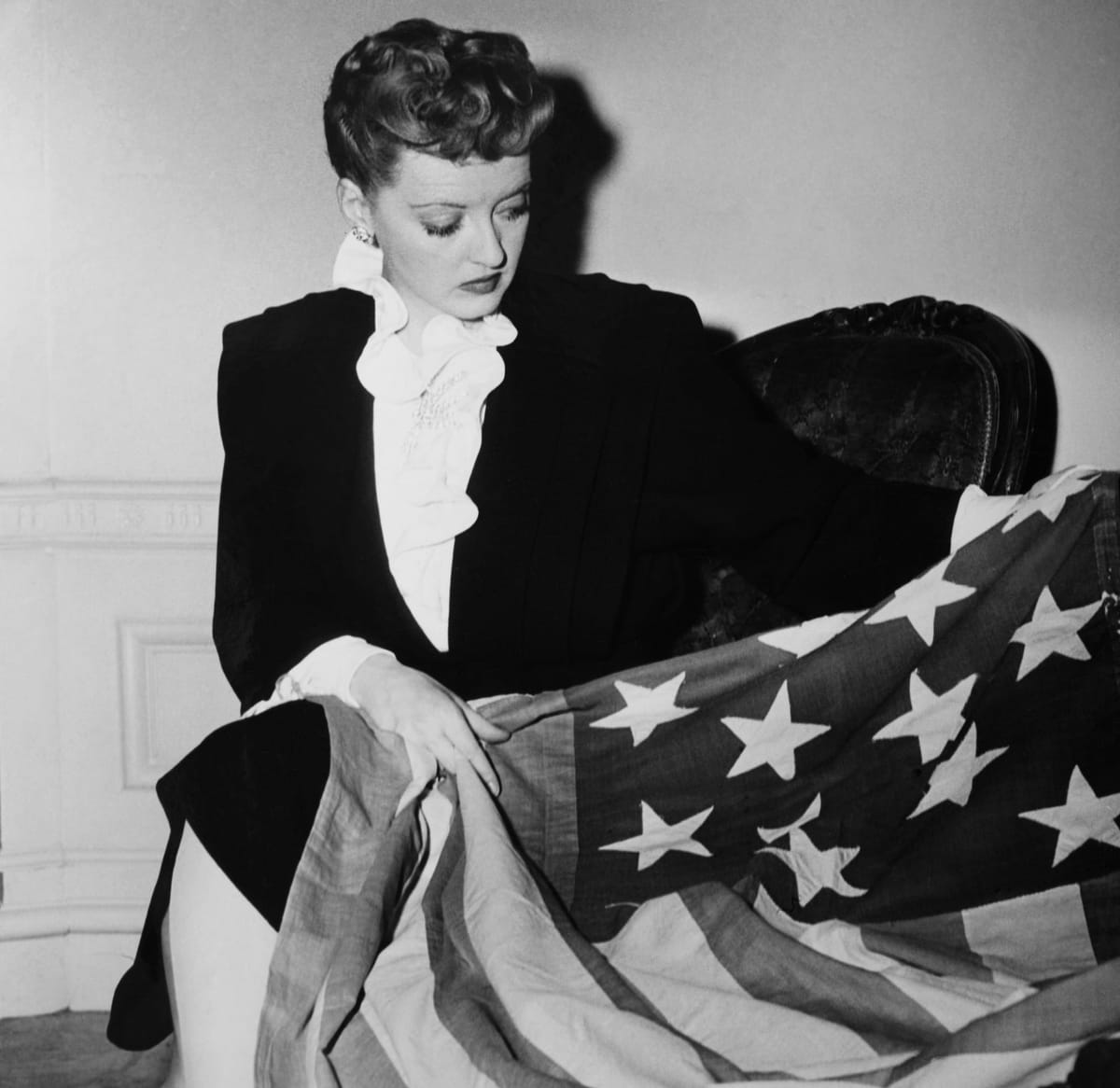
My love for America is resilient; I don’t want it ever to be complacent. And perhaps what I’m feeling is a different kind of patriotism: Not the loud, flag-draped kind, but the quiet, stubborn kind that insists on seeing a nation fully.
As we head into the second year of Trump’s second term, I’ll keep in mind Whitman’s “multitudes”—not as a romantic notion, but as a way of staying awake to what America is—a whole complicated thing, sprawling and unruly, but maybe—hopefully—still reaching for a better version of itself.
 Josie Cox