Work-Life Balance Isn't the Problem Anymore
The real challenge for modern parents isn't managing their time. It's reclaiming the boundaries that have vanished.


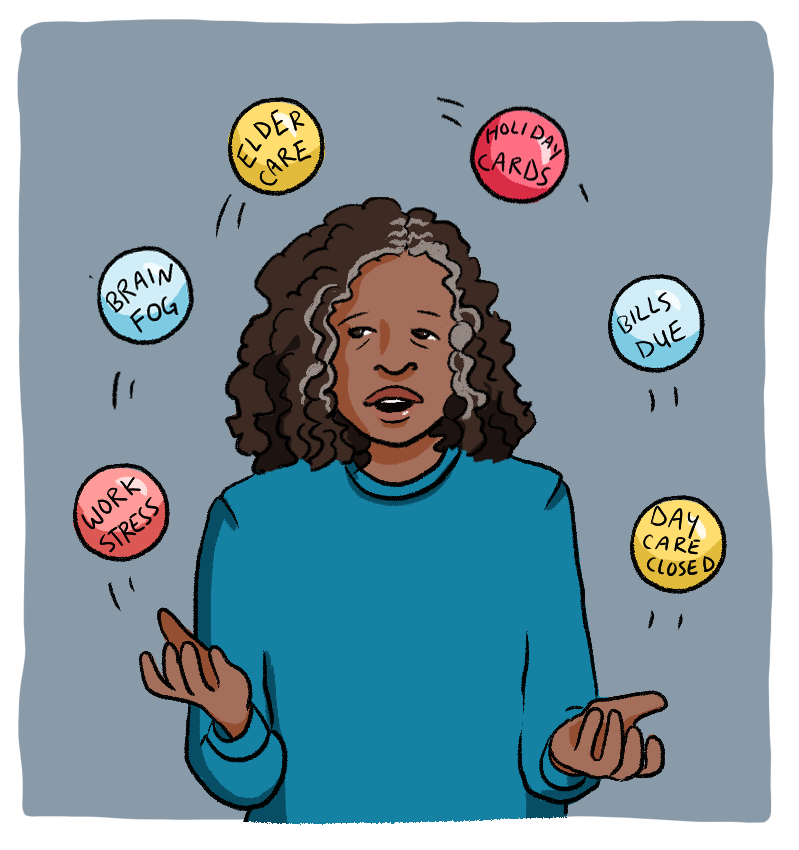
No parent needs a survey to tell them that juggling work and family is hard. The feeling of being pulled in two directions at once—dialling into an early-morning call while trying to pack lunch boxes, or sitting on the sidelines of a soccer game while attempting to compose coherent emails—is hardly a revelation.
But new research published by the Pew Research Center this week quantifies just how thoroughly those boundaries have blurred and, for many, disappeared altogether.
In March, Pew surveyed more than 2,400 working parents and found that 52% say their job makes it harder to be the parent they want to be. On the flip side, 45% say being a parent makes it harder to do their job.
As ever, the burden falls disproportionately on mothers. Compared with fathers, Pew found that working mothers shoulder more responsibilities at home and have a harder time balancing work and family.
Nearly two-thirds, or 62%, of full-time working mothers say it's difficult to balance work and family responsibilities, compared with 47% of full-time working fathers. In different-sex couples where both parents work full time, a majority, or 52%, say the mother takes on more parenting tasks, while just 10% say the father does more. Fewer than four in 10 say those responsibilities are shared equally.
The imbalance extends beyond visible chores. Mothers are also significantly more likely to carry the invisible “mental load,” which might include keeping track of school schedules, doctors’ appointments, childcare arrangements and the countless logistical details that keep family life ticking. Fathers, for their part, are much more likely to believe those responsibilities are shared equally. In other words, the gap isn't only in who does the work; it's also in how that work is perceived.
 Josie Cox
One woman surveyed captured the dilemma perfectly: "I'm supposed to work like I don't have kids and supposed to parent like I don't have a job."
Perhaps the report's most striking finding, however, is how thoroughly work and family now bleed into one another. More than half of working parents say they think about family responsibilities while they're at work, while nearly as many admit they spend family time thinking about work. The office and the home, once distinct places, now overlap — and not only physically, but mentally too.
Technology is at least partially to blame for this. Smartphones, Slack notifications and the always-on culture have become part of the fabric of many professions. They’ve provided a degree of flexibility that previous generations couldn’t have dreamed of. But that flexibility — Pew’s findings suggest — has come at a cost. The ability to work from anywhere has morphed into the expectation to work everywhere.
The findings echo a growing body of research. In May, Microsoft published a report describing today's office as an "infinite workday," where emails, meetings and notifications stretch from the early morning well into the evening, leaving almost no room for uninterrupted focus or genuine downtime. Gallup has found that one of the biggest benefits employees associate with working on-site isn't collaboration or culture — it's simply the ability to create boundaries between work and home. And this argument is the basis of a book called "The Flexibility Paradox," published by Heejung Chung, Professor of Work and Employment at the King's Business School in London.
“When workers have more control over their work, they end up working all the time and everywhere,” she writes. She argues that what feels like freedom and control often isn't either. That, she explains, is because we live in a “work-centric society, where passion at work is expected and where traditional gender norms prevail.”
So what’s to be done? The solution will likely never be a return to rigid nine-to-five schedules reminiscent of a pre-digital workplace. But if flexibility has become permanent availability in disguise, then it’s probably time to start treating boundaries — and not flexibility — as the real workplace benefit worth fighting for.
 Aubrey Hirsch