A Dancer Most ‘Apolitical’ — Ha, Hardly!
She may have described herself as apolitical, but the work of the dancer Martha Graham spoke volumes. And it's more relevant today than ever.

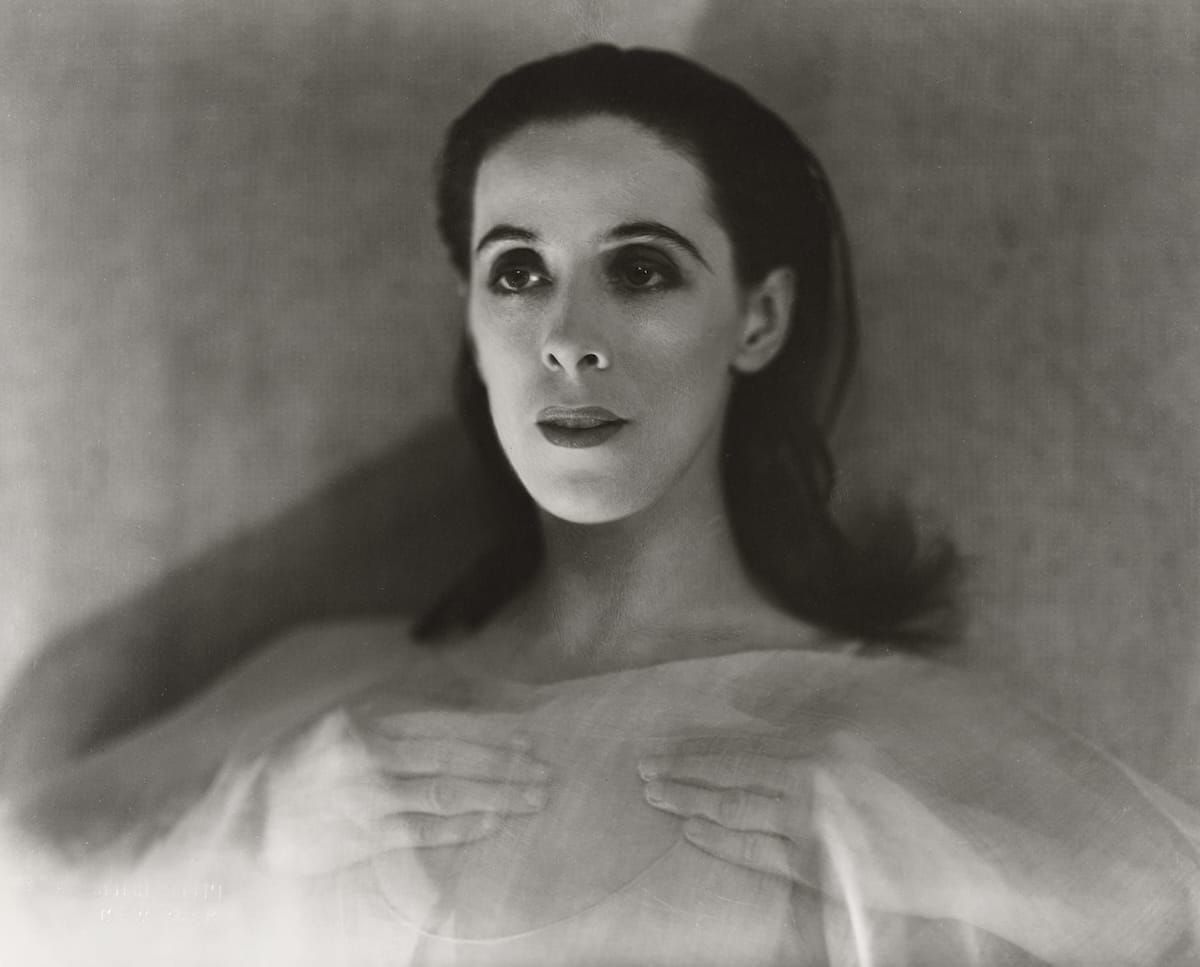
One hundred years ago, Martha Graham, arguably one of the most influential dancers and choreographers in U.S. history, founded her namesake dance company. It would become an institution of firsts: one of the first dance companies to be led by a woman, one of the first to be fully integrated, and, now, the oldest dance company in the United States.
On a recent morning, I went to see an exhibition celebrating this centennial. Titled “Martha Graham: The Mother of Psychological Dance,” the exhibit is on until Nov. 7 at the New York Public Library for the Performing Arts, tucked at the back of Manhattan’s Lincoln Center.
This is a prescient time to reflect on Graham and her legacy, and not just because the company is turning 100. Donald Trump’s relentless assault on the Kennedy Center, and his administration’s cancellation of a swath of National Endowment for the Arts (NEA) grants, have served as a bitter reminder that the arts can unfortunately not be taken for granted (because they are, in this case, quite literally not granted).
Apolitical, and yet…
According to one of Graham’s biographers, Victoria Phillips, Graham described herself as apolitical, but her actions suggest otherwise.
In 1944, Graham hired the Japanese American dancer Yuriko Kikuchi the year after Kikuchi was released from an internment camp in Arizona, at a time when other Japanese American citizens were still being forcibly interned on U.S. soil. (The camps weren’t shut down until 1946.) Kikuchi was the first non-white dancer hired by the company.
Seven years later, in 1951, she hired the company’s first Black dancers, Mary Hinkson and Matt Turney, at a time when the U.S. was still widely segregated.
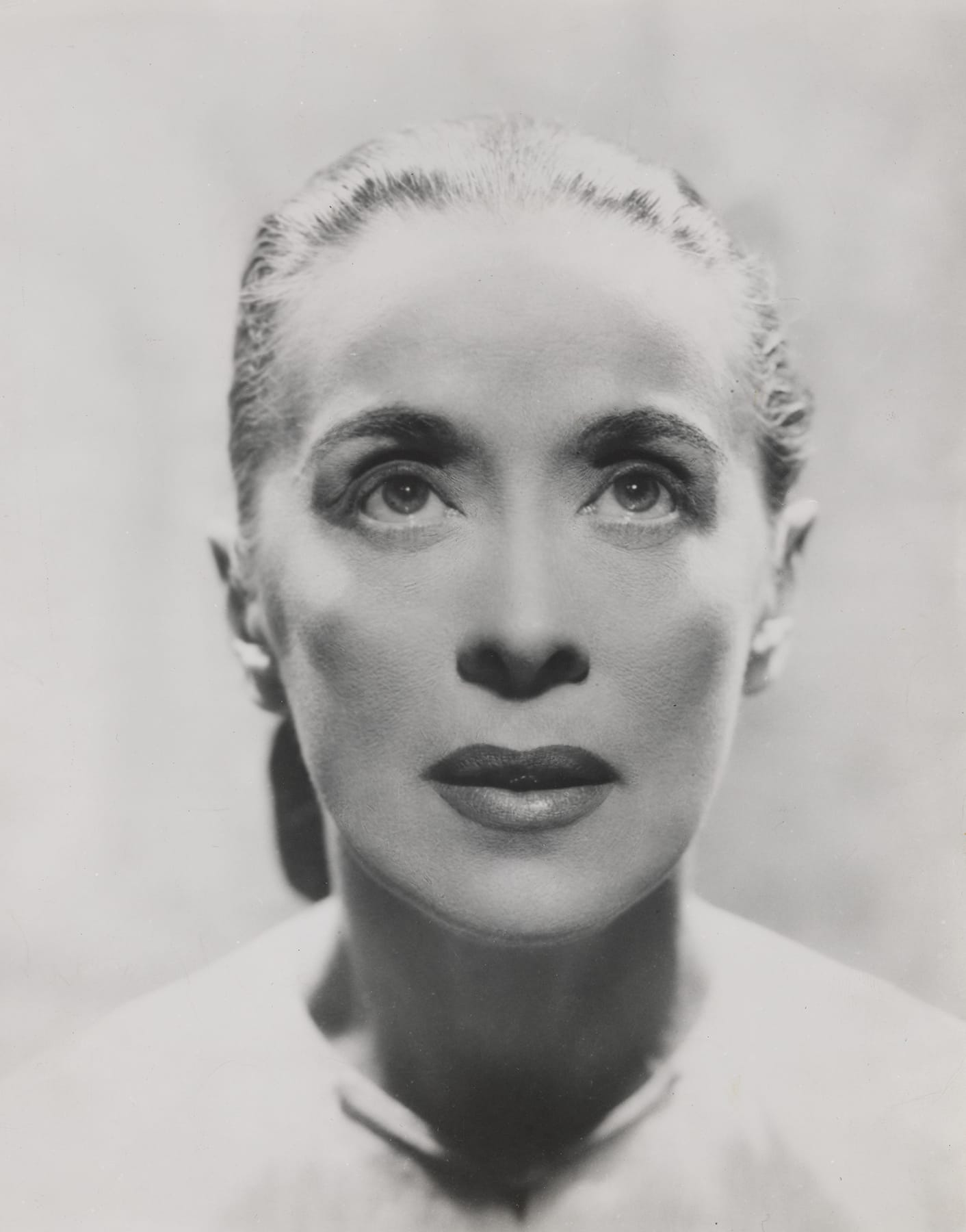
Naturally, all of this history is very much on view at the exhibition, which begins with a floor-to-ceiling photo of Graham’s striking face — her round eyes, high cheekbones, and perpetually haunting stare. Within, photos, letters, costumes, and videos co-mingle, along with music, videos and voice recordings that reverberate throughout the space. After my visit, Jack Ferver, who curated the exhibition (and is also a writer, choreographer, performer, and assistant professor at Bard College), told me they didn’t want visitors to use individual audioguides, which can be isolating. Instead, Graham’s dances come to life on screens dotted throughout.
And what dances they are!
“Heretic,” a five-minute piece that premiered in 1929, back when the company was in its infancy, features 13 dancers and encapsulates Graham’s burgeoning, edgy, serious, stunningly expressive style. Twelve of the 13 dancers wear long, black dresses. The 13th, dressed in white, cuts a tortured, ostracized silhouette, seeming to beg for her fellow dancers’ acceptance, while being met with rigidity and sternness.
 Diane de Vignemont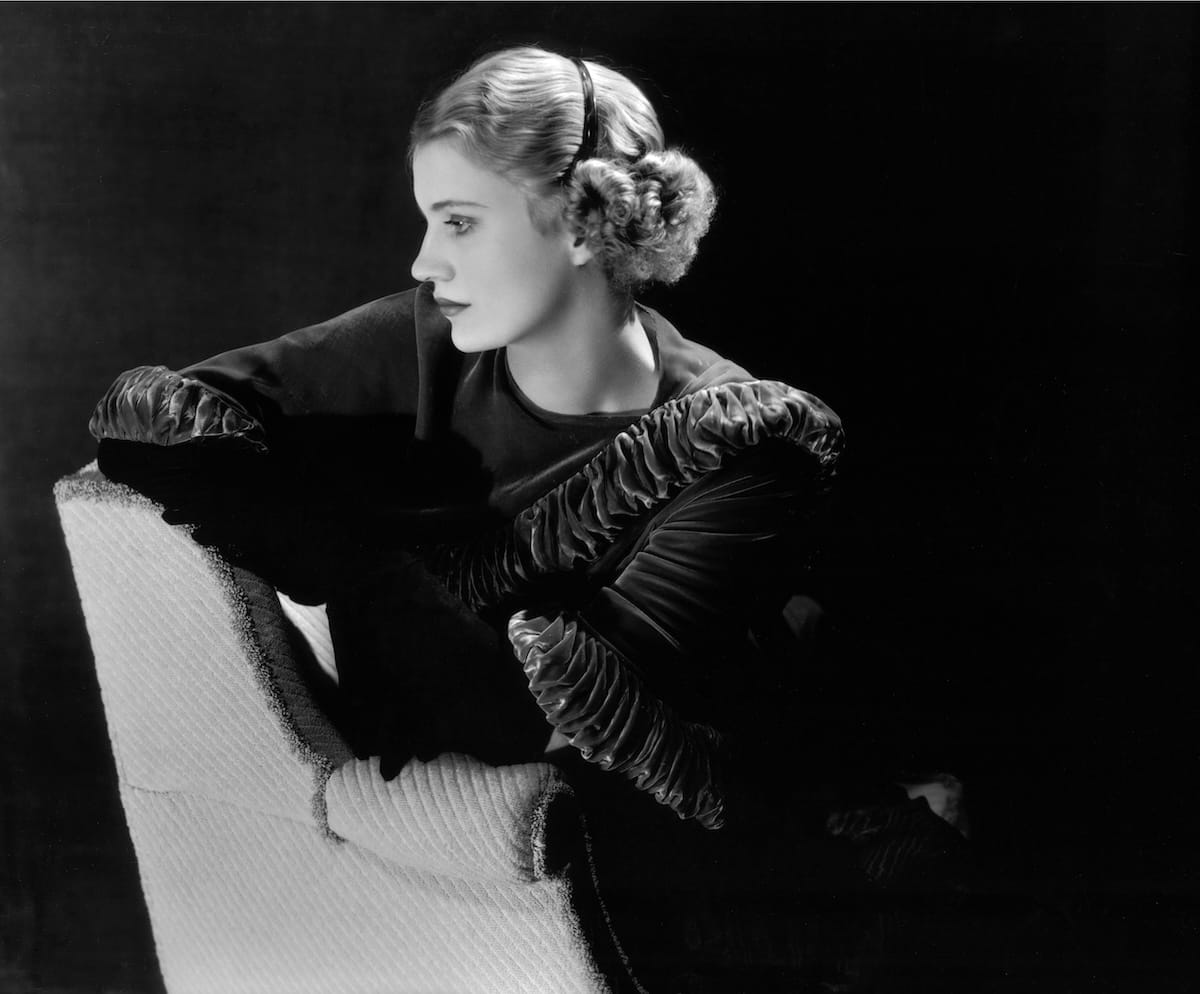
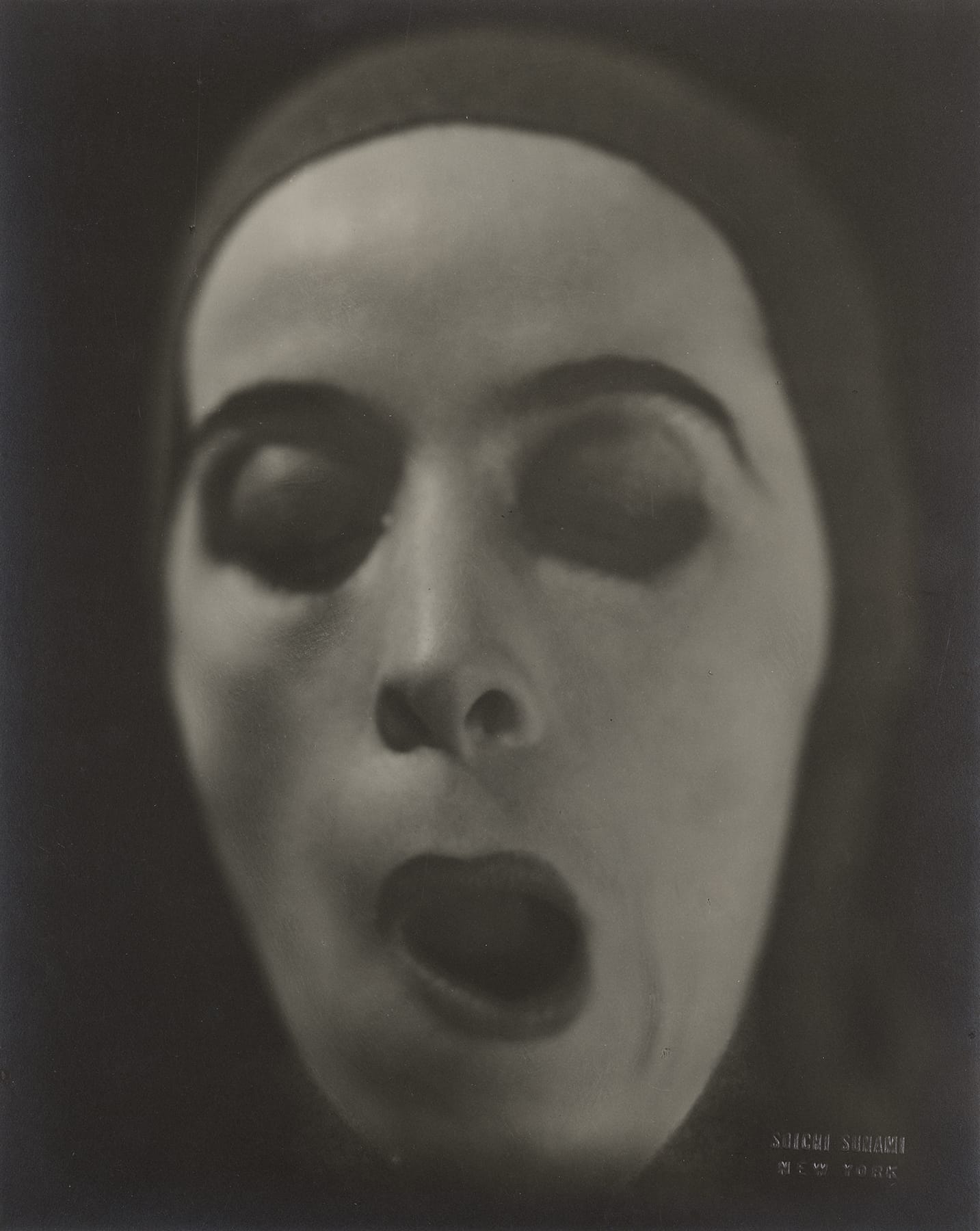
“Lamentation,” a solo that premiered in 1930, is chronicled across multiple photos. We see Graham dancing in a long tube of material to indicate “the tragedy that obsesses the body, the ability to stretch inside your own skin, to witness and test the perimeters and boundaries of grief, which is honorable and universal.”
A preoccupation with the mind
Graham’s preoccupation with the mind is a foundation of her work, and it’s only fitting that the psyche serves as the exhibition's throughline. When Ferver was first tasked with sorting through hundreds of boxes from Graham’s archive to shape and curate the exhibit, they didn’t have a specific vision in mind — though they were buoyed by an encyclopedic knowledge of Graham’s life and work.
Ultimately, Graham’s “investigation of the interplay” between the psyche and the body became Ferver’s guiding concept. “Every object I encountered, I held to the rubric of, Do I feel a psychological impact from this?” they said.
Indeed, psychology was a family heirloom for Graham, who was born on May 11, 1894 in what was then known as Allegheny, Penn., and later became part of Pittsburgh. Her father, a doctor, specialized in treating nervous and mental disorders. (At the time, this was called an alienist, a precursor to modern-day psychiatrists.)
Dr. Graham shaped how his young daughter came to think about truth and movement. In one memory recounted in Neil Baldwin’s 2022 biography “Martha Graham: When Dance Became Modern,” Dr. Graham placed a drop of water on a glass slide and asked his daughter what she saw. “Pure water” was her answer. But when he had her look at the slide through a microscope, the young Graham was shocked to see wriggles in it. This, her father said, meant the water was actually “impure” — and that there was more to it than met the naked eye.
“He taught me two laws which have proved invaluable to me,” Graham told the public radio station WFUV in 1974. “One was, ‘You must look for the truth,’ and the other is ‘Movement never lies.’”
But it was a performance Graham saw at 17, by the American dance pioneer Ruth St. Denis, that changed everything for her: “My fate was sealed,” Graham said of the performance, per Baldwin’s biography. “I knew at that moment I was going to be a dancer.”
Graham’s ambitions were deferred until the age of 22, when, two years after her father’s death, she enrolled at the Denishawn School, the avant-garde, pioneering dance academy co-founded by Graham’s idol St. Denis and her partner Ted Shawn. In the first half of the 1920s, Graham appeared in the Greenwich Village Follies, a musical revue in New York City, then landed at the Eastman School of Music in Rochester, N.Y.
“And there I began to work out things, because I’d made up my mind by that time that unless I found something to dance about, I would never dance again,” Graham told the dance critic Don McDonagh in the Ballet Review in 1968. “I felt there was some glory I had never seen and had never touched.”
Breaking with traditions
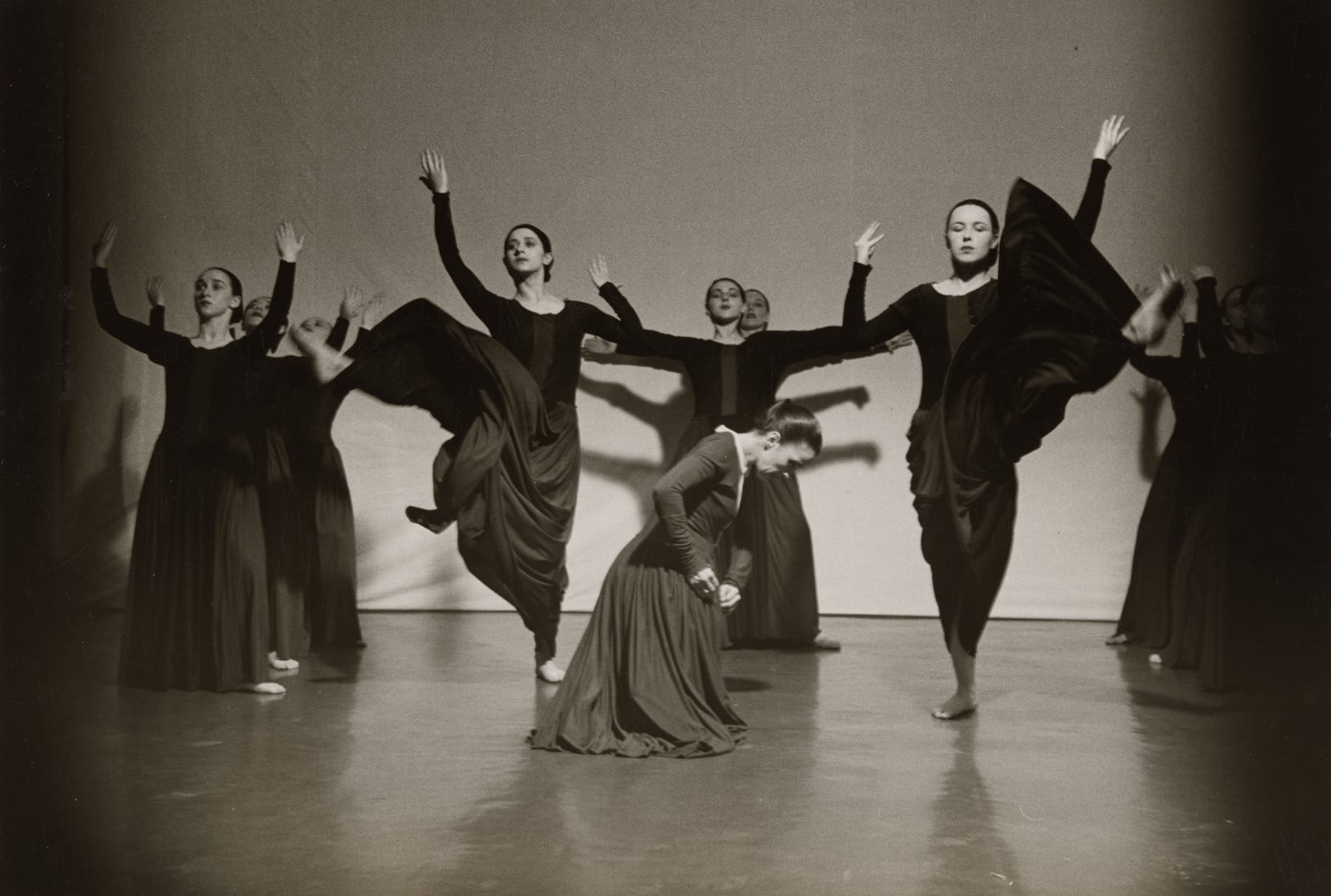
Hungering to create her own work — to see the unseeable and touch the untouchable — Graham founded her eponymous dance company in 1926, when she was 35. Graham didn’t just choreograph, she danced; she designed costumes (out of the 181 dances she made over the course of her career, 135 featured costumes she’d created); and she commissioned original scores from composers such as Aaron Copland, with styles as distinctive as her own.
The result is a catalogue of dances with depth and heft, which often feel as though they’re begging viewers not just to look at the dancers, but to hear what they’re trying to say. They are raw and visceral, stark and sharp. Ballet was preeminent when Graham started working in the 1920s, its popularity helped by Russian dancers’ touring the US after World War I, but Graham’s work broke with ballet’s traditions and created something new.
Classical ballet tends to use the body in service of the story, while the emotions, which are brought to life onstage through choreography and mime, are those of the characters. Graham’s dances seem to reverse that dynamic. They are dances for and about the body, for and about the mind. One of the most striking artifacts in the exhibition is a video of Helen Keller visiting Graham’s studio and noting “how like thought,”and “how like the mind” the dance felt to her. If there was an overarching quest in Graham’s work, it was her desire to embody interiority.
Taking a stand, holding values
Graham’s life spanned almost a century and included both World Wars. For all her work focused on interior life, Graham herself remained in touch with the outside world. Her principles shaped her work and the life of her company.
In September 1935, Graham received a letter inviting her to perform at the 1936 Olympics in Berlin. It was signed by three men, including Adolf Hitler’s propaganda minister Joseph Goebbels. In a letter dated March 1936, Graham declined the invitation, and included a full-throated condemnation of Hitler’s regime.
“I would find it impossible to dance in Germany at the present time,” she wrote. “So many artists whom I respect and admire have been persecuted, have been deprived of their right to work, and for such unsatisfactory and ridiculous reasons, that I should consider it impossible to identify myself, by accepting the invitation, with the regime that has made such things possible.
“In addition,” she continued, “some of my concert group would not be either welcome in Germany or willing to go.”
That ethos shaped the company, which, for its first 12 years, comprised female dancers exclusively. Looking at that period of time, “one has the sense of [Graham] strengthening her power, not only for herself as a woman, but what she wants to say as a woman about women,” said Ferver.
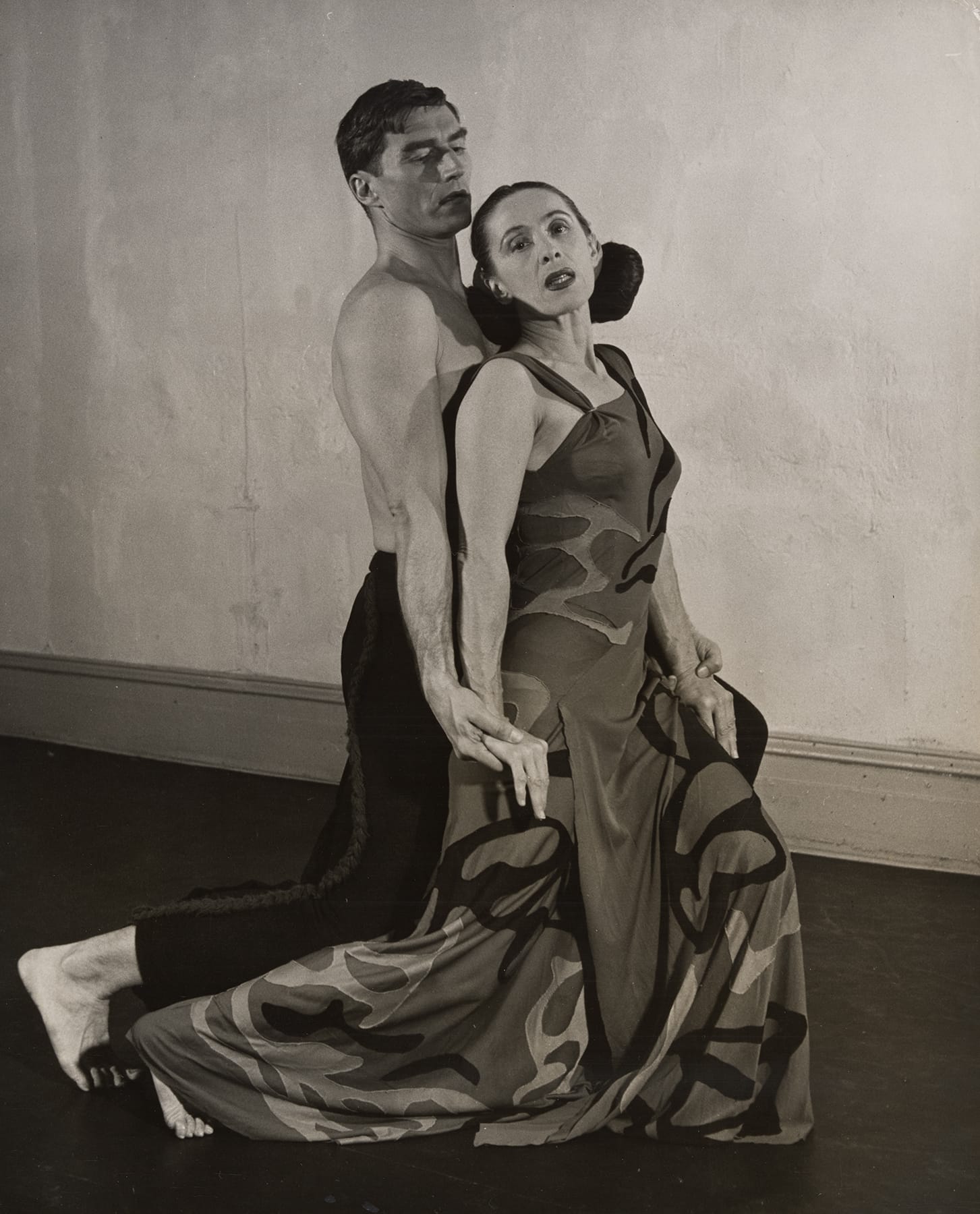
Although Graham eventually let men into the company — the first being Erick Hawkins in 1939 — she was a woman who went her own way, at a time when doing so was difficult. Hawkins and Graham eventually married, but their union was short-lived: “After eight years of living together, Erik decided we should marry. I didn't want to, but I did,” Graham said of their relationship. “During that ninth year it all fell apart. … Never try to hold on to anything.”
The two were divorced in 1954. Graham did not remarry, nor did she have children. “Merce Cunningham, Paul Taylor, Twyla Tharp, Mark Morris — all are Graham’s children and grandchildren,” wrote the dance critic Terry Teachout in TIME in 1998. Graham danced until the age of 75.
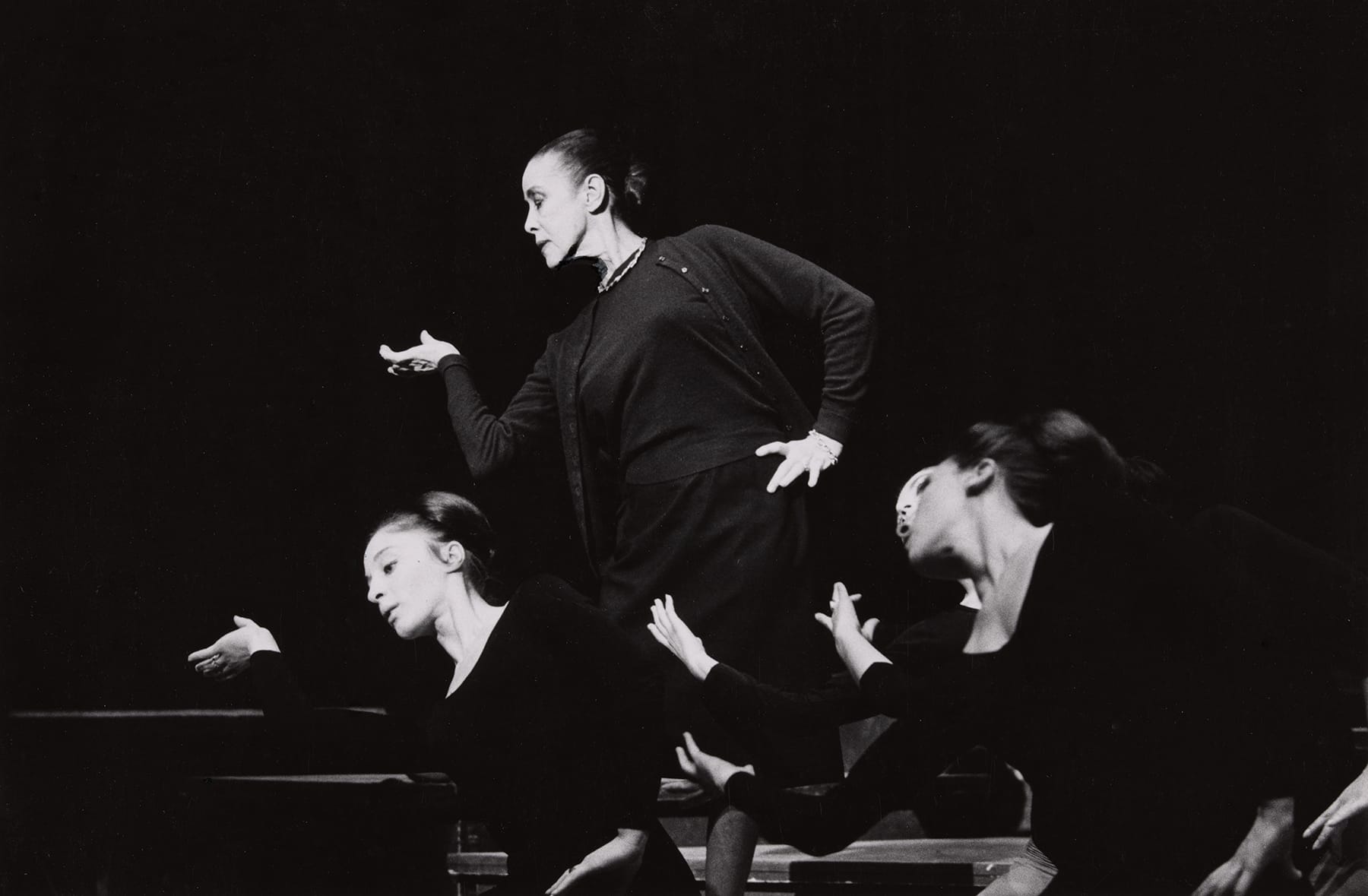
“Martha Graham made tremendous amounts of meaning during times of extreme evil,” Ferver said. “How do we bring the focus again back to what could be? How could we wake up to the beauty of life? How can we wake up to how destructive jealousy is? How can we wake up to how demoralizing the crush of industrialism may be? And how do we take care of our human spirit inside of that?”
If there is a lesson in her legacy, Ferver told me, it’s to “not yield, to not bend, which will mean sacrifice for yourself, but not for your mission.”
In a world that feels increasingly precarious, it’s an idea worth holding on to.
 Emma Haslett